PM Modi Issues Heat-Wave Health Advisory for Indians

Synopsis
Prime Minister Narendra Modi issued a direct public health advisory on 27 May 2026, urging Indians to act immediately on heat-wave symptoms — dizziness, nausea, fatigue — by moving affected persons to shade and providing water or ORS. The post reflects a broader national push on heat-action preparedness.
Key Takeaways
PM Modi posted a heat-wave health advisory in Hindi on 27 May 2026 , reaching millions of followers directly.
Key warning signs cited: dizziness, nausea, and excessive fatigue caused by extreme heat.
Recommended first response: move the affected person to a cool, shaded place and give water or ORS immediately.
The NDMA has maintained national heat-wave guidelines since 2016 ; the Ministry of Health integrated heat-stress protocols into national health programmes from 2019 .
The Ahmedabad Heat Action Plan (2010) remains India's most cited city-level model for reducing heat-related mortality.
Outdoor workers and elderly citizens face the highest risk and are the primary beneficiaries of such public advisories.
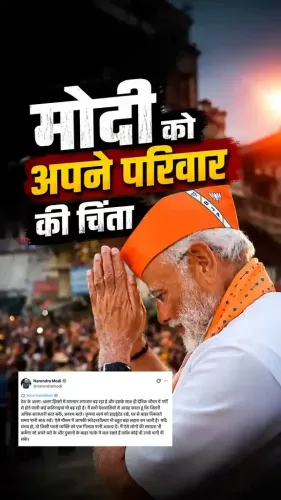
Prime Minister Narendra Modi on Wednesday, 27 May 2026 issued an urgent public health advisory on social media, urging Indians to take heat-related symptoms seriously and help those around them who may be showing signs of heat stress.
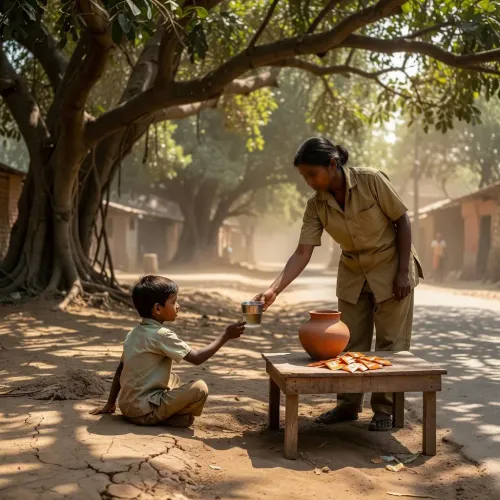
In a Hindi-language post, Modi wrote: 'अत्यधिक गर्मी से होने वाली परेशानी, जैसे चक्कर आना, मतली या ज्यादा थकान लगे तो उसे बिल्कुल भी नजरअंदाज न करें' — 'Do not ignore discomfort caused by extreme heat, such as dizziness, nausea, or excessive fatigue.' He further advised that if someone nearby suddenly feels faint, weak, or unwell, they should be moved immediately to a cool, shaded place and given water, ORS, or other fluids without delay.
Context
The advisory comes as large parts of India experience intense summer heat, a recurring seasonal challenge that strains public health infrastructure and disproportionately affects outdoor workers and the elderly. Modi has a pattern of using his social media platforms to issue direct, accessible public-health guidance during extreme-weather episodes. The simplicity of the message — recognise symptoms, find shade, give fluids — is consistent with national heat-action protocols.
Policy Backdrop
The National Disaster Management Authority (NDMA) issued its first national guidelines on heat-wave management in 2016, establishing a framework for state-level action plans, early-warning systems, and community-level response. From 2019 onward, the Ministry of Health integrated heat-stress protocols into the National Programme on Climate Change and Human Health, making ORS distribution and shaded rest areas standard recommendations.
At the city level, the Ahmedabad Heat Action Plan, launched in 2010, became a pioneering model that combined early warnings, public-awareness campaigns, and ORS distribution to measurably reduce heat-related mortality. Its approach has since influenced similar plans across Indian states.
Stakeholders and Impact
The advisory is aimed broadly at the general public but carries particular relevance for outdoor and construction workers, elderly citizens, and those in low-income households without access to air conditioning. Heat stress can escalate rapidly from fatigue and dizziness to heat stroke, which can be fatal if not treated within minutes.
Oral Rehydration Salts (ORS), specifically mentioned in the post, are a low-cost, widely available intervention that health authorities have long promoted as a first-line response to heat-induced dehydration. Moving an affected person to shade and administering fluids promptly can be the difference between recovery and a medical emergency.
What's Next
State governments are expected to update and activate their individual heat action plans in line with seasonal forecasts from the India Meteorological Department (IMD). Public health officials and district administrations typically coordinate ORS distribution points, cooling centres, and hospital preparedness as temperatures peak. Modi's advisory adds political visibility to these efforts and may prompt accelerated outreach at the local level, particularly in high-vulnerability districts.
Point of View
Action-oriented health advisory in Hindi signals a deliberate effort to reach populations least served by English-language public-health communication. The message aligns closely with NDMA and Ministry of Health protocols, suggesting coordinated seasonal outreach rather than a standalone gesture. It also reflects a broader pattern of the Prime Minister using his personal social media reach as a direct-to-citizen public-health channel, bypassing institutional intermediaries. As heat-wave frequency rises with climate change, such high-visibility advisories from the top of government carry real potential to shift community behaviour at scale.
NationPress
11 Oct 2026
Frequently Asked Questions
What did PM Modi say about heat wave symptoms?
PM Modi advised Indians on 27 May 2026 not to ignore symptoms of extreme heat such as dizziness, nausea, or excessive fatigue, and to immediately move anyone feeling faint or unwell to a cool, shaded place and give them water or ORS.
What is ORS and why is it recommended during a heat wave?
ORS stands for Oral Rehydration Salts, a low-cost solution of water, salt, and sugar that rapidly replaces fluids and electrolytes lost through sweating. Indian health authorities recommend it as a first-line response to heat-induced dehydration.
What are India's official heat wave guidelines?
The National Disaster Management Authority issued national heat-wave management guidelines in 2016, covering early-warning systems, state action plans, and community-level responses including ORS distribution and shaded rest areas.
Who is most at risk during a heat wave in India?
Outdoor and construction workers, elderly citizens, and people in low-income households without air conditioning face the highest risk of heat stress and heat stroke during India's summer months.
What is the Ahmedabad Heat Action Plan?
Launched in 2010, the Ahmedabad Heat Action Plan is India's pioneering city-level initiative that combines early warnings, public-awareness campaigns, and ORS distribution to reduce heat-related mortality, and has since served as a model for other Indian cities.