Pralhad Joshi hails Cabinet nod for PM Surya Sarovar Yojana
Synopsis
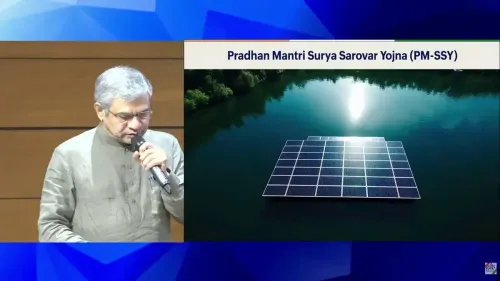
The Union Cabinet has approved the Pradhan Mantri Surya Sarovar Yojana (PM-SSY), targeting 5,000 MW of floating solar capacity on India's reservoirs and 10,000 MWh of battery storage, with an estimated investment of ₹28,500 crore, advancing India's 500 GW clean energy goal by 2030.
Key Takeaways
The Union Cabinet has approved the Pradhan Mantri Surya Sarovar Yojana (PM-SSY) , a flagship floating solar and battery storage scheme.
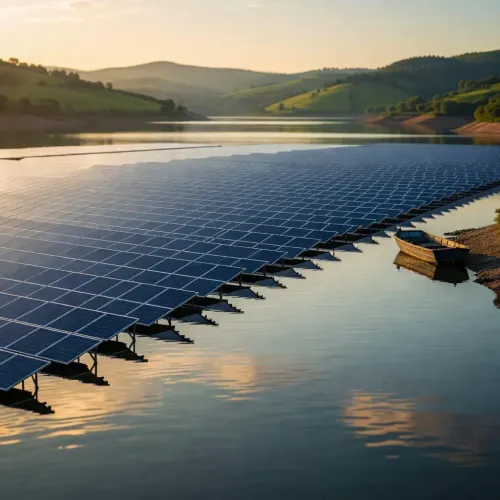
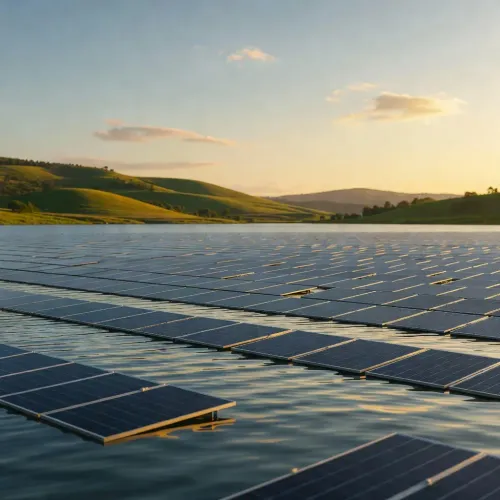
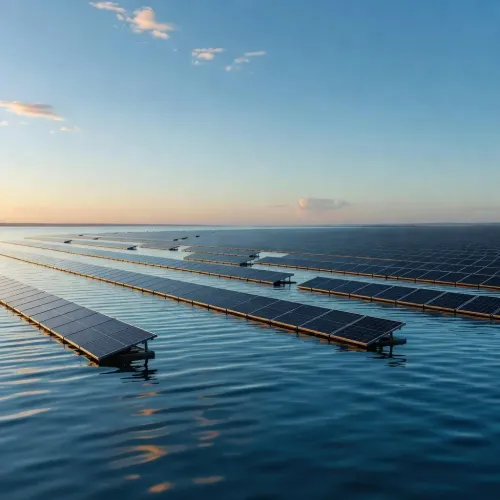
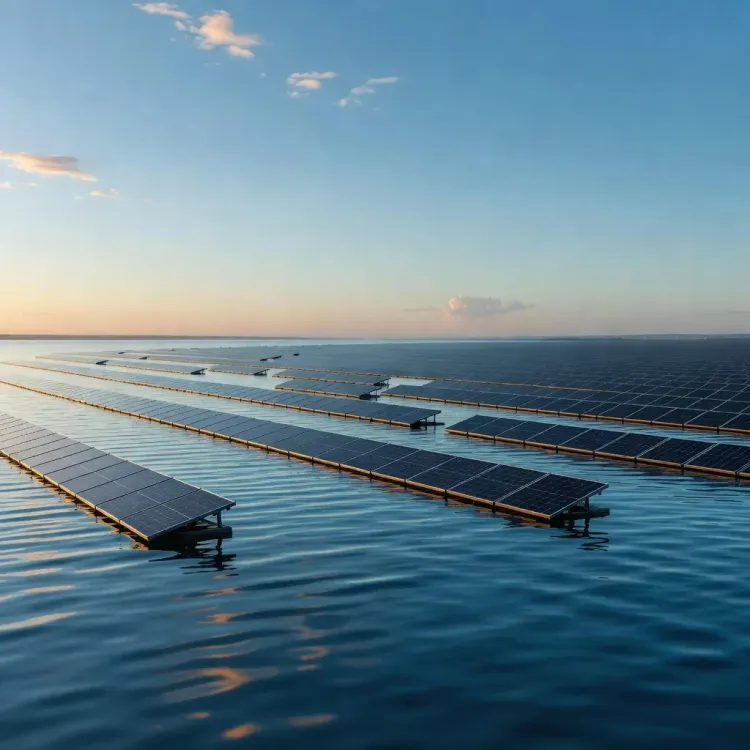
The scheme targets 5,000 MW of floating solar PV capacity deployed on India's reservoirs and irrigation water bodies.
A 10,000 MWh battery energy storage system will back the solar generation, addressing intermittency.
The estimated investment outlay for the scheme is ₹28,500 crore .
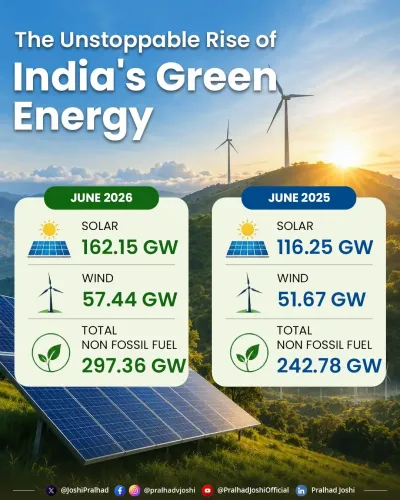
PM-SSY advances India's commitment to 500 GW of non-fossil fuel electricity capacity by 2030 , pledged at COP26 in Glasgow.
State irrigation departments and renewable energy developers are the primary stakeholders for project rollout and execution.
India's reservoirs are about to pull double duty. The Union Cabinet has approved the Pradhan Mantri Surya Sarovar Yojana (PM-SSY), a scheme that will harness the country's water bodies to generate clean electricity — and Union Minister for New and Renewable Energy Pralhad Joshi on Friday, 31 July 2026, credited Prime Minister Narendra Modi's 'visionary leadership' for the landmark decision.
Floating solar meets battery storage — what the scheme targets
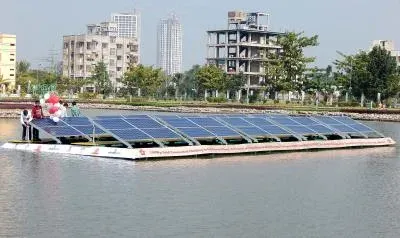
The scheme's architecture is built around two interlocking pillars. First, 5,000 MW of floating solar photovoltaic capacity will be deployed on India's reservoirs and irrigation sources — panels that sit on water, sidestepping the land-acquisition battles that have dogged ground-mounted projects. Second, 10,000 MWh of battery energy storage will back that generation, smoothing out the intermittency that is solar power's perennial weakness. The combined outlay is pegged at an estimated ₹28,500 crore.
Joshi's post, written in Kannada, framed the approval as a boost to India's energy security and the 'Atmanirbhar Viksit Bharat' ('self-reliant developed India') agenda — the government's umbrella vision for domestic capability-building across strategic sectors.
Why reservoirs, and why now
The logic of floating solar on reservoirs is well-established in Indian energy policy. Water-based installations avoid land competition, reduce water evaporation from reservoirs, and can be co-located with existing hydro or irrigation infrastructure — cutting transmission and grid-integration costs. State irrigation departments become natural partners, giving the scheme a federal dimension that ground-mounted solar parks lack.
India has been building toward this moment for over a decade. The Jawaharlal Nehru National Solar Mission, launched in 2010, laid the grid-connected solar foundation. At COP26 in Glasgow in 2021, India pledged to reach 500 GW of non-fossil fuel electricity capacity by 2030 — a target that now requires aggressive deployment across every viable surface, including water. PM-SSY represents the next logical push: hybrid projects that pair generation with storage, the combination that makes renewable energy dispatchable rather than merely available.
What to watch as PM-SSY moves from approval to action
A Cabinet approval is the starting gun, not the finish line. The immediate milestones to track are tender announcements from the Ministry of New and Renewable Energy, state-level project allocations — particularly from reservoir-rich states — and commissioning timelines for the first floating solar and battery storage installations under the scheme. Renewable energy developers and state irrigation departments are the two stakeholder groups whose coordination will determine whether the 5,000 MW target lands on schedule.
India has approved ambitious renewable targets before; execution pace has often lagged. But the explicit integration of battery storage into this scheme signals a maturation in policy design — the government is not just adding capacity, it is building a grid that can actually use it.
Point of View
And critically, bundling generation with storage in a single scheme. For Pralhad Joshi, whose New and Renewable Energy portfolio carries the weight of India's 2030 climate pledges, this is a high-visibility win that links his ministry directly to the Atmanirbhar Bharat narrative. The ₹28,500 crore outlay also signals that the Centre is willing to deploy serious fiscal firepower to close the gap between India's stated 500 GW target and current installed capacity. Whether the scheme accelerates or stalls will depend on how quickly state irrigation departments and private developers align — the federal coordination challenge that has historically been India's renewable Achilles heel.
NationPress
31 Jul 2026
Frequently Asked Questions
What is PM Surya Sarovar Yojana (PM-SSY)?
PM Surya Sarovar Yojana is a newly approved Union Cabinet scheme that aims to deploy 5,000 MW of floating solar photovoltaic capacity on India's reservoirs and irrigation water bodies, backed by 10,000 MWh of battery energy storage, with an estimated investment of ₹28,500 crore.
What is floating solar and why is it used on reservoirs?
Floating solar refers to photovoltaic panels mounted on structures that float on water bodies such as reservoirs and lakes. It avoids land acquisition challenges, reduces water evaporation, and can be co-located with existing irrigation or hydro infrastructure, lowering grid integration costs.
How does PM-SSY connect to India's 500 GW renewable energy target?
India pledged at COP26 in Glasgow in 2021 to achieve 500 GW of non-fossil fuel electricity capacity by 2030. PM-SSY's 5,000 MW floating solar target contributes directly to closing the gap between current installed capacity and that 2030 goal.
Who is responsible for implementing PM-SSY?
The Ministry of New and Renewable Energy, headed by Union Minister Pralhad Joshi, will oversee the scheme. State irrigation departments and renewable energy developers are the key implementing partners at the ground level.
What are the next steps after Cabinet approval of PM-SSY?
Following Cabinet approval, the key milestones include tender announcements from the Ministry of New and Renewable Energy, allocation of projects to states, and commissioning timelines for the first floating solar and battery storage installations under the scheme.