President Murmu graces Muria Darbar at Bastar Dussehra 2026
Synopsis
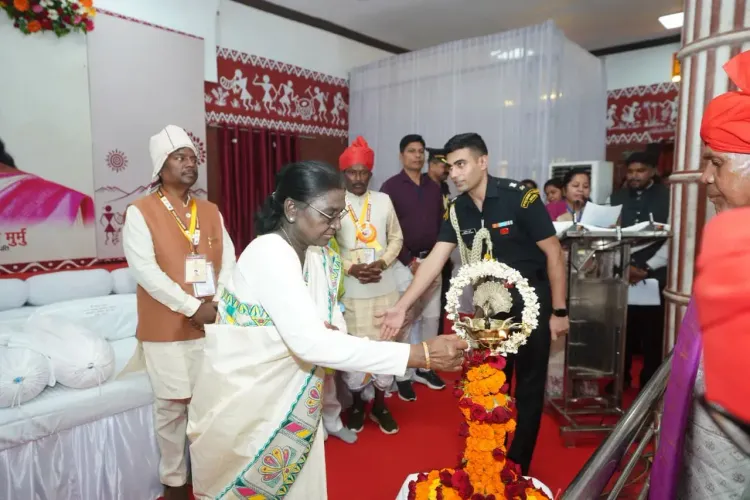
President Droupadi Murmu, India's first tribal head of state, attended the Muria Darbar — the ancient tribal assembly at the core of the 75-day Bastar Dussehra — at Sirhasaar Bhavan in Jagdalpur on October 23, 2026, an event amplified by the Chhattisgarh CMO under the Janjatiya Gaurav banner.
Key Takeaways
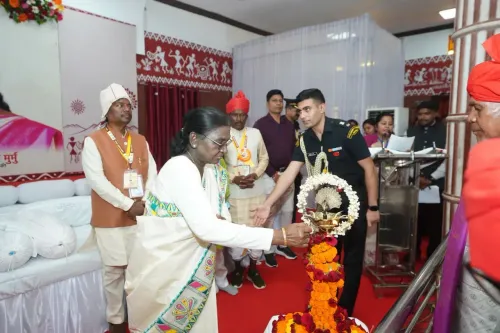
President Droupadi Murmu attended the Muria Darbar at Sirhasaar Bhavan, Jagdalpur on October 23, 2026 .
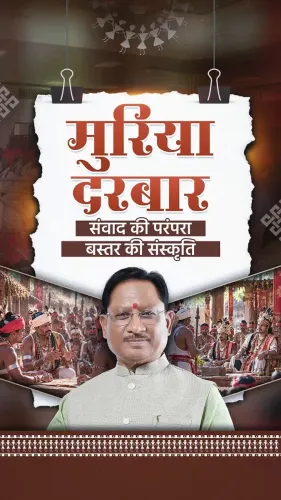
The Muria Darbar is a centuries-old tribal assembly of elders held during Bastar Dussehra , one of the world's longest festivals spanning 75 days .
Droupadi Murmu , elected President in 2022 , is India's first tribal woman to hold the office.
The visit was framed under the Janjatiya Gaurav banner, linked to the Government of India's Janjatiya Gaurav Diwas instituted in November 2021 .
The Chhattisgarh CMO officially marked the occasion on X, tagging Rashtrapati Bhavan and tribal pride hashtags.
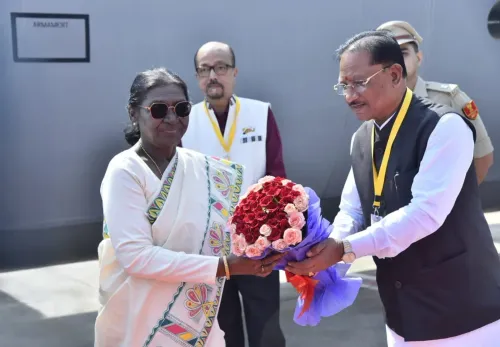
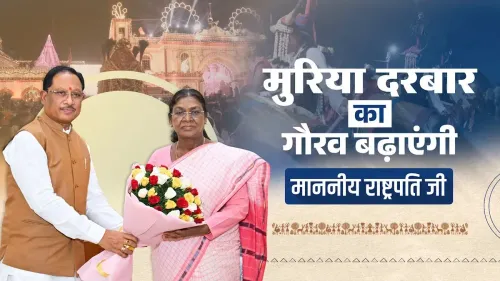
India's first tribal President walked into a living piece of cultural history on Friday, October 23, 2026 — President Droupadi Murmu lent her presence to the Muria Darbar, the ancient tribal assembly at the heart of Bastar Dussehra, held at Sirhasaar Bhavan, Jagdalpur. The Chief Minister's Office of Chhattisgarh marked the moment with a post on X, tagging the Rashtrapati Bhavan handle and flagging the occasion under #बस्तर_दशहरा_2026 and #JanJatiyaGaurav.
What the Muria Darbar is — and why it matters
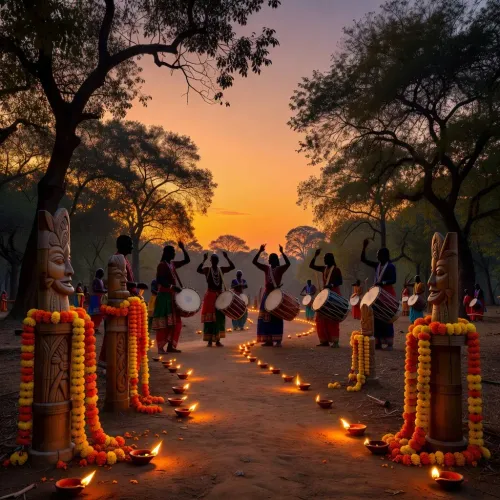
The Muria Darbar is no ceremonial photo-op. It is a centuries-old assembly of tribal elders from the Muria community, convened during Bastar Dussehra to deliberate on customs, community concerns, and local affairs — a form of grassroots governance that predates modern democratic institutions. The darbar sits at the spiritual and civic core of Bastar Dussehra, which itself is no ordinary festival: a 75-day celebration unique in the world, woven through with tribal deities, ritual processions, and devotion to Goddess Danteshwari.
Jagdalpur, the administrative headquarters of Bastar district, transforms into the fulcrum of this tribal universe every year. That the President of India — herself an Adivasi woman from the Santali community of Odisha — was present at Sirhasaar Bhavan for this gathering carries weight well beyond protocol.
President Murmu and the symbolism of Adivasi identity
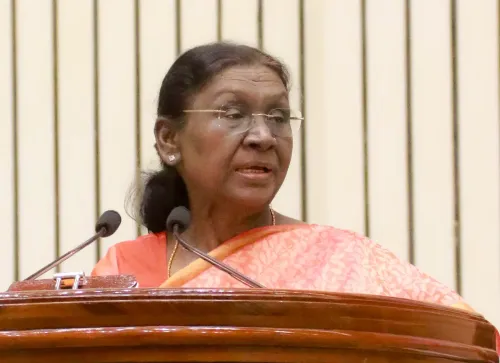
Droupadi Murmu was elected India's 15th President in 2022, making her the first tribal woman to hold the office. Her journey — from a schoolteacher in Mayurbhanj to Rashtrapati Bhavan — is frequently invoked by the government as emblematic of India's commitment to Adivasi representation. Her attendance at the Muria Darbar deepens that narrative: this is not a visiting dignitary observing a tribal tradition from the outside, but a tribal leader being received within it.
The Government of India instituted Janjatiya Gaurav Diwas in November 2021 to formally recognise tribal contributions and cultural heritage. President Murmu's presence at Bastar Dussehra — tagged explicitly under #JanJatiyaGaurav — places this visit squarely within that continuing framework of high-profile state engagement with indigenous culture.
A pattern of visibility at Bastar's biggest stage
Bastar Dussehra has long functioned as more than a religious festival — it is a political and cultural stage where the relationship between the state and its tribal populations is performed, tested, and renewed. Central and state authorities have periodically marked their commitment to Adivasi heritage through high-profile attendance at such events, and the Chhattisgarh CMO's decision to amplify the President's visit signals that this year's darbar carries official weight at the highest level.
The hashtag choices — #TribalPride, #JanJatiyaGaurav, #Bastar — are deliberate. They anchor a living community event to a national conversation about tribal identity and recognition that has only grown louder since 2021.
When a President who is herself Adivasi sits in an assembly of tribal elders at the world's longest festival, the message to Bastar's communities is unambiguous: their traditions are not folklore to be observed from a distance — they are heritage to be honoured from within.
Point of View
Where tribal communities constitute roughly 32 percent of the population, is a state where this visibility carries direct political currency. The choice to amplify the visit through official CMO channels — with tribal-pride hashtags rather than purely cultural ones — signals that the government views symbolic recognition and electoral mobilisation as two sides of the same coin. The deeper question is whether ceremonial presence translates into material outcomes for Bastar's communities; that answer will emerge in budget allocations and policy follow-through, not in hashtags.
NationPress
23 Oct 2026
Frequently Asked Questions
What is the Muria Darbar in Bastar Dussehra?
The Muria Darbar is a traditional tribal assembly of Muria elders held during Bastar Dussehra at Sirhasaar Bhavan in Jagdalpur. Elders gather to discuss customs, community matters, and local concerns — a form of indigenous governance practised for centuries.
Why did President Droupadi Murmu attend Bastar Dussehra 2026?
President Murmu, India's first tribal woman head of state, attended the Muria Darbar as part of the government's ongoing Janjatiya Gaurav (Tribal Pride) initiative, which honours and amplifies Adivasi cultural heritage at the highest levels of the state.
How long is Bastar Dussehra and what makes it unique?
Bastar Dussehra spans 75 days , making it one of the world's longest festivals. Centred in Jagdalpur, Chhattisgarh, it involves tribal deities, ceremonial processions, and rituals devoted to Goddess Danteshwari — distinct from the pan-Indian Navratri-Dussehra tradition.
What is Janjatiya Gaurav Diwas and when was it started?
Janjatiya Gaurav Diwas was instituted by the Government of India in November 2021 to recognise the contributions and cultural heritage of tribal communities across the country. It is observed on November 15, the birth anniversary of Birsa Munda.
Where is the Muria Darbar held during Bastar Dussehra?
The Muria Darbar is held at Sirhasaar Bhavan in Jagdalpur , the administrative headquarters of Bastar district in Chhattisgarh.