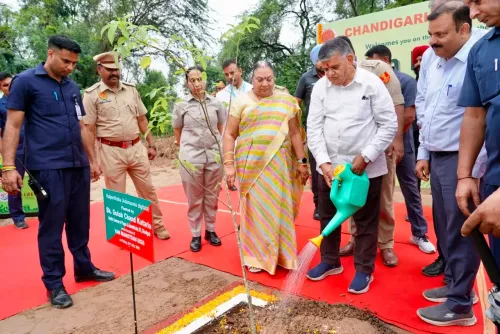
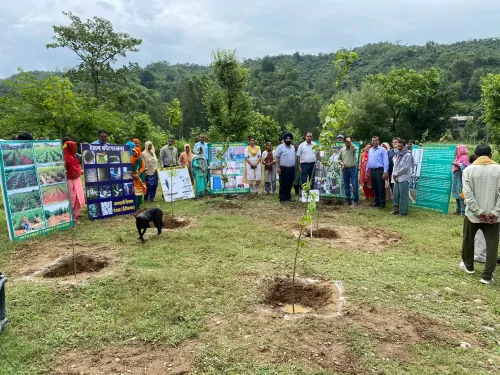
Punjab biodiversity project: ₹760 crore JICA tie-up to expand tree cover
Synopsis
Punjab has signed a ₹760.30 crore JICA-backed environmental project that goes well beyond tree-planting — it targets stubble burning, groundwater depletion, wetland restoration, and farmer income in one integrated push across the Shivalik region. With the loan agreement already inked with the Union Finance Ministry, the project has cleared its biggest institutional hurdles before a single sapling is planted.
Key Takeaways
Punjab has proposed the Punjab Biodiversity and Natural Resource Conservation Project in collaboration with JICA , announced on 11 August .
Total estimated cost is ₹760.30 crore , shared in an 85:15 ratio between JICA and the state.
The project will run over eight years and be executed through a dedicated society.
Key goals include agroforestry, groundwater preservation, wetland conservation, integrated watershed management in the Shivalik region , and curbing stubble burning.
The loan agreement has been signed between JICA and the Department of Economic Affairs under the Union Ministry of Finance .
Punjab's Council of Ministers and the AAP government have both cleared the project and the formation of an implementing society.
The Punjab government has approached the Japan International Cooperation Agency (JICA) to co-fund a ₹760.30 crore biodiversity and natural resource conservation project, Forest and Wildlife Conservation Minister Lal Chand Kataruchak announced on Tuesday, 11 August in Chandigarh. The initiative, backed by Chief Minister Bhagwant Mann's administration, aims to expand tree cover through agroforestry, protect wetlands, and conserve biodiversity across the state — with a particular focus on the ecologically sensitive Shivalik region.
Project Scope and Objectives
The proposed Punjab Biodiversity and Natural Resource Conservation Project targets a broad set of environmental and economic goals. These include promoting agroforestry, preserving groundwater, undertaking integrated watershed management, and curbing air pollution linked to stubble burning — a persistent seasonal problem in Punjab.
The project also seeks to develop ecotourism as a lever for local economic growth, improve the state's wetlands, and integrate animal husbandry with agriculture to diversify rural income streams.
Funding Structure and Timeline
The total estimated outlay stands at ₹760.30 crore, with costs shared in an 85:15 ratio — indicating that JICA will finance the larger share through a concessional loan. The project is proposed to run over eight years and will be executed through a society model.
Notably, the loan agreement has already been signed between JICA and the Department of Economic Affairs under the Union Ministry of Finance, signalling that the financial groundwork is in place.
Government Approvals in Place
Punjab's Council of Ministers has accorded approval to the project. The Aam Aadmi Party (AAP) government has additionally cleared the formation of the Punjab Biodiversity and Natural Resource Conservation Society, the dedicated body that will oversee implementation and management of the initiative.
Why It Matters for Punjab
Punjab's agricultural economy has long grappled with depleting groundwater tables, soil degradation, and the annual stubble-burning crisis that blankets northern India in smog each winter. This project, if executed on schedule, could address multiple interconnected pressure points simultaneously — from soil health and water conservation to farmer incomes and air quality.
This is also among the larger JICA-backed environmental collaborations in India's northern states, and its eight-year horizon suggests a structural, rather than cosmetic, intervention. The Shivalik foothills — a biodiversity corridor linking Punjab to the broader Himalayan ecosystem — stand to benefit directly from the watershed management and afforestation components. All eyes will now be on the formation of the implementing society and the rollout of the first-phase action plan.
Point of View
Wetlands, stubble burning, groundwater, ecotourism — but that breadth is also its risk. Multi-objective environmental projects in India have a mixed record; the ones that succeed tend to have a single, measurable anchor metric. The 85:15 funding split means JICA holds significant leverage, which could enforce implementation discipline that purely state-funded schemes often lack. The real test will be whether the newly formed society has the technical capacity and political insulation to deliver across eight budget cycles and potentially two or three government changes.
NationPress
26 Sept 2026
Frequently Asked Questions
What is the Punjab Biodiversity and Natural Resource Conservation Project?
It is an eight-year environmental initiative proposed by the Punjab government in collaboration with JICA, with a total estimated cost of ₹760.30 crore. The project aims to promote agroforestry, conserve wetlands, preserve groundwater, manage watersheds in the Shivalik region, and boost rural incomes.
How is the ₹760.30 crore project being funded?
The project costs are shared in an 85:15 ratio, with JICA providing the larger share through a concessional loan. The loan agreement has already been signed between JICA and the Department of Economic Affairs under the Union Ministry of Finance.
Which areas of Punjab will the project primarily cover?
The project has a particular focus on the Shivalik region, where integrated watershed management and biodiversity conservation are priority activities. Wetland improvement and agroforestry components will extend across the broader state.
How will the project help Punjab farmers?
The project aims to increase farmers' incomes by promoting agroforestry as an alternative or complement to conventional agriculture, developing animal husbandry alongside farming, and reducing losses linked to stubble burning. Ecotourism development is also expected to generate supplementary income for rural communities.
Has the project received all necessary approvals?
Yes. Punjab's Council of Ministers has approved the project, and the AAP government has cleared the formation of the Punjab Biodiversity and Natural Resource Conservation Society to manage its implementation. The JICA loan agreement with the Union Finance Ministry has also been signed.