Haryana CM launches ₹2,738 crore JICA horticulture project in Panchkula
Synopsis
Haryana is making its biggest horticulture bet yet — ₹2,738 crore backed by JICA — to cut the 20–30% post-harvest loss that bleeds farmer income before produce even reaches a market. With 400 clusters, 500 producer groups, and a new cold chain centre, the state is signalling a deliberate shift from Green Revolution wheat-and-rice dominance toward a high-value, export-ready agri economy.
Key Takeaways
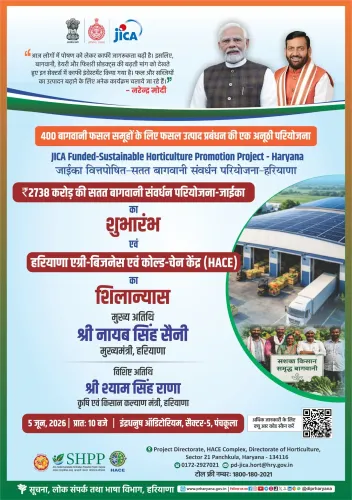
Haryana CM Nayab Singh Saini launched the ₹2,738 crore JICA -funded Sustainable Horticulture Promotion Project in Panchkula on 5 June 2025 .
The project will develop 400 horticulture clusters , 500 producer groups , 402 pack houses , and 44 retail outlets to cut post-harvest losses of 20–30% .
Foundation stone of the Haryana Agri-Business and Cold Chain Centre was also laid at the same event.
The state will plant on 1,000 hectares using biodrainage technology and build 25 new water storage dams in the Shivalik and Aravalli regions.
Haryana hosts 394 Japanese industries and over 600 Japanese business establishments , reflecting strong India–Japan economic ties.
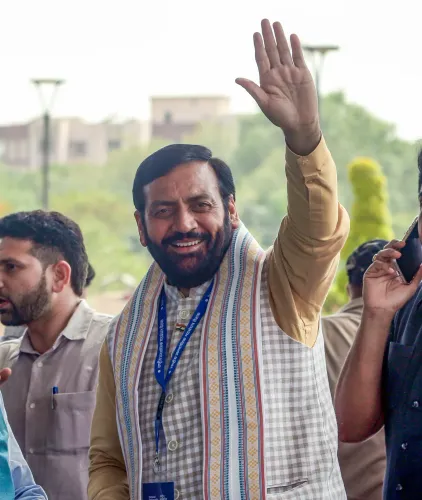
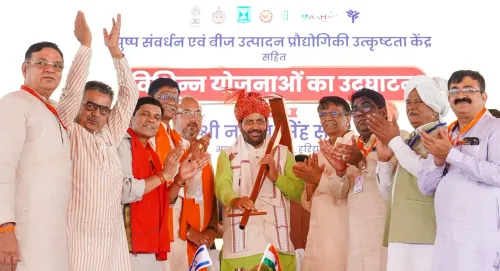
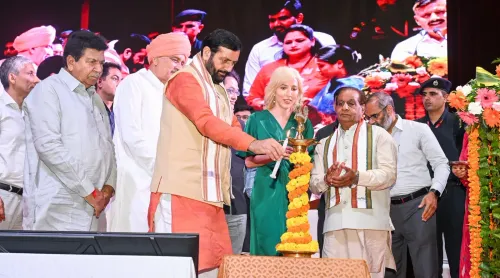
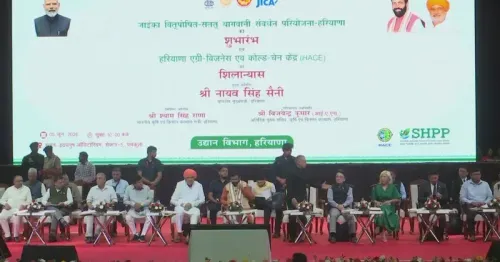
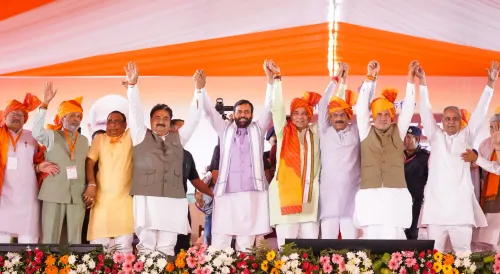
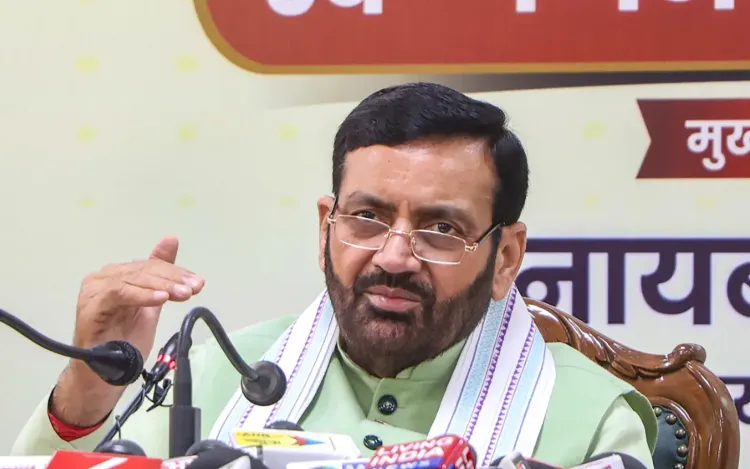
Haryana Chief Minister Nayab Singh Saini on Friday, 5 June launched the Japan International Cooperation Agency (JICA)-funded Sustainable Horticulture Promotion Project worth ₹2,738 crore at a programme in Panchkula, stating that farmers, youth, women, and modern technology would be central to realising the vision of Viksit Bharat – 2047. The event, held on the occasion of World Environment Day, also saw the laying of the foundation stone of the Haryana Agri-Business and Cold Chain Centre.
What the Project Entails
The Sustainable Horticulture Promotion Project targets a persistent structural problem: nearly 20–30 per cent of fruits and vegetables currently perish before reaching markets. To address post-harvest losses, the initiative will develop 400 horticulture clusters and organise 500 producer groups. Infrastructure to be built includes 402 pack houses, four lead pack houses, three fulfilment centres, and 44 retail outlets.
The project also envisages the construction of 1,000 rainwater harvesting structures and the expansion of micro-irrigation systems to cover 65,000 acres, directly addressing Haryana's deepening groundwater crisis.
Key Announcements by the Chief Minister
Saini announced that to tackle waterlogging and soil salinity in several districts, the state government would undertake plantation on 1,000 hectares this year using biodrainage technology, restoring the land for agricultural use. He also disclosed plans to construct 25 new water storage dams and renovate 25 existing dams in the Shivalik and Aravalli regions to bolster groundwater conservation.
The Chief Minister described the dual launch — the JICA project and the Agri-Business and Cold Chain Centre — as 'the beginning of a new chapter for Haryana's agriculture, environment, and rural economy.'
Why Haryana Is Pivoting to Horticulture
Saini acknowledged that while Haryana had played a defining role in India's food security through the Green Revolution, changing climatic conditions, declining groundwater levels, rising cultivation costs, and shrinking landholdings now necessitate diversification. He highlighted horticulture, fruits, vegetables, spices, medicinal plants, floriculture, mushroom cultivation, and beekeeping as high-opportunity segments for farmers seeking to raise incomes.
Making Haryana the country's leading state in horticulture, agribusiness, cold chain infrastructure, food processing, and agricultural exports was described as among the government's top priorities.
India–Japan Cooperation and Dignitaries Present
The event was attended by Agriculture Minister Shyam Singh Rana, JICA Chief Representative Takeuchi Takuro, First Secretary (Food and Agriculture) Hayase Takehiko, and British Deputy High Commissioner Alba Smeriglio. The dignitaries appreciated the government's efforts to strengthen the agricultural sector and improve farmers' welfare.
Saini noted that Haryana currently hosts 394 Japanese industries and more than 600 Japanese business establishments, underscoring the depth of bilateral economic ties. Both Saini and Rana also planted saplings under the 'Ek Ped Maa Ke Naam' campaign and visited an exhibition organised by the Horticulture Department.
What Comes Next
With the foundation stone laid and JICA funding secured, attention will now shift to the pace of cluster development, producer group formation, and cold chain infrastructure rollout. The project's success will hinge on whether post-harvest loss reduction translates into measurable income gains for small and marginal farmers — the demographic most vulnerable to the structural challenges Saini outlined.
Point of View
738 crore JICA partnership is significant, but the real test is execution speed: Haryana has announced cold chain and cluster schemes before, and the gap between foundation stones and functional infrastructure has historically been wide. The 20–30% post-harvest loss figure the Chief Minister cited is not new — it has persisted for decades despite multiple central and state schemes. What is different this time is the JICA technical-assistance component, which brings Japanese supply-chain expertise alongside the capital. Whether that expertise is absorbed at the farmer-producer-group level — rather than remaining in state agency boardrooms — will determine if this is a genuine pivot or another headline number.
NationPress
20 Sept 2026
Frequently Asked Questions
What is the JICA-funded Sustainable Horticulture Promotion Project in Haryana?
It is a ₹2,738 crore project funded by the Japan International Cooperation Agency (JICA), launched by Haryana Chief Minister Nayab Singh Saini on 5 June 2025 in Panchkula. The project aims to reduce post-harvest losses and build cold chain infrastructure through 400 horticulture clusters, 500 producer groups, and over 400 pack houses.
What infrastructure will be built under the Haryana horticulture project?
The project envisages 402 pack houses, four lead pack houses, three fulfilment centres, 44 retail outlets, and 1,000 rainwater harvesting structures. Micro-irrigation systems will also be expanded to cover 65,000 acres across the state.
Why is Haryana shifting focus from traditional crops to horticulture?
Changing climatic conditions, declining groundwater levels, rising cultivation costs, and shrinking landholdings have made continued dependence on wheat and rice unsustainable, according to CM Saini. Horticulture, floriculture, medicinal plants, and beekeeping are being promoted as higher-income alternatives for farmers.
What is the Haryana Agri-Business and Cold Chain Centre?
It is a new facility whose foundation stone was laid alongside the JICA project launch on 5 June 2025 in Panchkula. The centre is intended to serve as a hub for agri-business activity and cold chain logistics, complementing the post-harvest infrastructure being built under the JICA project.
How strong are India–Japan economic ties in Haryana?
Haryana currently hosts 394 Japanese industries and more than 600 Japanese business establishments, according to CM Saini. JICA Chief Representative Takeuchi Takuro attended the launch, reflecting the institutional depth of bilateral cooperation in the state's agricultural and industrial sectors.