Puri, Gadkari launch Hero flex-fuel two-wheelers on E20-E85
Synopsis
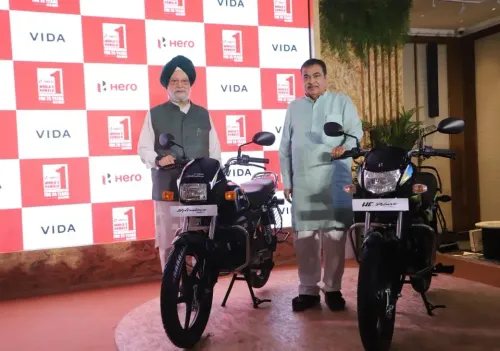
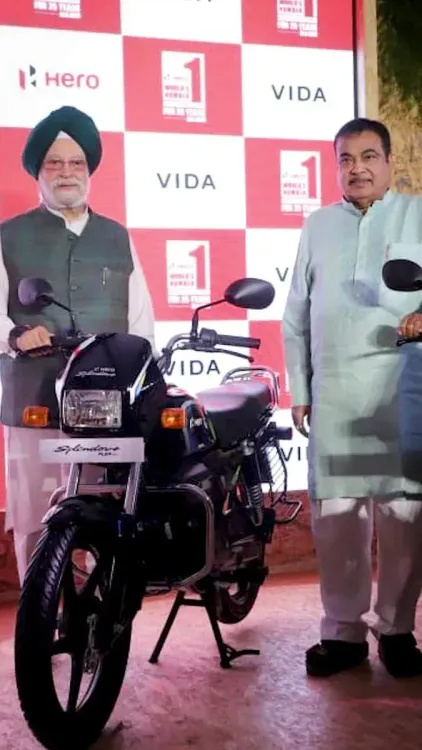
Union Petroleum Minister Hardeep Singh Puri, with Nitin Gadkari, launched Hero MotoCorp's Splendor+ and HF Deluxe flex-fuel motorcycles compatible with E20 to E85 ethanol blends. He pegged ethanol blending at 20%, up from 1.5% a decade ago, and projected crore-rupee gains for farmers, distilleries and foreign exchange savings.
Key Takeaways
Hero MotoCorp's Splendor+ and HF Deluxe Flex Fuel motorcycles launched, compatible with ethanol blends from E20 to E85.
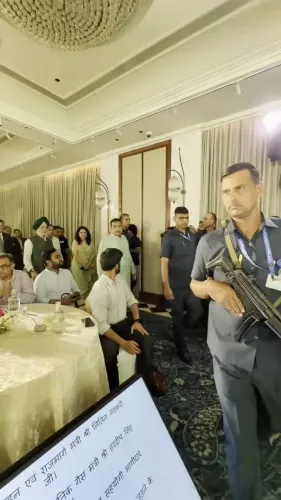
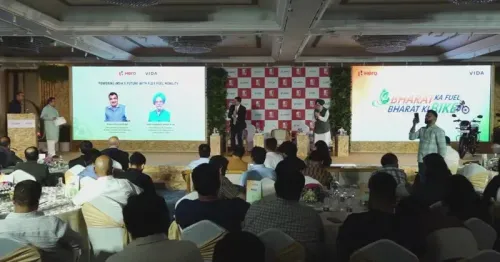
Ministers Hardeep Singh Puri and Nitin Gadkari jointly attended the launch event.
India's ethanol blending has risen from 1.5% a decade ago to 20% currently, per Puri.
Over 30 crore two-wheelers ply on Indian roads, making the segment central to the energy transition.
A 1% flex-fuel share in petrol vehicle sales could mean 4 crore litres of ethanol demand and Rs 160 crore for farmers annually.
Puri cited Brazil's flex-fuel experience as a reference point for India's rollout.
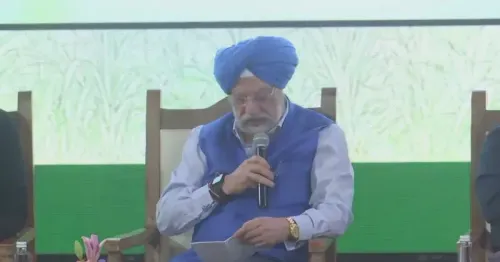
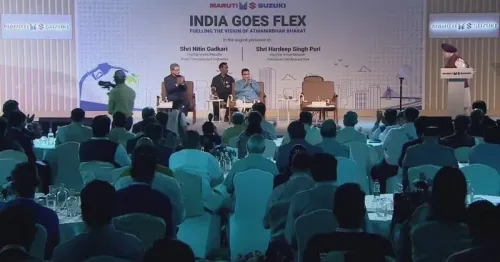
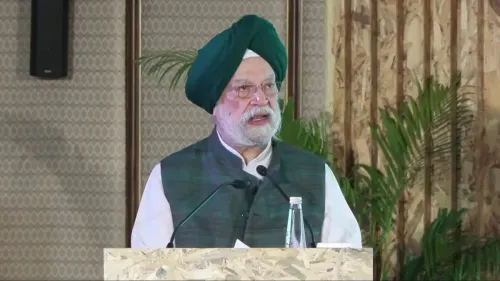
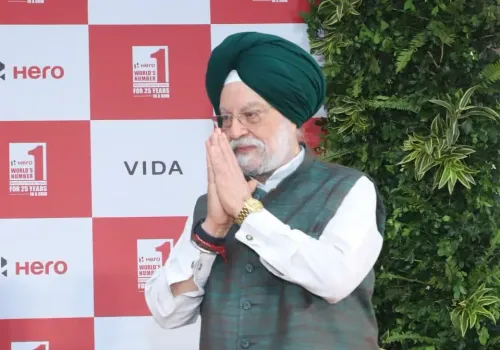
Union Petroleum Minister Hardeep Singh Puri, alongside Union Road Transport and Highways Minister Nitin Gadkari, witnessed the launch of Hero MotoCorp's Splendor+ and HF Deluxe Flex Fuel motorcycles capable of running on ethanol blends ranging from E20 to E85. Announcing the development on X on 3 June 2026, Puri framed the rollout as a milestone in India's mobility, energy security and self-reliance agenda. The launch targets the country's largest vehicle segment, with over 30 crore (300 million) two-wheelers on Indian roads.
Context
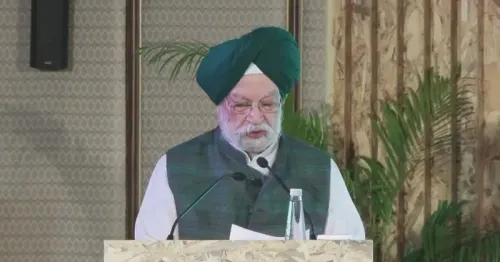
In his post, Puri said 'India's mobility revolution has entered a new chapter', describing the launch as 'far more than the launch of a new vehicle' and 'the convergence of India's energy security mission, our commitment to clean mobility, and our resolve to build an #AatmaNirbharBharat'.
The minister noted that ethanol blending in India stood at just 1.5% a decade ago and has since reached 20%, calling it 'one of the fastest energy transitions anywhere in the world'. He listed the gains as reduced dependence on imported oil, lower foreign exchange outgo, cleaner transportation and additional income for farmers.
Policy backdrop
The Ethanol Blended Petrol (EBP) Programme, launched in 2003, has progressively raised blending targets, with the National Biofuel Policy of 2018 giving the push a formal framework. In 2021, the Centre advanced the E20 blending target from 2030 to 2025, accompanied by state-level procurement mandates and distillery capacity expansion.
Flex-fuel vehicle standards have been under consultation with the auto industry since around 2019 through the Ministry of Road Transport and Highways, the portfolio held by Gadkari, a long-time votary of ethanol and methanol mobility. The Hero MotoCorp launch operationalises that policy track for the dominant two-wheeler segment.
Stakeholders and impact
Puri argued that Indian farmers are 'no longer only Annadatas (food providers). They are increasingly becoming Urjadatas (energy providers)'. The scheme links sugarcane growers, maize farmers and ethanol distilleries to the transport fuel value chain, broadening rural cash flows beyond food procurement.
Citing the scale of the opportunity, the minister said that even if flex-fuel vehicles account for just 1% of annual petrol vehicle sales, they could generate annual demand for nearly 4 crore litres of ethanol, payments of about Rs 266 crore to distilleries, foreign exchange savings of roughly Rs 195 crore, and direct benefits of nearly Rs 160 crore to farmers.
Puri also invoked Brazil, which he said he had observed firsthand, as a template. The Latin American economy has run a large-scale flex-fuel programme using sugarcane ethanol since the 1970s and remains the most cited global precedent for India's transition.
What's next
The next phase of the rollout will hinge on the availability of higher-blend retail dispensing infrastructure, particularly E85-compatible pumps, which remain sparse outside pilot corridors. Industry watchers will also track whether the Ministry of Road Transport and Highways moves to mandate flex-fuel compatibility in new two-wheeler models from 2027 onward.
Pricing of the new Splendor+ and HF Deluxe Flex Fuel variants, dealer-level training and after-sales servicing for ethanol-tolerant engines will determine whether early adopter demand translates into mass-market penetration. Puri closed his post with the line that 'the road ahead is cleaner, the road ahead is greener, the road ahead is more self-reliant'.
For the Centre, the launch sits at the intersection of three priorities it has repeatedly emphasised: shrinking the crude oil import bill, monetising agricultural surplus, and embedding self-reliance into everyday consumer products. The two-wheeler, India's most ubiquitous vehicle, is now squarely inside that policy frame.
Point of View
And crucially into the mass two-wheeler segment that defines Indian mobility. By pairing a petroleum minister with a road transport minister at a private OEM launch, the Centre is signalling that biofuels are now a whole-of-government project, not a niche refinery target. The Brazil analogy is deliberate, but India's challenge is distinct: scaling E85 retail infrastructure and sustaining feedstock supply without straining food security. Execution on pump rollout and OEM mandates from 2027 will decide whether this becomes a structural shift or a showcase.
NationPress
18 Oct 2026
Frequently Asked Questions
What are Hero Splendor+ and HF Deluxe Flex Fuel motorcycles?
They are new variants of Hero MotoCorp's Splendor+ and HF Deluxe two-wheelers engineered to run on ethanol blends ranging from E20 (20% ethanol) up to E85 (85% ethanol). They were launched in the presence of Union Ministers Hardeep Singh Puri and Nitin Gadkari.
What is E20 and E85 fuel in India?
E20 is petrol blended with 20% ethanol, and E85 is petrol blended with 85% ethanol. India has currently achieved the E20 blending level nationally, while E85 is used in dedicated flex-fuel vehicles.
How does flex-fuel benefit Indian farmers?
Ethanol is largely produced from sugarcane, maize and other domestic crops, so higher blending creates a new demand stream for farm output. Puri estimated that even a 1% flex-fuel share in petrol vehicle sales could channel nearly Rs 160 crore annually to farmers.
What is India's current ethanol blending percentage?
According to Union Petroleum Minister Hardeep Singh Puri, India has achieved 20% ethanol blending, up from just 1.5% a decade ago. He described it as one of the fastest energy transitions globally.
Why is Brazil mentioned in India's flex-fuel push?
Brazil has run a successful flex-fuel vehicle programme using sugarcane ethanol since the 1970s and is the world's most cited example of large-scale ethanol mobility. Puri said he has witnessed Brazil's journey firsthand and views it as a reference for India.