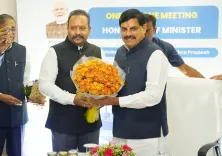
Gadkari Launches Hero MotoCorp's First Flex-Fuel Motorcycles
Synopsis
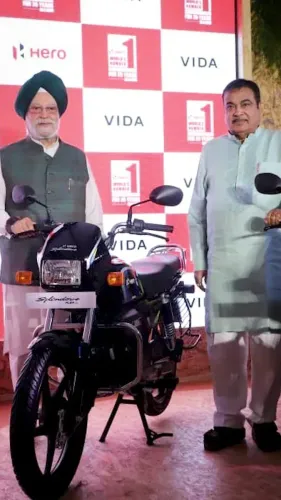
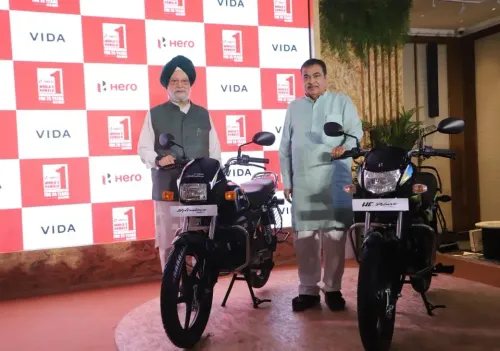
Union Road Transport Minister Nitin Gadkari, alongside Petroleum Minister Hardeep Singh Puri, launched Hero MotoCorp's first flex-fuel motorcycles in New Delhi. He cited a 77% cut in carbon monoxide emissions and ₹1.44 lakh crore in forex savings, framing the move as central to India's self-reliant, sustainable mobility push and rural energy security.
Key Takeaways
Union Minister Nitin Gadkari launched Hero MotoCorp's first flex-fuel motorcycles in New Delhi alongside Petroleum Minister Hardeep Singh Puri.
Gadkari cited a 77% reduction in carbon monoxide emissions from flex-fuel technology.
He projected foreign exchange savings of ₹1.44 lakh crore through reduced import dependence.
The launch aligns with India's Ethanol Blended Petrol programme targeting 20% blending by 2025.
Government frames the move as supporting farmers, biofuel demand and rural employment.
India is the world's largest two-wheeler market, amplifying the impact of flex-fuel adoption.
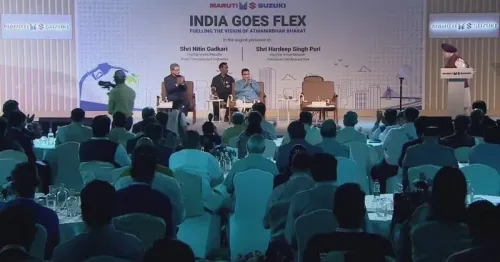
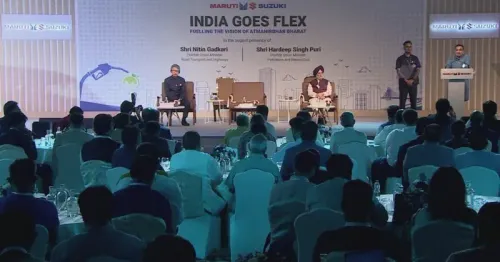
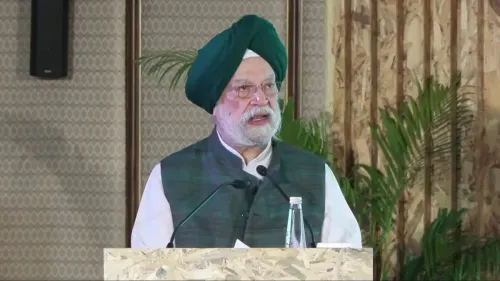
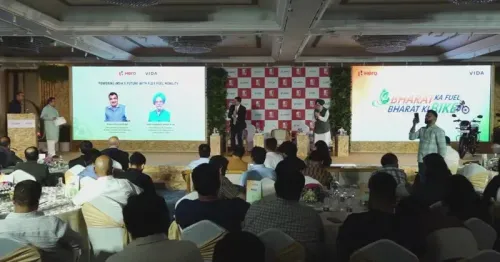
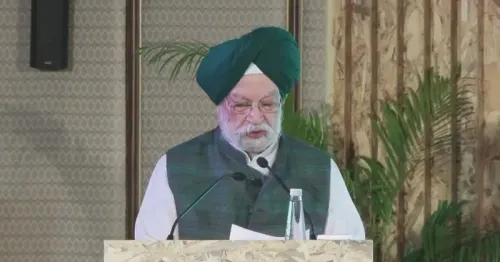
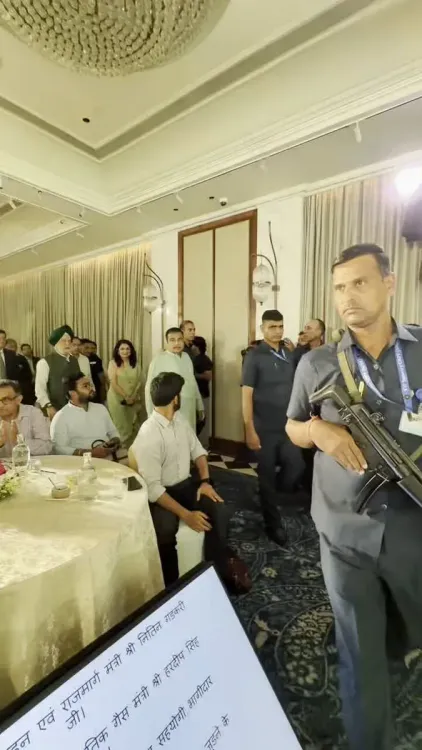
Union Road Transport and Highways Minister Nitin Gadkari on Wednesday addressed the launch of Hero MotoCorp's first flex-fuel motorcycles in New Delhi, joined by Union Minister of Petroleum and Natural Gas Hardeep Singh Puri. Gadkari framed the rollout as a pioneering step toward cleaner, self-reliant mobility, citing sharp emission cuts and substantial foreign exchange savings. The announcement, shared on X, anchors a coordinated cross-ministry push to scale biofuel-compatible vehicles in the world's largest two-wheeler market.
Context
In his post, Gadkari said he 'addressed the launch of Hero MotoCorp's first flex-fuel motorcycles along with Union Minister Shri Hardeep S Puri Ji in New Delhi today,' and congratulated the company on a 'pioneering step, aligned with the vision of Prime Minister Shri Narendra Modi Ji for clean, self-reliant and sustainable mobility.'
He listed three headline gains attributed to flex-fuel technology: a 77% reduction in carbon monoxide emissions, lower import dependence, and foreign exchange savings of ₹1.44 lakh crore. The minister tagged Hero MotoCorp and used the hashtags #FlexFuel, #FlexFuelVehicle and #GreenMobility.
Policy backdrop
Flex-fuel vehicles, capable of running on petrol blended with high concentrations of ethanol, sit at the centre of India's biofuel strategy. The Ethanol Blended Petrol programme, with a 20% blending target for 2025, builds on phases initiated in 2003 and accelerated after 2018, while government statements from 2021 flagged the introduction of flex-fuel vehicles across the auto segment.
Gadkari has been among the most vocal advocates within the Union Cabinet for ethanol, methanol and hydrogen pathways, arguing that biofuels can run in parallel with electrification rather than be displaced by it. Petroleum Minister Hardeep Singh Puri's presence at the launch underlined the inter-ministerial coordination needed to align vehicle technology with upstream fuel supply.
Stakeholders and impact
Gadkari said the initiative 'will strengthen rural energy security, create demand for biofuels, support farmers, promote waste-to-wealth, and generate employment,' calling it 'a decisive win for the auto sector, environment, and economy.' The minister framed the outcome as a product of 'strong cooperation and coordinated efforts of all stakeholders.'
For Hero MotoCorp, headquartered in New Delhi and India's largest two-wheeler manufacturer, the launch positions the company as the first mover in the flex-fuel motorcycle segment. The broader stakeholder set includes sugarcane farmers, ethanol distillers, and rural producers of agricultural residues that can be converted into second-generation biofuels.
India's annual crude import bill, which has exceeded USD 100 billion in recent years, gives the policy a strong macroeconomic rationale. With two-wheelers accounting for the bulk of personal mobility, even incremental ethanol substitution at the pump can compound into significant savings on the trade account.
What's next
The immediate watch is whether other two-wheeler manufacturers follow Hero's lead with flex-fuel variants, and whether the government issues fresh mandates or incentives for compliance across the segment. Equally important is the scaling of ethanol production capacity in states with surplus feedstock, which will determine how quickly high-blend fuel becomes available at retail outlets nationwide.
Gadkari's emphasis on 'cooperation and coordinated efforts' signals that the next phase of the biofuel push will be measured not only by vehicle launches but by the alignment of refining, distribution and farm-gate procurement. For policymakers, the test is whether the flex-fuel pathway can deliver on its stated promise of cleaner air, lower import bills and rural income — without slowing the parallel transition to electric mobility.
Point of View
But a multi-fuel pathway in which ethanol-based flex-fuel plays a major role. By staging the event with the Petroleum Minister, the government is signalling that vehicle technology and fuel supply policy are now being choreographed together. For Hero MotoCorp, first-mover status in the flex-fuel motorcycle segment is a strategic bet on policy continuity. The bigger question is whether ethanol supply chains and pump-level availability can keep pace with the vehicle rollout.
NationPress
17 Oct 2026
Frequently Asked Questions
What are flex-fuel motorcycles?
Flex-fuel motorcycles are two-wheelers designed to run on petrol blended with high concentrations of ethanol, typically up to 85%. They use modified engines and fuel systems that can adjust to varying ethanol-petrol ratios automatically.
Who launched Hero MotoCorp's flex-fuel motorcycles?
The launch was addressed by Union Road Transport and Highways Minister Nitin Gadkari along with Union Petroleum and Natural Gas Minister Hardeep Singh Puri in New Delhi. Hero MotoCorp is India's largest two-wheeler manufacturer.
How much can flex-fuel technology save India in foreign exchange?
According to Minister Nitin Gadkari, flex-fuel technology can enable foreign exchange savings of ₹1.44 lakh crore by reducing India's dependence on imported crude oil. India's annual crude import bill has crossed USD 100 billion in recent years.
What is India's ethanol blending target?
India has set a 20% ethanol blending target in petrol for 2025 under the Ethanol Blended Petrol programme. The programme was first initiated in 2003 and accelerated after 2018.
How does flex-fuel benefit farmers in India?
Flex-fuel boosts demand for ethanol produced from sugarcane, maize and agricultural residues, creating an additional revenue stream for farmers. It also supports waste-to-wealth initiatives by converting crop residues into biofuel feedstock.