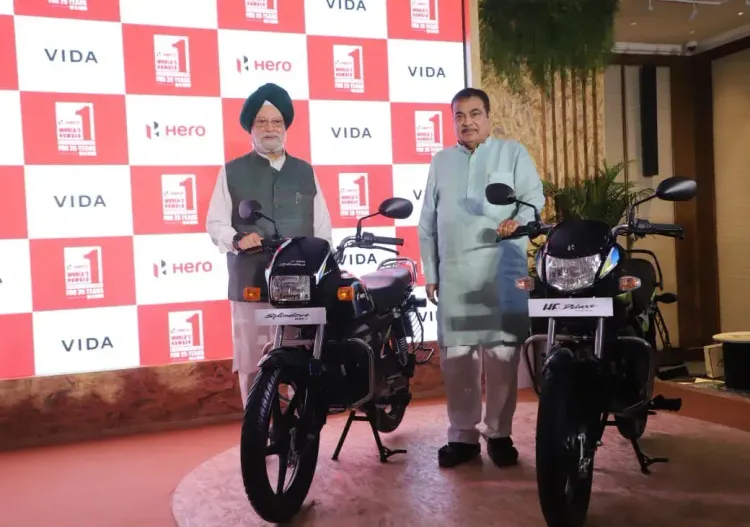
Puri, Gadkari unveil Hero flex-fuel bikes running E20-E85
Synopsis
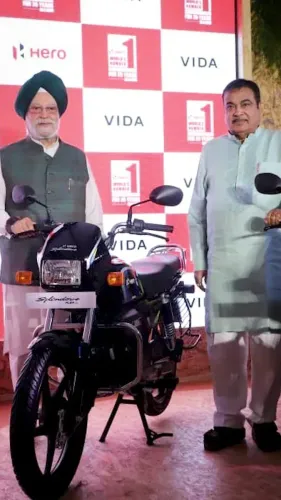
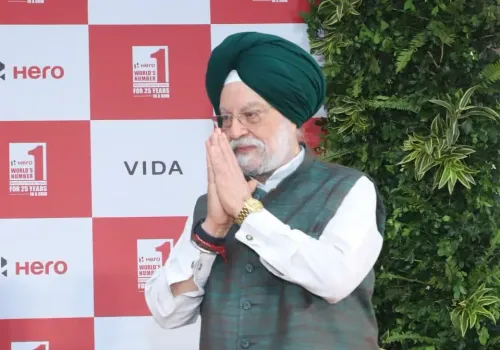
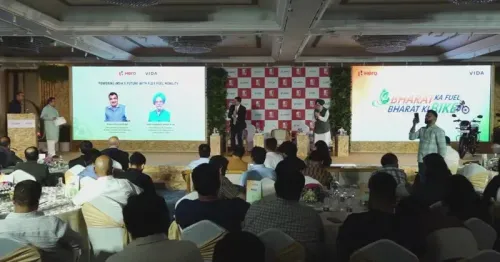
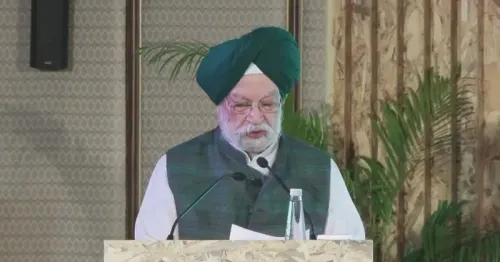
Union Petroleum Minister Hardeep Singh Puri and Union Road Transport Minister Nitin Gadkari unveiled Hero MotoCorp's Splendor+ and HF Deluxe flex-fuel motorcycles, capable of running on ethanol blends from E20 to E85. Puri called the launch a 'historic chapter' in India's energy sector and a boost to Aatmanirbhar Bharat, extending the country's ethanol blending push into the mass-market two-wheeler segment.
Key Takeaways
Hero MotoCorp's Splendor+ and HF Deluxe Flex Fuel motorcycles unveiled, running on E20 to E85 ethanol blends.
Launch jointly announced by Union Petroleum Minister Hardeep Singh Puri and Union Road Transport Minister Nitin Gadkari.
Vehicles feature upgraded fuel systems, revised ECU calibration and flex-fuel-capable components.
Move extends India's ethanol blending push into the mass-market two-wheeler segment.
Aligns with the Centre's advanced E20 blending target of 2025, set under the National Policy on Biofuels, 2018.
Aimed at cutting crude import dependence and supporting sugarcane and grain-based ethanol producers.
Union Petroleum Minister Hardeep Singh Puri, alongside Union Road Transport Minister Nitin Gadkari, unveiled India's first mass-market flex-fuel two-wheelers from Hero MotoCorp — the Splendor+ and HF Deluxe Flex Fuel — designed to run on ethanol blends ranging from E20 to E85. Announcing the launch on X, Puri described the event as the start of 'a new chapter in India's energy history'.
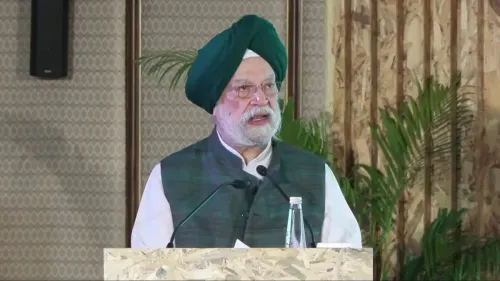
In a bilingual post, the minister wrote 'Bharat ki bike, Bharat ka eindhan' ('India's bike, India's fuel'), calling the unveiling 'a historic chapter in India's energy sector'. He said the initiative would 'not only bring a revolution in green energy in India but also strengthen self-reliance', crediting the 'visionary leadership' of Prime Minister Narendra Modi.
Context
The two motorcycles are positioned as Aatmanirbhar vehicles built with upgraded fuel systems, revised ECU calibration and flex-fuel-capable components, enabling them to combust petrol mixed with anywhere between 20 per cent and 85 per cent ethanol. Two-wheelers account for the bulk of India's personal mobility fleet, making any fuel-side shift in this segment a significant lever for the country's energy transition.
Puri framed the launch as a joint push with his 'senior cabinet colleague' Gadkari, who has been among the most vocal advocates of flex-fuel adoption within the Union government. The post tagged the Prime Minister's Office, the Ministry of Petroleum and Natural Gas, NHAI and the auto industry body SIAM.
Policy backdrop
India's ethanol push traces back to the National Policy on Biofuels, 2018, which set targets for scaling up ethanol production and blending with petrol. In 2021, the Centre advanced its E20 blending target — 20 per cent ethanol in petrol — from 2030 to 2025, accelerating supply-side investment by sugar mills and grain-based distilleries.
Subsequent statements from the Road Transport Ministry in 2022-23 flagged the introduction of flex-fuel vehicles across passenger and two-wheeler segments. The Splendor+ and HF Deluxe flex-fuel variants extend that trajectory from cars into the mass commuter motorcycle market, where price sensitivity is acute and volumes are large.
Stakeholders and impact
For Hero MotoCorp, India's largest two-wheeler manufacturer, the launch is a bid to align its commuter portfolio with the government's blending roadmap. Ethanol producers — particularly sugarcane farmers and grain-based distilleries — stand to gain from sustained offtake if flex-fuel models scale, while oil marketing companies will need to expand higher-blend dispensing infrastructure at retail outlets.
For consumers, the headline question will be running cost and mileage at higher ethanol blends, where energy density is lower than pure petrol. The economics depend on the relative pump price of ethanol-rich blends versus conventional petrol, and on long-term engine durability data that will accumulate only with on-road use.
Environmentally, higher ethanol blending is pitched as a route to lower tailpipe emissions and reduced crude-oil imports — India imports more than 85 per cent of its crude requirement, making fuel substitution a strategic as well as ecological priority.
What's next
Attention now turns to whether other two-wheeler manufacturers follow with their own flex-fuel variants, and to the pace at which oil marketing companies roll out E20-and-above dispensing across the retail network. Official progress reports on the 2025 E20 target will be the next reference point for assessing how quickly the ecosystem behind these motorcycles matures.
If adoption holds, the launch could mark the moment India's largest mobility segment began a structural pivot away from pure petrol — with implications for farm incomes, import bills and urban air quality alike.
Point of View
The government is signalling that the demand-side (vehicles) and supply-side (blending mandates, distilleries) are being sequenced together. The real test lies beyond the unveiling: pump-level availability of higher blends, consumer economics at E85, and whether rival manufacturers follow Hero into the category. Done at scale, it nudges India's energy security calculus; done in isolation, it risks becoming a showcase SKU.
NationPress
17 Oct 2026
Frequently Asked Questions
What are flex-fuel motorcycles?
Flex-fuel motorcycles are two-wheelers engineered to run on petrol blended with varying proportions of ethanol — in this case, anywhere from E20 (20 per cent ethanol) to E85 (85 per cent ethanol). They use upgraded fuel systems, revised ECU calibration and ethanol-compatible components to handle the different blends.
Which Hero MotoCorp models were launched as flex-fuel?
Hero MotoCorp launched the Splendor+ and HF Deluxe in Flex Fuel variants. Both are mass-market commuter motorcycles and have been engineered to operate on ethanol blends ranging from E20 to E85.
What is India's E20 ethanol blending target?
India's E20 target refers to mixing 20 per cent ethanol with petrol nationwide. The Centre advanced this target from 2030 to 2025 through a 2021 notification, building on the National Policy on Biofuels, 2018.
Why is the government pushing ethanol blending?
Ethanol blending is aimed at reducing India's crude-oil import dependence, lowering tailpipe emissions and creating additional demand for sugarcane and grain-based feedstocks. India imports more than 85 per cent of its crude requirement, making domestic biofuels a strategic priority.
Will flex-fuel bikes cost more to run than petrol bikes?
Running costs depend on the relative pump price of ethanol-rich blends versus conventional petrol and on mileage at higher blends, since ethanol has lower energy density than petrol. The net effect on consumers will hinge on pricing of E20-and-above fuels and long-term engine performance data.