Puri Pays Tribute to Kartar Singh Sarabha on Martyrdom Day
Synopsis
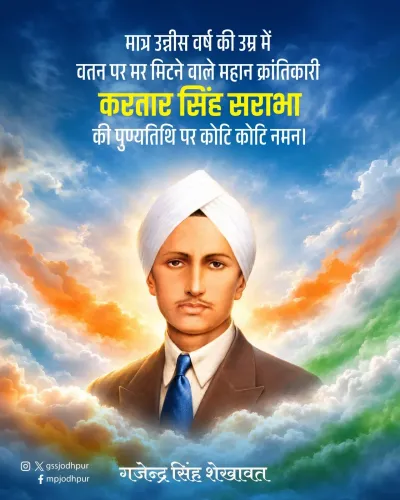
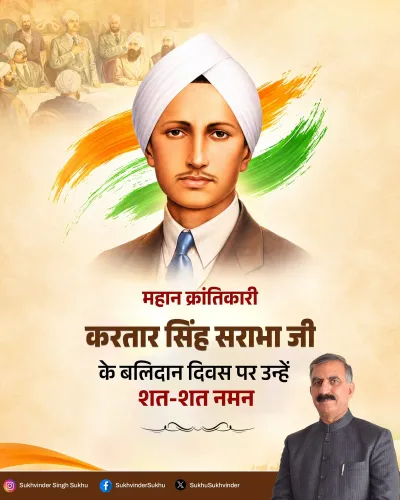
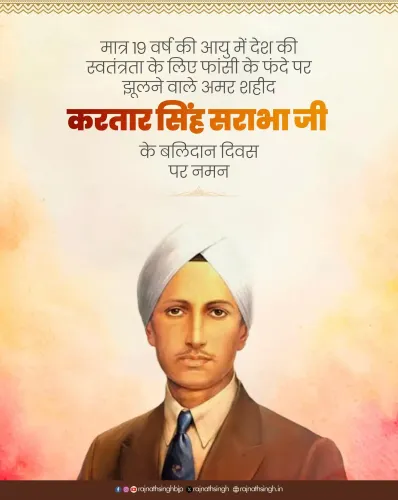
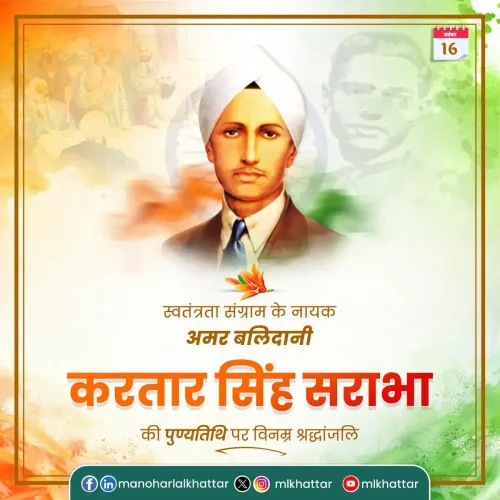
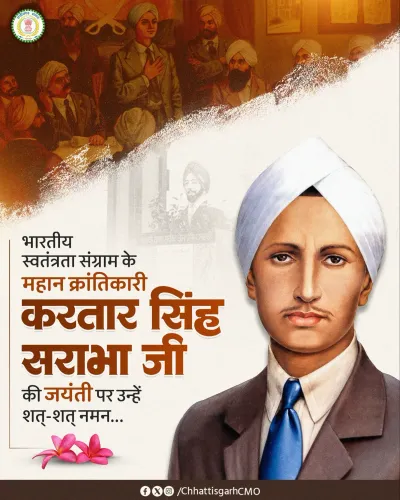
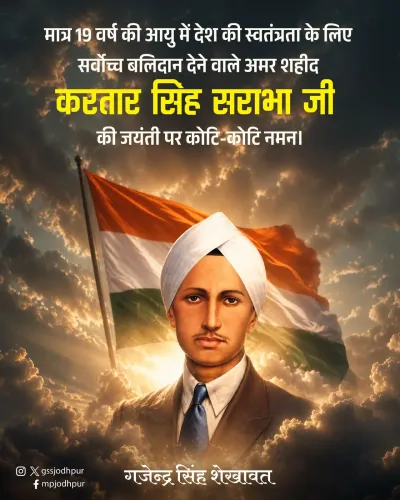
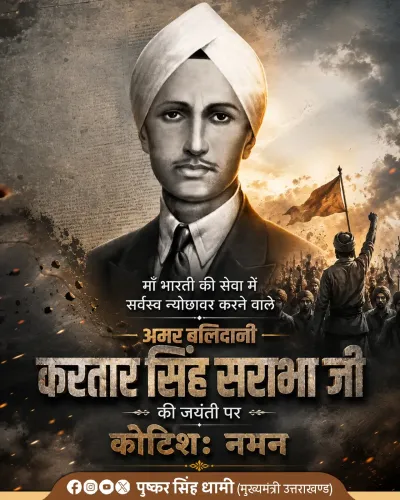
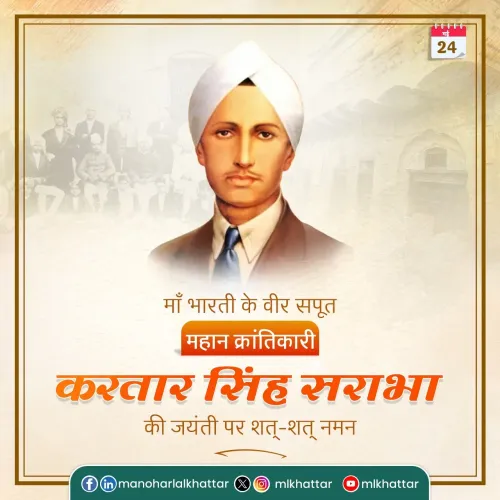
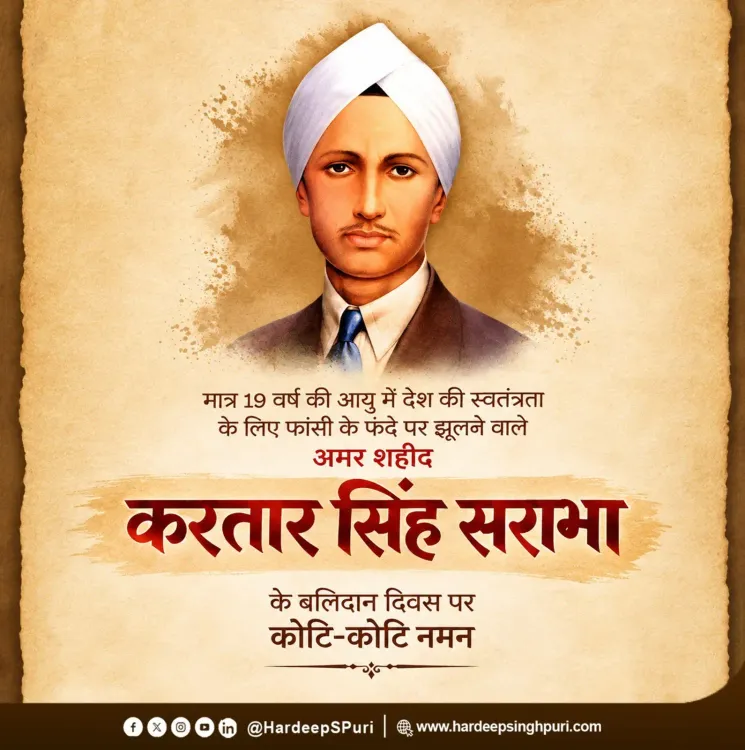
Union Petroleum Minister Hardeep Singh Puri honoured Ghadar Party revolutionary Sardar Kartar Singh Sarabha on his 111th martyrdom anniversary, saluting the 19-year-old who was hanged by British authorities at Lahore on 16 November 1915 for fighting for India's freedom.
Key Takeaways
Sardar Kartar Singh Sarabha was hanged at Lahore Central Jail on 16 November 1915 , aged just 19 .
He was a key member of the Ghadar Party , an Indian expatriate revolutionary organisation based in San Francisco .
Sarabha was involved in the planned 1915 Ghadar Mutiny against British colonial rule during World War I.
Bhagat Singh reportedly regarded Sarabha as a personal inspiration and hero.
Union Petroleum Minister Hardeep Singh Puri marked the martyrdom anniversary with a Hindi tribute on 16 November 2026 .
Annual commemorations are held in Punjab , including at Sarabha village and Lahore Central Jail memorial sites.
At just 19 years of age, Sardar Kartar Singh Sarabha walked to the gallows on 16 November 1915 — not broken, but resolute — choosing death over submission to British colonial rule. Union Petroleum Minister Hardeep Singh Puri marked the revolutionary's Shahidi Diwas on Monday, 16 November 2026, with a heartfelt tribute on X, bowing to a figure whose brief life left a permanent imprint on India's freedom struggle.
Posting in Hindi, Minister Puri wrote: 'मातृभूमि की आज़ादी के लिए मात्र 19 वर्ष की आयु में फाँसी के फंदे को गले लगाने वाले महान क्रांतिकारी अमर शहीद सरदार करतार सिंह सराभा जी के शहीदी दिवस पर उन्हें कोटि-कोटि नमन।' — 'On the martyrdom anniversary of the great revolutionary, immortal martyr Sardar Kartar Singh Sarabha, who embraced the noose at just 19 years of age for the freedom of the motherland — a million salutes to him.'Who Was Kartar Singh Sarabha — and Why Does His Story Still Reverberate?
Born in Sarabha village, Ludhiana district, Punjab, Kartar Singh joined the Ghadar Party, a revolutionary organisation founded by Indian expatriates in North America that sought to overthrow British rule by force during World War I. When the call came to return to India and trigger an armed uprising, he answered it without hesitation.
Arrested by British authorities for his role in the planned 1915 Ghadar Mutiny, he was tried, sentenced to death, and hanged at Lahore Central Jail on 16 November 1915. He was 19. His youth only sharpens the magnitude of that choice.
The Ghadar Party and the Armed Resistance India Often Forgets
The Ghadar Party — the name itself means 'rebellion' — was one of the earliest organised transnational movements against British colonialism. Headquartered in San Francisco, it galvanised Indian workers and students abroad into a disciplined anti-imperial force. Sarabha was among its youngest and most fearless cadres.
His legacy sits in a vital but sometimes under-lit corner of the independence narrative — the pre-Gandhian tradition of armed resistance. Bhagat Singh, himself one of the most iconic martyrs of the freedom movement, is said to have carried a photograph of Sarabha and held him as a personal inspiration. That lineage matters.
A Recurring Ritual With Enduring Weight
Indian political figures across the spectrum observe 16 November as an occasion to invoke Sarabha's memory — particularly in Punjab, where commemorative events are held each year. The tributes are part of a broader national practice of reclaiming pre-Gandhian revolutionary figures, ensuring that armed resistance to colonialism remains part of the official memory of independence.
Minister Puri's tribute, brief but unambiguous, adds a senior Union Cabinet voice to that chorus — a reminder that the youngest martyrs of 1915 are not footnotes. They are foundations.
Point of View
Armed-resistance figures within India's official historical memory — a discourse that has gained particular traction in recent years. Sarabha's story is especially resonant in Punjab, making the tribute doubly meaningful given the state's political weight. By invoking a 19-year-old who chose the gallows over submission, the post implicitly frames sacrifice as the bedrock of nationhood — a rhetorical move that transcends party lines but carries unmistakable cultural currency for a senior BJP leader. The choice of Hindi in a tribute to a Punjabi martyr also reflects a deliberate pan-national framing.
NationPress
16 Nov 2026
Frequently Asked Questions
Who was Sardar Kartar Singh Sarabha?
Sardar Kartar Singh Sarabha was a Punjabi revolutionary and member of the Ghadar Party who was executed by British authorities at Lahore Central Jail on 16 November 1915 at the age of 19 for his role in planning an armed uprising against colonial rule.
Why is 16 November observed as Shahidi Diwas for Sarabha?
16 November is observed as Sardar Kartar Singh Sarabha's Shahidi Diwas (Martyrdom Day) because he was hanged by the British on that date in 1915, making it an annual occasion for tributes across India, especially in Punjab.
What was the Ghadar Party?
The Ghadar Party was a revolutionary organisation founded by Indian expatriates, primarily in North America, in the early 20th century. It sought to end British rule in India through armed uprising and was headquartered in San Francisco.
What is the connection between Kartar Singh Sarabha and Bhagat Singh?
Bhagat Singh, one of India's most iconic revolutionary martyrs, is said to have regarded Sarabha as a personal inspiration and hero, reportedly carrying his photograph — underscoring Sarabha's deep influence on the next generation of freedom fighters.
Why did Hardeep Singh Puri pay tribute to Kartar Singh Sarabha?
Union Petroleum Minister Hardeep Singh Puri posted a Hindi tribute on X on 16 November 2026, marking Sarabha's martyrdom anniversary as part of a wider practice among Indian political leaders to honour pre-Gandhian revolutionary figures.