QCI-NSIC MoU: MSMEs get quality, market access boost in 5-year pact
Synopsis
India's 6.5 crore MSMEs just got a structural upgrade: QCI and NSIC have formalised a five-year MoU that links ZED quality certification directly to digital market access via ONDC and AI-enabled cataloguing — a rare instance of quality infrastructure and export promotion being bundled into a single framework, with West Bengal, the country's MSME capital, standing to gain the most.
Key Takeaways
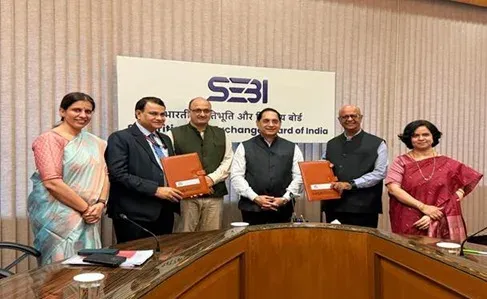
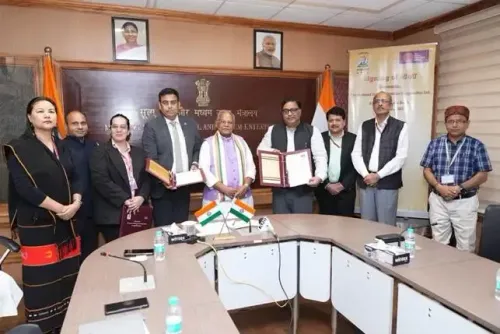
QCI and NSIC signed a five-year MoU on 9 July in Kolkata to strengthen quality and market access for Indian MSMEs.
West Bengal hosts the largest number of MSME manufacturing units in India and leads in women-led MSMEs.
India's 6.5 crore MSMEs employ 28 crore people and contribute 30% of GDP, 35.4% of manufacturing, and 45.73% of exports.
The MoU integrates ZED Certification , MSME Global Mart , ONDC onboarding, and AI-enabled cataloguing under a unified support framework.
A Joint Coordination Committee (JCC) will meet quarterly to monitor implementation over the MoU's five-year tenure.
The collaboration supports NABL accreditation for NSIC testing facilities and NABET -led capacity-building for NSIC training centres.
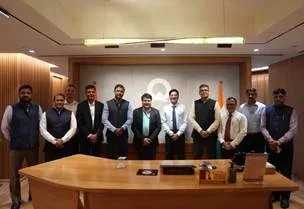
The Quality Council of India (QCI) and the National Small Industries Corporation Limited (NSIC) signed a Memorandum of Understanding (MoU) on 9 July in Kolkata, establishing a five-year collaborative framework aimed at strengthening quality standards, competitiveness, and market access for Micro, Small and Medium Enterprises (MSMEs) across India. The partnership is particularly significant for West Bengal, which hosts the largest number of MSME manufacturing units in the country and leads all states in women-led MSMEs.
What the MoU Covers
The agreement integrates several flagship national initiatives under a unified support structure. These include the MSME Sustainable (ZED) Certification Scheme, MSME Global Mart, the TEAM Initiative, and the Single Point Registration Scheme (SPRS). Together, they are designed to let MSMEs draw on the combined strengths of both organisations through a single access point.
The collaboration will also deepen the convergence between ZED Certification and NSIC's SPRS, support NABL accreditation for NSIC testing facilities, and enable NABET-led assessment, accreditation, and customised capacity-building programmes for NSIC training centres and laboratories.
Digital Market Access and AI Tools
ZED-certified MSMEs will gain enhanced access to digital commerce through MSME Global Mart, onboarding on the Open Network for Digital Commerce (ONDC) under the TEAM Initiative, AI-enabled product cataloguing, and export promotion via dedicated digital platforms. The push toward digital channels reflects a broader policy thrust to internationalise Indian small enterprises.
Scale of India's MSME Sector
India's approximately 6.5 crore MSMEs employ around 28 crore people, accounting for roughly 30% of the country's GDP, 35.4% of manufacturing output, and nearly 45.73% of total exports, according to available data. The sector's scale makes any systemic quality or market-access intervention consequential at a macroeconomic level.
What Officials Said
Subhransu Sekhar Acharya, Chairman-cum-Managing Director of NSIC, said MSMEs are central to India's journey towards Viksit Bharat 2047. 'The partnership with QCI brings together quality, market access and institutional support to create greater opportunities for MSMEs to enhance their competitiveness, expand into new markets and achieve sustainable growth,' Acharya said, adding that the collaboration would help build a stronger ecosystem empowering enterprises to compete in both domestic and global markets.
A. Raj, Senior Director and Head of the National Division for Industry Excellence (NDIE) and Chief Executive Officer of the National Board for Quality Promotion (NBQP), said the integration of ZED Certification with QCI's quality infrastructure — including NABL, NABET, and the National Accreditation Board for Certification Bodies (NABCB) — alongside NSIC's outreach mechanisms, would enhance MSME competitiveness and strengthen quality consciousness nationally.
Governance and Next Steps
QCI and NSIC will constitute a Joint Coordination Committee (JCC) comprising representatives from both organisations. The committee will convene every quarter to identify new collaboration areas, monitor progress, and guide implementation over the five-year tenure of the MoU. The partnership is aligned with the broader national vision of Viksit Bharat 2047.
Point of View
Which certified enterprises without guaranteeing market reward. The real test will be uptake: ZED adoption has historically been slow outside incentive-heavy states. With West Bengal — a state not known for aggressive MSME formalisation — identified as a primary beneficiary, the quarterly JCC reviews will need to be more than ceremonial to move the needle on the sector's persistent quality gap.
NationPress
8 Oct 2026
Frequently Asked Questions
What is the QCI-NSIC MoU signed on 9 July?
It is a five-year Memorandum of Understanding signed between the Quality Council of India and the National Small Industries Corporation Limited to build a collaborative ecosystem for India's MSMEs. The pact integrates ZED Certification, MSME Global Mart, ONDC onboarding, and NSIC's Single Point Registration Scheme under a unified framework.
How does this MoU benefit MSMEs?
MSMEs that obtain ZED Certification will gain access to digital commerce through MSME Global Mart, AI-enabled product cataloguing, ONDC onboarding under the TEAM Initiative, and export promotion via dedicated digital platforms. The pact also expands testing, accreditation, and capacity-building support through NABL and NABET.
Why is West Bengal highlighted in this partnership?
West Bengal has the largest number of MSME manufacturing units of any state in India and also leads the country in women-led MSMEs, making it a primary beneficiary of any national MSME quality or market-access initiative.
What is ZED Certification and why does it matter?
Zero Defect Zero Effect (ZED) Certification is a government scheme that assesses MSMEs on quality and environmental sustainability standards. Under this MoU, ZED-certified enterprises will be directly linked to digital market access and export promotion tools, giving the certification tangible commercial value.
How will the MoU be governed and monitored?
QCI and NSIC will form a Joint Coordination Committee comprising representatives from both organisations, which will meet every quarter to review progress, identify new collaboration areas, and guide implementation over the five-year tenure of the agreement.