Rahul Gandhi Slams Modi Over NEET, CBSE, SSC, CUET Failures

Synopsis
Congress leader Rahul Gandhi on May 30, 2026, accused the Modi government of destroying India's education system, citing failures across NEET, CBSE, SSC and CUET — four national exams affecting an estimated one crore students — and warned that the affected generation would hold the government accountable.
Key Takeaways
Rahul Gandhi posted on May 30, 2026 , targeting the Modi government over the conduct of four major national exams: NEET, CBSE, SSC , and CUET .
Gandhi alleged that not one of the four examinations was conducted honestly, affecting an estimated one crore students.
The National Testing Agency (NTA) , established in 2017 , is the central body responsible for administering NEET and CUET .
CUET was introduced in 2022 for undergraduate admissions to central universities under the National Education Policy 2020 framework.
Gandhi warned that the generation whose futures are being disrupted will hold the government politically accountable.
The Congress is expected to press the issue in Parliament, with scrutiny of the Ministry of Education and NTA likely to intensify in the 2026-27 session.
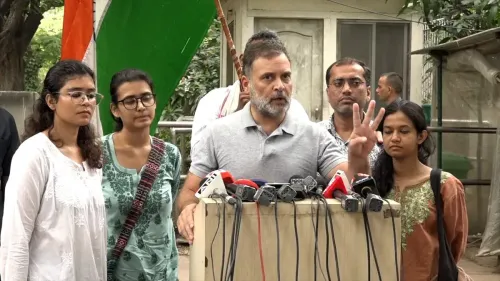
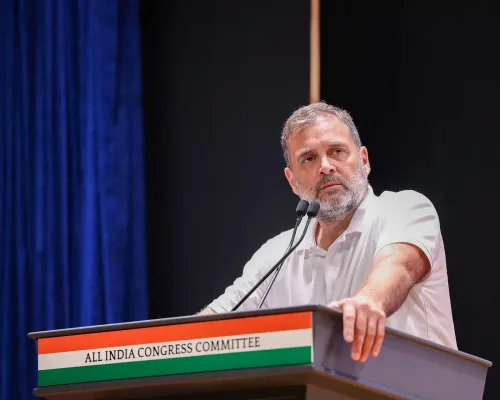
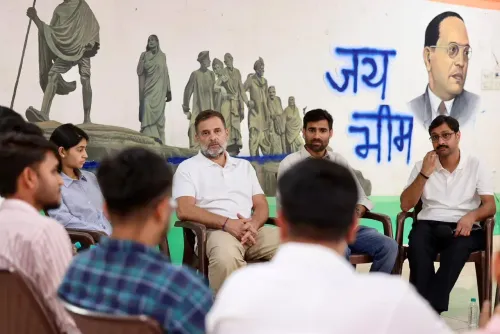
Congress leader Rahul Gandhi, Leader of the Opposition in the Lok Sabha, launched a sharp attack on the Narendra Modi government on Saturday, May 30, 2026, accusing it of destroying India's education system after fresh controversy erupted around the Common University Entrance Test (CUET).
Context
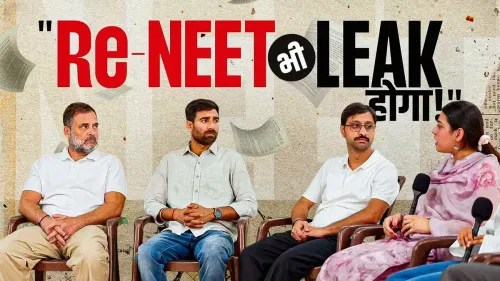
Gandhi's post listed four major national examinations — NEET, CBSE, SSC, and CUET — and alleged that not one had been conducted with integrity. In Hindi, he wrote: 'चार परीक्षाएँ। एक करोड़ बच्चे। एक भी ईमानदारी से नहीं हो पाई।' ['Four exams. One crore children. Not one conducted honestly.'] The post drew immediate attention given the scale of students affected across these centralised testing systems.
Gandhi directly named the Prime Minister, stating: 'मोदी जी ने पूरी शिक्षा व्यवस्था तबाह कर दी है' ['Modi ji has destroyed the entire education system'], and closed with a pointed warning to the government: 'The generation whose future you are ruining — that very generation will hold you accountable.'
Policy Backdrop
The examinations Gandhi cited are all centrally administered. NEET became the sole medical entrance examination across India in 2016. The National Testing Agency (NTA), an autonomous body under the Ministry of Education, was established in 2017 to consolidate the conduct of major national entrance tests. CUET was introduced in 2022 to streamline undergraduate admissions across central universities.
The National Education Policy (NEP) 2020, approved by the Union Cabinet in July 2020, accelerated this centralisation drive, emphasising standardised testing and curricular flexibility. The consolidation was presented as a means to reduce state-level variation and ensure uniform opportunity for aspirants across the country.
However, the centralisation of examinations under a single national agency has been accompanied by recurring concerns around paper security, logistics, and administrative capacity in high-volume tests — concerns that opposition parties have consistently raised in Parliament and in public discourse.
Stakeholders and Impact
The examinations in question collectively affect an estimated one crore students annually, spanning aspirants for medical seats, central government jobs, and undergraduate admissions to central universities. Students and parents have repeatedly flagged anxieties around exam scheduling, alleged paper leaks, and the pressure of a single high-stakes national test determining career trajectories.
Gandhi's post channels a broader sentiment among youth and their families who see repeated disruptions in the examination calendar as a systemic failure rather than isolated incidents. The Opposition has used such episodes to question the governance capacity of the NTA and, by extension, the Ministry of Education under the current dispensation.
What's Next
Attention will now turn to the government's response to the latest CUET controversy and whether the Ministry of Education or the NTA announces any inquiry, procedural overhaul, or scheduling changes for the 2026-27 examination cycle. Parliamentary scrutiny — through questions, committee hearings, or adjournment motions — is likely to intensify in the coming weeks. Gandhi's warning that the affected generation 'will hold you accountable' signals that the Congress intends to keep education integrity as a sustained political pressure point ahead of future electoral cycles.
Point of View
CBSE, SSC, and now CUET — into a single, politically potent narrative of systemic state failure rather than isolated administrative lapses. By invoking 'one crore children' and the 'Vishwaguru' aspiration in the same breath, he frames the government's credibility gap between its global ambitions and its domestic delivery record. The closing line — that the affected generation will seek accountability — is a deliberate signal that the Congress sees youth disillusionment over examination failures as a durable electoral wedge. This approach mirrors a broader Opposition strategy of connecting governance failures in education and employment to a generational contract the current government is accused of breaking.
NationPress
14 Oct 2026
Frequently Asked Questions
What exams did Rahul Gandhi criticise in his May 2026 post?
Rahul Gandhi criticised four major national examinations: NEET, CBSE, SSC, and CUET, alleging that none of them were conducted with integrity and that the failures affected an estimated one crore students.
What is CUET and why is it controversial?
CUET, or the Common University Entrance Test, was introduced in 2022 for undergraduate admissions to central universities as part of the National Education Policy 2020 framework. It has faced recurring criticism over administrative challenges, scheduling disruptions, and concerns about paper security since its launch.
What is the National Testing Agency (NTA)?
The National Testing Agency is an autonomous body under India's Ministry of Education, established in 2017 to centrally administer major national entrance examinations including NEET and CUET.
What did Rahul Gandhi say about PM Modi and education?
Gandhi directly accused Prime Minister Narendra Modi of destroying India's entire education system, stating in Hindi that 'Modi ji has destroyed the entire education system' and warning that the generation whose future is being ruined will hold the government accountable.
What action is expected after Gandhi's criticism of NEET and CUET?
Political observers expect increased parliamentary scrutiny of the Ministry of Education and the NTA, with possible inquiries or procedural changes for the 2026-27 examination cycle likely to be demanded by the Opposition.