Rahul Gandhi Slams CBSE Re-evaluation Fee Structure
Synopsis
Congress leader Rahul Gandhi on June 1, 2026, attacked CBSE's fee structure for re-evaluation services, saying students pay up to ₹2,000 — including ₹100 per subject for a scan copy and ₹25 per question for re-evaluation — to correct the board's own marking errors.
Key Takeaways
Rahul Gandhi posted on June 1, 2026 , accusing CBSE of charging students to fix the board's own marking mistakes.
The fee breakdown cited: ₹100 per subject for a digital scan copy, ₹100 per paper for re-totalling, and ₹25 per question for re-evaluation.
Gandhi stated a student could pay up to ₹2,000 in total to get their answer sheet correctly assessed.
CBSE conducts board exams for over 30 lakh students annually across Class 10 and Class 12 .
The fee-based post-result grievance system has been in place since at least the mid-2000s and is governed by CBSE's examination bye-laws.
The post is likely to prompt parliamentary questions on student grievance redressal mechanisms ahead of the next board cycle.
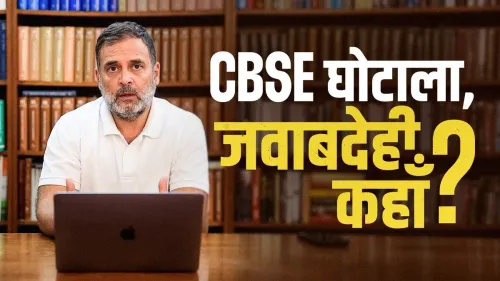
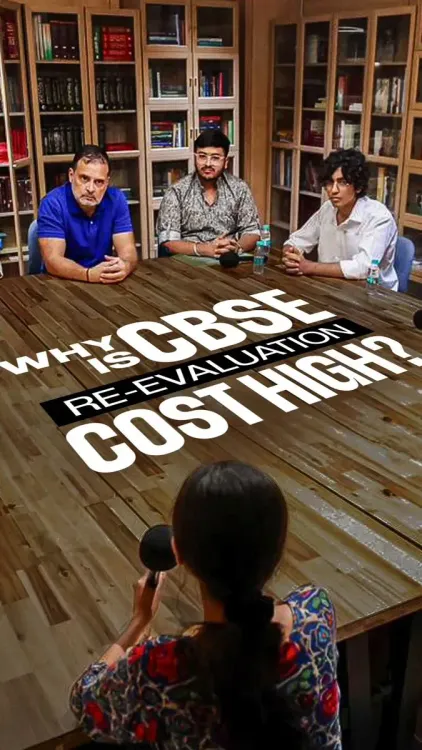
Congress leader Rahul Gandhi on Monday, June 1, 2026, sharply criticised the Central Board of Secondary Education (CBSE) over the fees it charges students seeking re-evaluation of their answer sheets, calling the board's officials 'pickpockets.' The Leader of the Opposition in Lok Sabha posted a detailed breakdown of the charges on X, arguing that students are being made to pay for the board's own errors.
In his post, Gandhi wrote: 'जेबकतरों से सावधान - आज वो CBSE के अंदर बैठे हैं' ('Beware of pickpockets — today they are sitting inside CBSE'). He itemised the fee structure as follows: a digital scan copy costs ₹100 per subject, re-totalling costs ₹100 per paper, and re-evaluation costs ₹25 per question. Gandhi argued that a student could end up paying up to ₹2,000 simply to get their own answer sheet correctly checked.
Context
CBSE is the national-level autonomous examination body under the Ministry of Education that conducts Class 10 and Class 12 board examinations for millions of students across India every year. After results are declared, students who believe their marks are incorrect can apply for a photocopy of their answer sheet, re-totalling of marks, or a full re-evaluation — each of which attracts separate fees.
Gandhi's post comes in the wake of board results season, when large numbers of students and parents routinely raise grievances about marking discrepancies. His framing — that students are billed for errors the board itself commits — has resonated widely on social media.
Policy Backdrop
CBSE has operated a fee-based post-result grievance system since at least the mid-2000s, with charges for photocopies, re-totalling, and re-evaluation structured to manage the volume of applications. The board's examination bye-laws govern these charges and are revised periodically through official circulars.
Critics have long argued that the cumulative cost of availing all three services — photocopy, re-totalling, and re-evaluation — can be prohibitive for students from lower-income families, effectively creating a financial barrier to accessing a fair correction process. The board's examinations affect over 30 lakh students each year, making the reach of any such fee structure significant.
Stakeholders and Impact
The primary stakeholders are CBSE students and their parents, particularly those appearing in Class 10 and Class 12 board examinations, for whom a single mark can determine college admissions and career trajectories. For families in smaller towns and rural areas, an outlay of ₹2,000 for re-evaluation services represents a meaningful financial burden.
Opposition leaders, including Gandhi, have repeatedly framed such charges as barriers to transparency in a high-stakes system. The post fits into a broader pattern of political scrutiny directed at examination boards over result accuracy and the equitable treatment of students seeking redress.
What's Next
CBSE typically revises its examination bye-laws and fee schedules ahead of each new board cycle through annual circulars. Parliamentary questions on student grievance redressal mechanisms have been raised in previous sessions and are likely to follow Gandhi's public intervention.
Whether the Ministry of Education responds to the political pressure by reviewing the fee structure — or whether CBSE issues a clarification — will be closely watched by student groups and parents ahead of the next examination season.
Point of View
He shifts the narrative from routine administrative charges to a question of moral accountability — a framing that tends to travel fast on social media. The post also fits a longer arc of opposition scrutiny directed at autonomous bodies under the Ministry of Education, signalling that education governance will remain a live political battleground. Whether it produces policy movement depends on whether the government chooses to engage or deflect ahead of the next examination cycle.
NationPress
15 Oct 2026
Frequently Asked Questions
What fees does CBSE charge for re-evaluation of answer sheets?
According to the fee structure cited by Rahul Gandhi, CBSE charges ₹100 per subject for a digital scan copy of the answer sheet, ₹100 per paper for re-totalling, and ₹25 per question for re-evaluation. The cumulative cost can reach up to ₹2,000 for a student seeking all three services.
Why did Rahul Gandhi criticise CBSE on June 1, 2026?
Rahul Gandhi criticised CBSE for charging students fees to verify or correct their own answer sheets, arguing that students should not have to pay when the board itself makes marking errors. He called the practice exploitative and compared CBSE officials to pickpockets.
Can a CBSE student get their answer sheet re-evaluated for free?
No. CBSE's fee-based grievance system requires students to pay separately for a photocopy of their answer sheet, re-totalling of marks, and re-evaluation — each attracting distinct charges as outlined in the board's examination bye-laws.
How many students appear in CBSE board exams each year?
CBSE conducts Class 10 and Class 12 board examinations for over 30 lakh students annually across India, making the reach of its fee structure for post-result services substantial.
What happens after Rahul Gandhi raises an issue about CBSE fees?
Such public interventions by opposition leaders typically lead to parliamentary questions on student grievance redressal, and may prompt the Ministry of Education or CBSE to review or clarify its fee schedule ahead of the next board examination cycle.