Rajasthan CMO: Rs 5/litre milk subsidy for dairy farmers
Synopsis
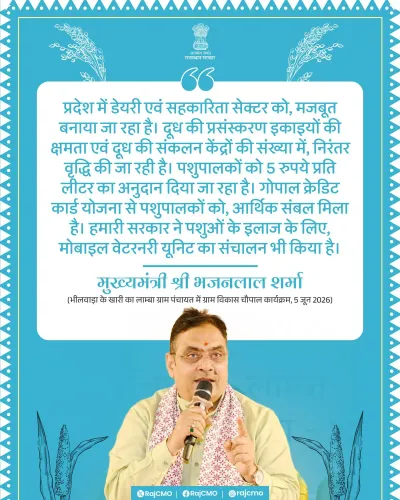
The Rajasthan CMO announced that the state government is providing Rs 5 per litre as a subsidy to livestock keepers through the cooperative dairy network, reaffirming CM Bhajan Lal Sharma's administration's direct income-support push for dairy farmers.
Key Takeaways
The Rajasthan state government is providing a subsidy of Rs 5 per litre of milk to livestock keepers.
The benefit is channelled through the dairy cooperative network , primarily the RCDF (Saras) system.
The announcement was made by the Chief Minister's Office of Rajasthan on 18 July 2026 , tagging CM Bhajan Lal Sharma .
The subsidy is part of a broader livestock development package that includes breed improvement, fodder support, and insurance schemes.
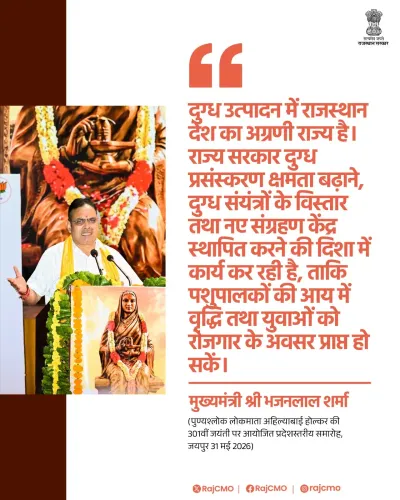
Rajasthan is one of India's largest livestock-holding states, making dairy welfare a high-impact policy lever for rural incomes.
State budget allocations for 2026-27 and any revision to the per-litre rate will be key indicators of the programme's future scale.
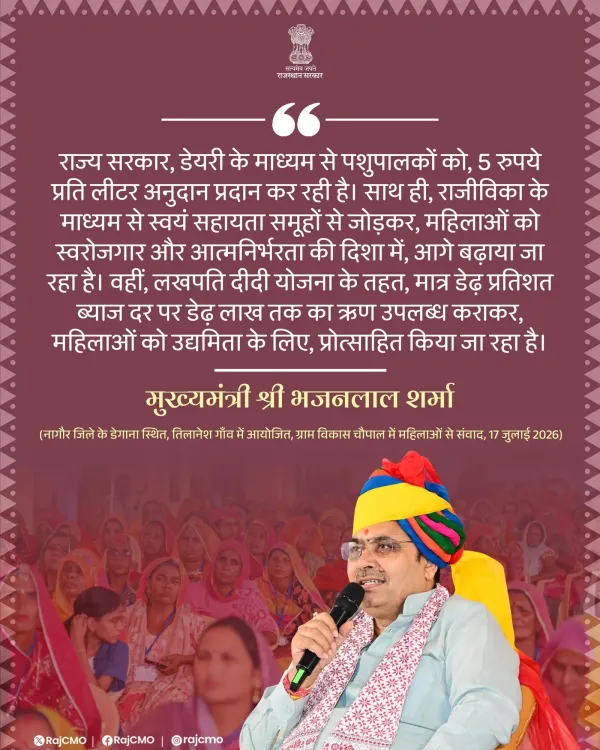
The Chief Minister's Office of Rajasthan announced on Saturday, 18 July 2026 that the state government is providing a subsidy of Rs 5 per litre to livestock keepers through the dairy cooperative network, tagging Chief Minister Bhajan Lal Sharma in the post.
The post, shared under the hashtag #आपणो_अग्रणी_राजस्थान ('Our Leading Rajasthan'), states: 'The state government is providing a grant of Rs 5 per litre to livestock keepers through the dairy.' The announcement reaffirms a direct income-support measure channelled through the cooperative dairy infrastructure.
Context
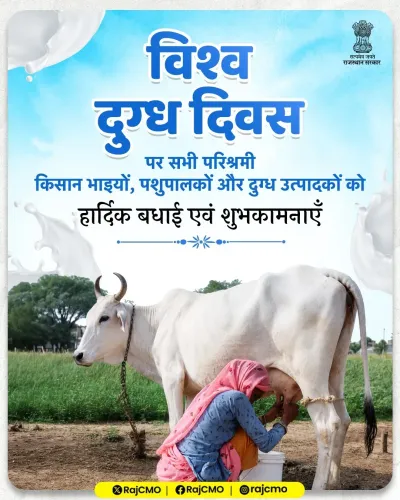
Rajasthan is among India's largest livestock-holding states, with a significant share of rural households dependent on animal husbandry for supplementary income. Milk production and its pricing directly affect the livelihoods of millions of dairy farmers and livestock keepers across the state's arid and semi-arid districts.
The per-litre subsidy is routed through the cooperative dairy system, most prominently the Rajasthan Cooperative Dairy Federation (RCDF), which operates under the well-known Saras brand. This channel ensures that the benefit reaches farmers who are registered members of primary dairy cooperatives.
Policy Backdrop
Successive Rajasthan governments have used targeted per-litre milk incentives as a tool to stabilise farmer incomes, boost cooperative procurement volumes, and provide a competitive counterweight to private dairy players. The Bhajan Lal Sharma-led BJP government, in office since December 2023, has continued and reinforced this approach as part of its broader livestock development agenda.
Post-2023 state budget and agriculture policy documents emphasised direct support to livestock rearers through per-litre incentives routed via dairy cooperatives. This subsidy sits alongside complementary measures such as breed improvement programmes, fodder support, and livestock insurance schemes that together form the state's animal husbandry policy package.
Stakeholders and Impact
The primary beneficiaries are dairy farmers and livestock keepers — a constituency spread across both rural villages and peri-urban areas of Rajasthan. For small and marginal farmers, a per-litre subsidy of Rs 5 can meaningfully supplement household income, particularly during lean seasons when milk yields are lower and market prices volatile.
The cooperative dairy route also benefits the RCDF by incentivising farmers to pour milk into the cooperative system rather than selling to private aggregators at fluctuating rates, thereby strengthening procurement volumes and the Saras supply chain.
What's Next
Attention will now turn to the state budget allocations for 2026-27 and any revisions to the per-litre subsidy rate or changes in eligibility criteria that may be announced in the upcoming assembly session. Observers will watch whether the government expands coverage to non-cooperative farmers or links the subsidy to quality-based pricing benchmarks.
The sustained emphasis on dairy welfare signals that livestock support will remain a central plank of the Rajasthan government's rural economy strategy in the near term.
Point of View
Such messaging also serves to pre-empt opposition narratives around rural distress in a state where livestock rearing is a critical secondary income source. The broader pattern across Indian states suggests that per-litre milk incentives, while fiscally modest in isolation, carry outsized political resonance in agrarian belts.
NationPress
18 Jul 2026
Frequently Asked Questions
What is the Rajasthan government's milk subsidy for dairy farmers?
The Rajasthan state government is providing a subsidy of Rs 5 per litre of milk to livestock keepers and dairy farmers, channelled through the cooperative dairy network.
Who benefits from the Rs 5 per litre milk subsidy in Rajasthan?
Livestock keepers and dairy farmers registered with primary dairy cooperatives in Rajasthan are the primary beneficiaries of the Rs 5 per litre milk subsidy.
How is the Rajasthan dairy subsidy paid to farmers?
The subsidy is routed through the cooperative dairy system, primarily the Rajasthan Cooperative Dairy Federation (RCDF), which operates the Saras brand, ensuring registered cooperative members receive the benefit.
What is Bhajan Lal Sharma's policy for dairy farmers in Rajasthan?
Under CM Bhajan Lal Sharma, the Rajasthan government has continued a per-litre milk subsidy of Rs 5 for dairy farmers, alongside broader livestock support measures including breed improvement and fodder assistance.
What is the Saras dairy cooperative in Rajasthan?
Saras is the consumer brand of the Rajasthan Cooperative Dairy Federation (RCDF), which procures milk from primary dairy cooperatives across the state and is the channel through which the government's per-litre milk subsidy is delivered to farmers.