Rajasthan-Haryana sign Yamuna water MoA, ending 30-year deadlock

Synopsis
Thirty years after it was signed, the 1994 Yamuna water-sharing agreement is finally being acted upon — with Rajasthan and Haryana inking an MoA on 29 June under Amit Shah's watch. The deal unlocks 1,917 cusecs of Yamuna water for Rajasthan's parched Shekhawati belt, backed by a 3.6-metre pipeline stretching from Hathnikund to Churu. The real test now is execution.
Key Takeaways
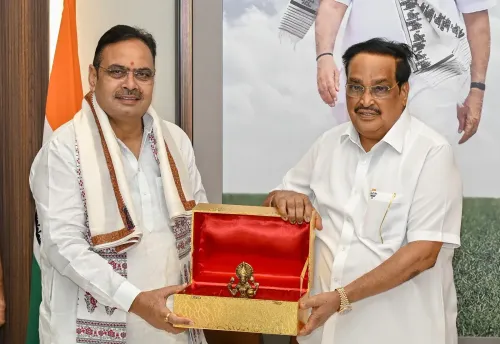
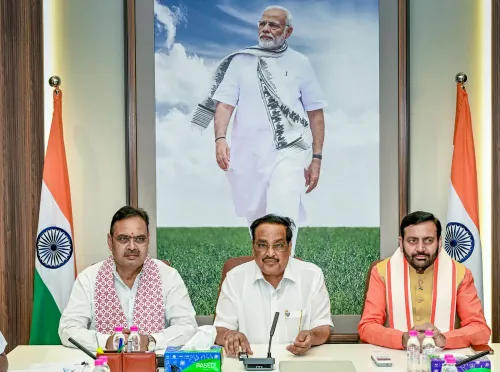
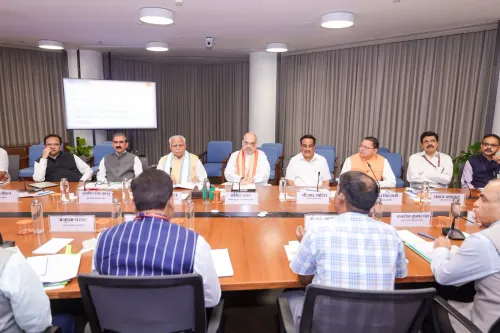
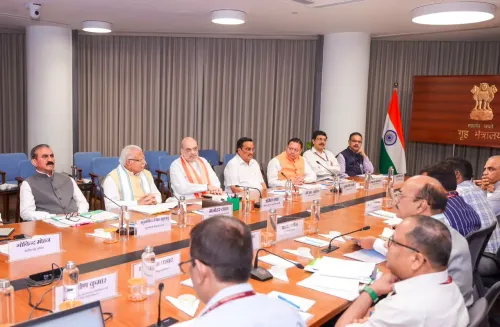
Rajasthan and Haryana signed a Yamuna water-sharing MoA on 29 June 2025 at Kartavya Bhawan-3, New Delhi , in the presence of Home Minister Amit Shah .
The pact implements the original 1994 Yamuna water-sharing agreement , ending a 30-year deadlock.
Rajasthan will receive 1,917 cusecs of Yamuna water, benefiting the Shekhawati districts of Sikar , Churu , and Jhunjhunu .
Three pipelines of 3.6 metres diameter will carry water from Hathnikund Barrage to Hashyawas reservoir via a hybrid gravity-pump system.
A Special Purpose Vehicle (SPV) — not a joint board — will implement, operate, and maintain the project.
Land acquisition and tendering will follow formal approval; Rajasthan will bear the primary project cost, with Central funding to be sought.
Rajasthan and Haryana signed a Memorandum of Agreement (MoA) on Monday, 29 June to implement the long-pending 1994 Yamuna water-sharing agreement, ending a three-decade deadlock in the presence of Union Home Minister Amit Shah at Kartavya Bhawan-3, New Delhi. The pact will channel 1,917 cusecs of Yamuna water to Rajasthan's water-scarce Shekhawati region, covering the districts of Sikar, Churu, and Jhunjhunu.
What the Agreement Covers
Under the framework finalised during a two-hour marathon session at Bikaner House on Sunday, Haryana will draw water from several designated intake points — including 10 cusecs from Danoda Kalan, 80 cusecs from Sarsaud Distributary near Nayagaon, 70 cusecs from Hindwan on Chaudhary Minor, 20 cusecs from Pattan on Sarsana Minor, two cusecs from Sega Narar, 43 cusecs from Peoda near Kaithal, and 41.83 cusecs from Chandna-Manas Road near Kaithal. Haryana will also have access to one of three reservoirs at Hashyawas as required.
Three pipelines, each 3.6 metres in diameter, will carry water from Hathnikund Barrage to the Hashyawas reservoir in Churu district through a hybrid pipeline-gravity system. Since Rajgarh in Churu lies nearly 110 metres below Hathnikund, gravity will drive flow for much of the route, with pumping stations installed to maintain supply during lean periods. The pipeline corridor will pass through five Haryana districts: Yamunanagar, Kurukshetra, Kaithal, Jind, and Hisar.
Key Officials and Signatories
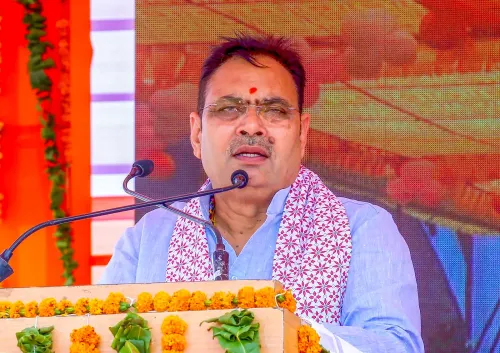
The signing ceremony was attended by Rajasthan Chief Minister Bhajanlal Sharma, who departed Jaipur for Delhi at 8:30 am, and Haryana Chief Minister Nayab Singh Saini, alongside Union Jal Shakti Minister C.R. Patil, the Union Home Secretary, and senior officials from both state governments. Representing Rajasthan in Sunday's preparatory meeting were Chief Secretary V. Srinivas, Additional Chief Secretary Abhay Kumar, and Water Resources Department Chief Engineer Bhuvan Bhaskar. Haryana's delegation comprised Additional Chief Secretary Anurag Agarwal and Chief Engineer Virendra Singh, with Chief Secretary Anurag Rastogi joining via video conferencing.
Implementation Structure and Financing
Instead of a joint management board, both states have agreed to establish a Special Purpose Vehicle (SPV) to implement, operate, and maintain the project — a structure that officials say offers greater operational flexibility. The SPV's detailed framework will be finalised in due course. The Rajasthan government will bear the primary financial burden of the project, though efforts will be made to secure Central government assistance as well.
Notably, the same pipeline network is expected to later facilitate transportation of Rajasthan's allocated water from the future Kishau, Lakhwar, and Renukaji dam projects, giving the infrastructure long-term strategic value beyond the current agreement.
Background and What Comes Next
The original 1994 Yamuna water-sharing agreement had remained unimplemented for over 30 years, with Haryana at one point seeking a revision of allocations given changed requirements. Both states have agreed, for now, to proceed on the basis of the original pact. This comes amid the Centre's broader push to resolve interstate water disputes that have historically stalled infrastructure development across river-basin states.
Following formal approval, land acquisition along the pipeline corridor will commence, with construction to begin after tenders are floated and work orders issued. The project promises to transform drinking water and irrigation access for millions in one of Rajasthan's most water-stressed sub-regions.
Point of View
But the harder work starts now. Implementing a pipeline across five Haryana districts — requiring land acquisition, tendering, and SPV formation — has derailed similar inter-state water projects before. Haryana's willingness to proceed on 1994 allocations, despite flagging changed requirements, suggests political pressure from the Centre was decisive; whether that pressure sustains through the construction phase is the real question. For Rajasthan's Shekhawati belt, which has faced chronic water scarcity for generations, this agreement is overdue — but the gap between signing and water-in-tap has historically been wide.
NationPress
29 Jun 2026
Frequently Asked Questions
What is the Rajasthan-Haryana Yamuna water-sharing MoA signed on 29 June?
It is a Memorandum of Agreement signed on 29 June 2025 to implement the 1994 Yamuna water-sharing agreement, under which Rajasthan will receive 1,917 cusecs of Yamuna water for irrigation and drinking use in the Shekhawati region's Sikar, Churu, and Jhunjhunu districts. The signing took place in New Delhi in the presence of Union Home Minister Amit Shah.
Why had the 1994 Yamuna water agreement remained unimplemented for 30 years?
The agreement had been stuck in a three-decade deadlock due to unresolved differences between Rajasthan and Haryana over implementation details and, more recently, Haryana's push to revisit water allocations given changed requirements. Both states finally agreed to proceed on the original 1994 terms following a two-hour officials-level meeting at Bikaner House on Sunday, 28 June.
How will water be transported from Hathnikund to Rajasthan's Shekhawati region?
Three pipelines, each 3.6 metres in diameter, will carry water from Hathnikund Barrage to the Hashyawas reservoir in Churu district. Since Rajgarh in Churu lies nearly 110 metres below Hathnikund, gravity will drive flow for much of the route, with pumping stations installed to maintain supply during low-flow periods.
Who will manage and fund the Yamuna Water Project?
A Special Purpose Vehicle (SPV) — rather than a joint management board — will implement, operate, and maintain the project. The Rajasthan government will bear the primary financial burden, while both states will also seek financial assistance from the Central government.
What happens next after the MoA is signed?
Land acquisition along the pipeline corridor — passing through Yamunanagar, Kurukshetra, Kaithal, Jind, and Hisar in Haryana — will begin following formal approval. Construction will commence after tenders are floated and work orders issued. The SPV's operational framework will also be finalised in due course.