PMK's Ramadoss demands urgent fix for Tamil Nadu's public healthcare staffing crisis
Synopsis
PMK's Dr Ramadoss has put Tamil Nadu's public healthcare system on notice: no new doctor posts since 2015, patient numbers tripled post-COVID, and new hospitals staffed by cannibalising existing facilities. His list of demands — from pay parity to 24/7 diagnostics — frames a structural crisis that infrastructure spending alone cannot fix.
Key Takeaways
Ramadoss on 7 June demanded urgent steps to address a staffing crisis in Tamil Nadu government hospitals.
No significant new government doctor posts have been created since 2015 , despite a post-COVID surge in patient numbers.
Patient footfall at government hospitals has reportedly more than tripled in recent years.
Tamil Nadu needs at least twice its current doctor, nurse, and paramedical strength under IPHS norms, according to Ramadoss.
New hospitals including Kalaignar Centenary Super Speciality Hospital in Guindy are being staffed by transfers, not new appointments.
Demands include revision of Government Order No.
354 , pay parity with Central government doctors, and round-the-clock diagnostic services in district hospitals.
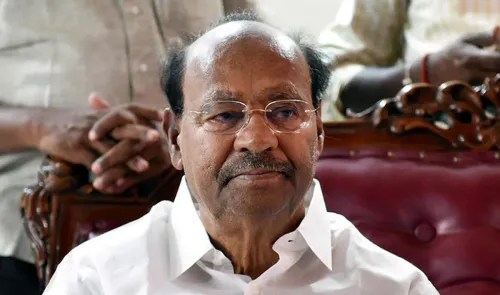
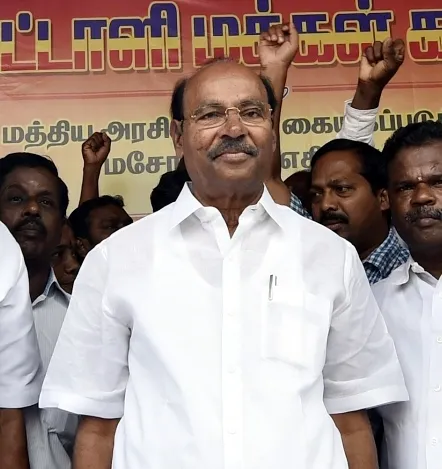
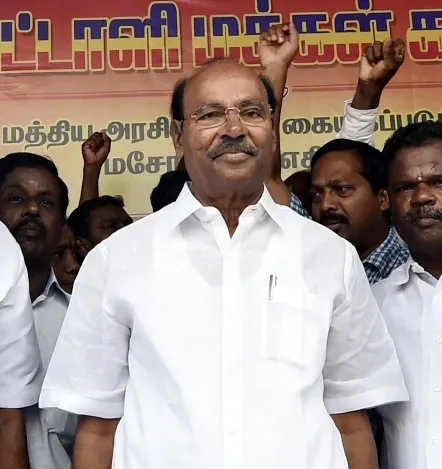
Pattali Makkal Katchi (PMK) founder Dr S. Ramadoss on Sunday, 7 June urged the Tamil Nadu government to immediately address a deepening staffing crisis in state-run hospitals, warning that manpower development has failed to keep pace with a decade of infrastructure expansion. The call comes amid reports that patient footfall at government hospitals has more than tripled in recent years, placing severe strain on existing medical personnel.
The Staffing Gap
According to Dr Ramadoss, no significant number of new government doctor posts has been created since 2015, even as the COVID-19 pandemic dramatically accelerated demand for public healthcare. Citing the Indian Public Health Standards (IPHS), he argued that Tamil Nadu currently needs at least twice its present strength of doctors, nurses, and paramedical staff to meet effective healthcare delivery norms.
He pointed out that newly commissioned facilities — including the Kalaignar Centenary Super Speciality Hospital in Guindy, the Periyar Government Hospital in Kolathur, and recently developed hospitals in Vellore and Salem — are being staffed largely by transferring personnel from other institutions rather than by sanctioning dedicated new posts. This, he argued, merely redistributes an existing shortage rather than resolving it.
Key Demands from PMK
Dr Ramadoss outlined a broad set of demands for the state government. He called for a revision of Government Order No. 354 and demanded pay parity for state government doctors with their Central government counterparts, arguing that better salaries and clearer career progression would improve both efficiency and morale.
He also sought full implementation of the 50 per cent reservation for Tamil Nadu government doctors in DM and MCh super-speciality courses, expansion of nursing positions, regularisation of contract nurses, and the creation of permanent posts for hospital support staff in place of outsourced arrangements.
Infrastructure and Quality Demands
Beyond staffing, the PMK leader demanded round-the-clock X-ray services in district hospitals, expanded CT scan and MRI facilities, early appointment of health inspectors, and stricter quality control of medicines and medical supplies. He also called for the formation of dedicated management committees to oversee infrastructure development and quality assurance across public health institutions.
Broader Context
Tamil Nadu has long been regarded as one of India's better-performing states on health indicators, yet critics argue that infrastructure investment has consistently outpaced human resource planning. This is not the first time Dr Ramadoss has raised the issue — the PMK has repeatedly flagged the doctor-to-patient ratio in government hospitals as a structural concern. The post-pandemic surge in outpatient numbers has, according to health policy observers, exposed the limits of a system that expanded buildings without proportionately expanding its workforce.
With assembly elections on the horizon and healthcare remaining a politically sensitive issue in Tamil Nadu, the government's response to these demands will be closely watched by both medical professionals and voters.
Point of View
And one that the post-pandemic patient surge has made untenable. Ramadoss's demands are not new; what is new is the scale of the gap. Transferring staff from one facility to another is a zero-sum fix that masks the real number: Tamil Nadu is likely running at half the IPHS-mandated strength. Until the state treats human resource planning as seriously as it treats capital expenditure, every new hospital is, in effect, an underfunded promise.
NationPress
19 Sept 2026
Frequently Asked Questions
Why is PMK's Dr Ramadoss demanding healthcare reforms in Tamil Nadu?
Dr Ramadoss argues that Tamil Nadu's public hospitals face a severe staffing shortage, with no significant new doctor posts created since 2015 even as patient numbers have more than tripled. He says the state needs at least twice its current medical workforce to meet Indian Public Health Standards.
Which hospitals did Ramadoss specifically flag as understaffed?
He highlighted the Kalaignar Centenary Super Speciality Hospital in Guindy, the Periyar Government Hospital in Kolathur, and newly developed hospitals in Vellore and Salem — all reportedly staffed by transferring personnel from other facilities rather than through fresh appointments.
What is Government Order No. 354 and why does Ramadoss want it revised?
Government Order No. 354 relates to service conditions for state government doctors. Ramadoss has demanded its revision alongside pay parity with Central government doctors, arguing that better compensation and career progression are essential to retaining medical talent in the public sector.
What specific infrastructure demands has PMK made?
PMK has called for round-the-clock X-ray services in district hospitals, expanded CT scan and MRI facilities, stricter quality control of medicines, early appointment of health inspectors, and the creation of dedicated management committees for infrastructure oversight.
What is the significance of the 50 per cent reservation demand for super-speciality courses?
Ramadoss has demanded full implementation of the 50 per cent reservation for Tamil Nadu government doctors in DM and MCh super-speciality courses. The demand is aimed at ensuring that doctors who serve in state-run hospitals have a structured pathway to advanced specialisation, improving both retention and specialist availability in public facilities.