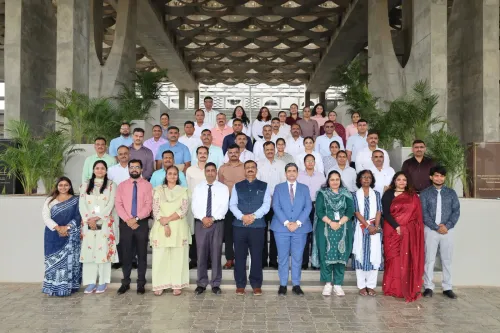
RRU launches 3 training programmes in Fiji for 180 officials from 9 Pacific nations
Synopsis
India's Rashtriya Raksha University has deployed a month-long, three-course training mission in Suva for 180 officials from nine Pacific nations — covering international law, mental health and AI-linked cybersecurity. Framed under Modi's MAHASAGAR vision, the initiative marks one of RRU's most ambitious single-country capacity-building pushes and signals India's intent to convert Indo-Pacific diplomacy into durable institutional links.
Key Takeaways
Rashtriya Raksha University (RRU) launched three training programmes in Suva, Fiji starting 2 November 2026 .
Around 180 government officials from nine Pacific Island nations will participate across the month-long initiative.
The three courses cover international law and security , stress management and psychological well-being , and cybersecurity and artificial intelligence .
The initiative is aligned with PM Narendra Modi 's MAHASAGAR vision for mutual security and growth across regions.
RRU has trained more than 3,200 law-enforcement officials from 94 countries under the ITEC programme to date.
The programme is conducted in collaboration with Fiji's Ministry of Civil Service and supported by the High Commission of India in Fiji .
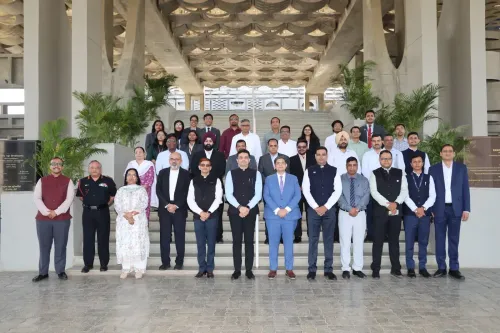
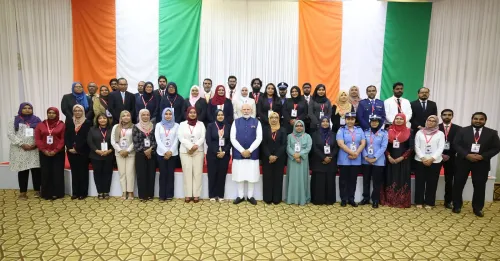
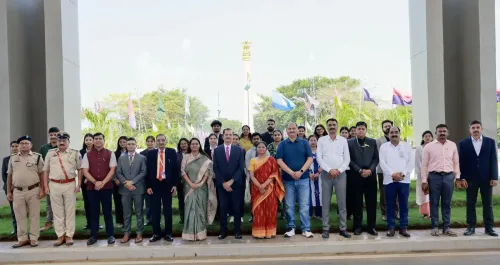
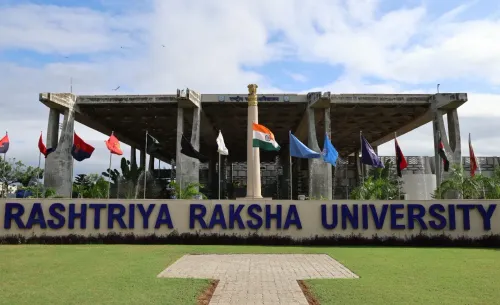
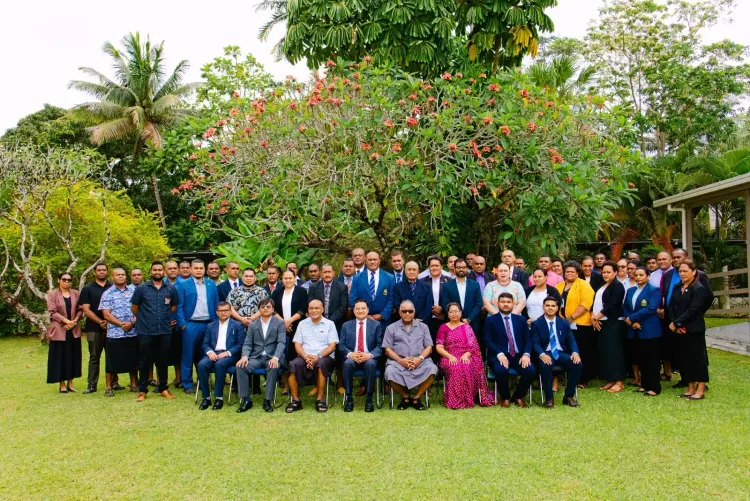
Rashtriya Raksha University (RRU), based in Gandhinagar, Gujarat, has launched three specialised training programmes in Suva, Fiji, targeting around 180 government officials from nine Pacific Island nations. The month-long initiative, which commenced on 2 November 2026, is being conducted in collaboration with Fiji's Ministry of Civil Service and is supported by the High Commission of India in Fiji.
Three Programmes, One Strategic Agenda
The training is structured across three distinct courses. The first — a 10-day course on international law and security — began on 2 November with 60 participants drawn from nine Pacific countries. It covers foundational principles of international law, their intersection with contemporary security challenges, and their practical application within public institutions.
The second programme, a six-day course on stress management and psychological well-being, is scheduled from 16 to 23 November. It will address mindfulness, burnout prevention, psychological resilience and peer support, with a specific focus on climate-related displacement and the mental health demands on personnel in high-pressure environments — challenges particularly relevant to Fiji given its exposure to natural disasters.
The third, a five-day course on cybersecurity and artificial intelligence, is slated from 24 to 30 November. It will span cybercrime investigation, digital forensics, network security, cyber law and the responsible use of AI, incorporating practical demonstrations and hands-on tool exposure.
What the Government Said
Luke Rokovada, Chairman of Fiji's Public Service Commission, acknowledged India as Fiji's largest capacity-building partner, commending RRU's outreach to Pacific Island countries and its role in improving professional competencies and institutional effectiveness.
Suneet Mehta, High Commissioner of India to Fiji, described Pacific Island engagement as a key dimension of India's international cooperation, adding that such programmes 'could help translate diplomatic goodwill into lasting institutional partnerships, knowledge exchange and people-to-people connections.'
RRU Vice-Chancellor Bimal Patel, who also serves as a Judge of the International Tribunal for the Law of the Sea (ITLOS), stressed the importance of bridging the gap between international legal frameworks and on-the-ground institutional practice. 'International law serves people best when public institutions have the knowledge to put it into practice,' he said.
Modi's MAHASAGAR Vision as the Policy Frame
The initiative is guided by Prime Minister Narendra Modi's MAHASAGAR vision — an acronym for Mutual and Holistic Advancement of Security and Growth Across Regions — which positions capacity-building, institutional cooperation and knowledge exchange as pillars of India's engagement with partner nations in the Indo-Pacific. This programme represents a practical deployment of that framework in the Pacific Island context.
RRU's Broader International Footprint
The Fiji initiative is part of RRU's expanding global training mandate under the Indian Technical and Economic Cooperation (ITEC) programme, coordinated with the Ministry of External Affairs. According to the university, it has trained more than 3,200 law-enforcement officials from 94 partner countries in areas including forensics, cyber education and policing. An additional 52 students from 18 countries across South Asia, Southeast Asia, Africa and Oceania are currently enrolled in its two-year master's programmes for law-enforcement professionals.
Going forward, RRU has indicated plans to deepen cooperation with Pacific Island nations across international law, maritime security, disaster management and defence studies — aligning institutional capacity-building with India's broader Indo-Pacific strategic interests.
Point of View
Maritime law and psychological resilience in one package, timed to a region where China has been deepening security partnerships. The MAHASAGAR framing also signals that Pacific Island engagement is now a named doctrine, not an ad hoc gesture. Whether RRU can sustain this across 94 partner countries without diluting programme quality remains the real test.
NationPress
3 Nov 2026
Frequently Asked Questions
What are the three training programmes launched by RRU in Fiji?
RRU has launched a 10-day course on international law and security (from 2 November), a six-day course on stress management and psychological well-being (16–23 November), and a five-day course on cybersecurity and artificial intelligence (24–30 November). Together they cover around 180 officials from nine Pacific Island nations.
Which countries are participating in the RRU training in Fiji?
Nine Pacific Island nations are participating, including Fiji as the host country. The first course on international law and security alone saw 60 participants drawn from across these nine countries, though the full list was not individually specified at the inaugural ceremony.
What is India's MAHASAGAR vision and how does it relate to this initiative?
MAHASAGAR stands for Mutual and Holistic Advancement of Security and Growth Across Regions — a policy framework articulated by Prime Minister Narendra Modi that prioritises capacity-building, institutional cooperation and knowledge exchange with partner nations. The Fiji training programme is a direct implementation of this vision in the Pacific Island region.
What is RRU's track record in international training?
Rashtriya Raksha University has trained more than 3,200 law-enforcement officials from 94 partner countries in areas such as forensics, cyber education and policing under the ITEC programme. An additional 52 students from 18 countries are currently enrolled in its two-year master's programmes for law-enforcement professionals.
Why is the psychological well-being course specifically relevant to Fiji?
Fiji faces heightened exposure to climate-related challenges, natural disasters and population displacement, all of which carry significant psychological consequences for public officials and emergency responders. The six-day course on stress management addresses these unique regional stressors alongside broader topics such as burnout prevention and digital stress.