SatLeo Labs launches TAPAS-1, India's first commercial thermal payload on SpaceX Falcon 9
Synopsis
A three-kilogram payload from an Ahmedabad startup just made history — TAPAS-1 is India's first commercial thermal payload in orbit, riding a SpaceX Falcon 9 to 500 km altitude. Backed by Gujarat's pioneering state spacetech policy, SatLeo Labs is now generating real-time thermal intelligence for urban heat, agriculture, and disaster tracking, signalling that India's private space era has moved from ambition to orbit.
Key Takeaways
SatLeo Labs , based in Ahmedabad , deployed TAPAS-1 — India's first commercial thermal payload — on 1 October 2025 via a SpaceX Falcon 9 rocket.
The payload weighs 3 kg and orbits at approximately 500 km above Earth, capturing high-resolution thermal imagery.
TAPAS-1 data will support urban heat management , agricultural monitoring , water scarcity assessment, and disaster tracking including floods and forest fires.
Gujarat is the first Indian state to introduce a dedicated spacetech policy — the Gujarat Spacetech Policy 2025-30 — which provided SatLeo Labs with launch cost support, IPR assistance, and testing subsidies.
The mission aligns with the Centre's 'Make in India' and 'Atmanirbhar Bharat' initiatives, reflecting India's broader push to build domestic deep-tech capability.
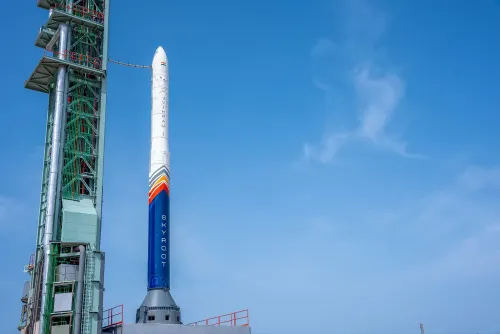
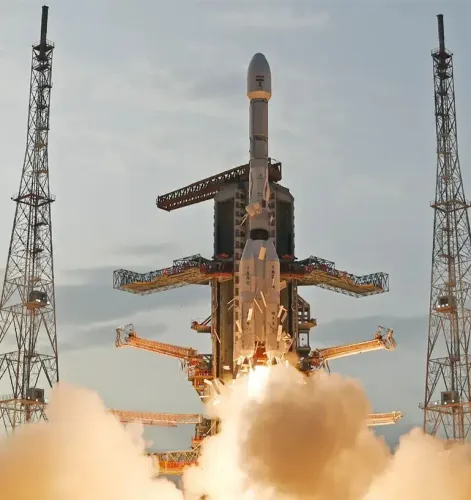
Ahmedabad-based spacetech startup SatLeo Labs successfully deployed TAPAS-1 — described as India's first commercial thermal payload — aboard a SpaceX Falcon 9 rocket on 1 October 2025, marking a significant milestone in the country's fast-expanding commercial space sector. The payload now orbits Earth at approximately 500 km altitude, capturing high-resolution thermal imagery for a range of civilian and industrial applications.
What TAPAS-1 Does
TAPAS-1, which stands for Thermal Access Platform for Analytics and Solutions-1, weighs 3 kg and is engineered to detect and map temperature variations across the Earth's surface. The data it generates is processed into actionable intelligence for sectors ranging from agriculture to disaster management.
According to the company, the thermal intelligence produced by TAPAS-1 is expected to support urban heat island monitoring, assessment of agricultural conditions and water scarcity, and near-real-time tracking of natural disasters including floods and forest fires. The system is designed to provide continuous situational awareness to aid rapid decision-making by governments and enterprises.
Gujarat's Spacetech Policy as an Enabler
The launch is closely tied to Gujarat's Spacetech Policy 2025-30, introduced under Chief Minister Bhupendra Patel — making Gujarat the first state in India to adopt a dedicated spacetech policy. The framework offers startups financial and institutional support, including assistance with launch costs, intellectual property rights, and subsidies for testing facilities.
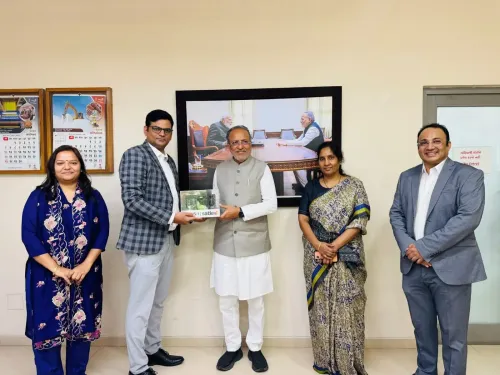
SatLeo Labs has directly benefited from this policy ecosystem. Neha Kumari, Mission Director at GSEM, outlined the breadth of support available under the state's initiative, which is designed to lower the financial barriers that typically make space missions prohibitive for early-stage companies.
The policy explicitly aims to position Gujarat as a 'global hub' for space technology manufacturing and innovation — an ambition that TAPAS-1's deployment now lends tangible credibility to.
Voices Behind the Mission
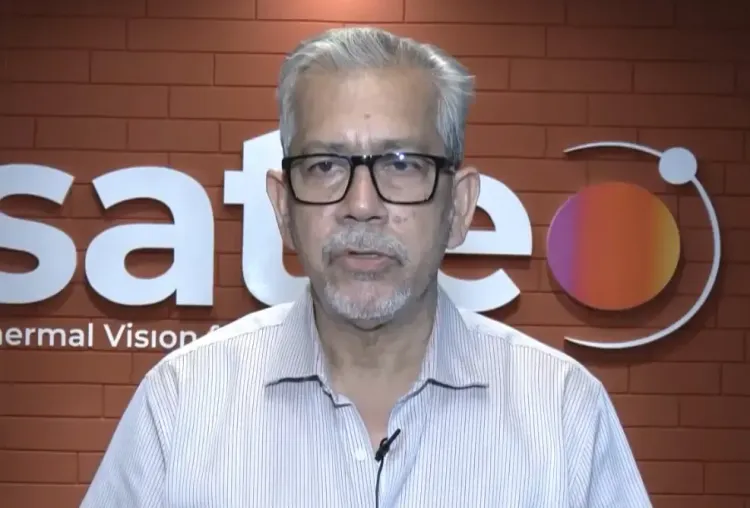
R Ghosh, co-founder and Chief Technology Officer of SatLeo Labs, and Urmil Bakhai, co-founder and Chief Strategy Officer, spoke about the startup's journey and its technology roadmap. Technology expert Narottam Sahu highlighted the potential downstream applications of the thermal intelligence platform, noting its relevance to climate monitoring and resource management.
Broader Context: India's Deep-Tech Shift
This launch reflects a wider pivot underway in Gujarat's industrial ecosystem — from software services toward advanced hardware development in areas such as semiconductors, electronics, and space systems. Notably, the mission aligns with the Centre's 'Make in India' and 'Atmanirbhar Bharat' programmes, which seek to build domestic manufacturing depth in strategically important technology sectors.
India's commercial space sector has been opening up rapidly since the government liberalised the sector in 2020, allowing private players to design, build, and launch satellites independently. TAPAS-1 represents one of the earliest commercially deployed thermal-imaging payloads to emerge from this new policy environment. With state-level frameworks like Gujarat's now operational, more such missions from Indian startups are widely anticipated in the near term.
Point of View
Not just launch ambitions. What makes this case instructive is the state-policy angle: Gujarat's Spacetech Policy 2025-30 provided the financial scaffolding that made a three-kilogram thermal payload commercially viable for an early-stage company. The risk, however, is that state enthusiasm outpaces the data-monetisation frameworks needed to turn thermal imagery into sustainable revenue — a challenge that has stalled similar ventures globally. Whether SatLeo Labs can convert TAPAS-1's orbital presence into paying customers across agriculture, disaster management, and urban planning will determine if this is a proof of concept or the start of a scalable business.
NationPress
25 Oct 2026
Frequently Asked Questions
What is TAPAS-1 and who launched it?
TAPAS-1 (Thermal Access Platform for Analytics and Solutions-1) is described as India's first commercial thermal payload, launched by Ahmedabad-based startup SatLeo Labs aboard a SpaceX Falcon 9 rocket on 1 October 2025. The 3 kg payload now orbits Earth at around 500 km altitude, capturing thermal imagery for civilian and industrial applications.
What will the thermal data from TAPAS-1 be used for?
The thermal intelligence generated by TAPAS-1 is intended to support urban heat island monitoring, agricultural condition assessment, water scarcity tracking, and real-time monitoring of natural disasters such as floods and forest fires. The data is processed to provide actionable information for government and enterprise decision-making.
What is Gujarat's Spacetech Policy 2025-30?
Introduced under Chief Minister Bhupendra Patel, the Gujarat Spacetech Policy 2025-30 is India's first state-level dedicated spacetech policy. It offers startups support including launch cost assistance, intellectual property rights guidance, and subsidies for testing facilities, with the goal of positioning Gujarat as a global hub for space technology manufacturing and innovation.
How does TAPAS-1 fit into India's broader commercial space ambitions?
India liberalised its commercial space sector in 2020, allowing private players to independently design, build, and launch satellites. TAPAS-1 is one of the first commercially deployed thermal-imaging payloads to emerge from this policy environment, and its launch aligns with the Centre's Make in India and Atmanirbhar Bharat initiatives aimed at building domestic deep-tech capability.
Who are the key people behind SatLeo Labs and TAPAS-1?
SatLeo Labs was co-founded by R Ghosh (Chief Technology Officer) and Urmil Bakhai (Chief Strategy Officer). Technology expert Narottam Sahu has spoken about TAPAS-1's application potential, while Neha Kumari, Mission Director at GSEM, outlined the state policy support that enabled the mission.