Supreme Court: Protest right doesn't allow indefinite site occupation
Synopsis
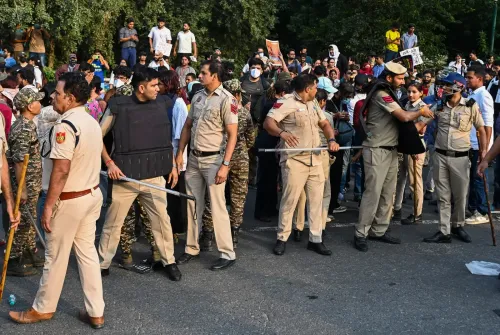
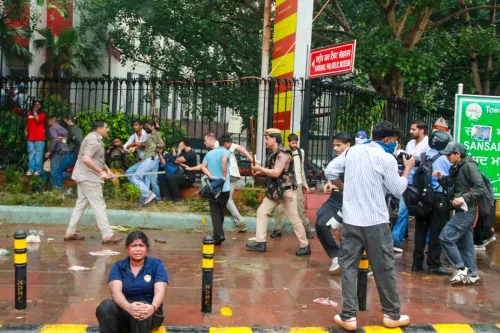
The Supreme Court drew a sharp constitutional line on 3 November: the right to protest is universal, which is precisely why no single group can monopolise a designated site indefinitely. With livelihoods, facial recognition surveillance, and the October anti-CEC protests all before the Bench, this hearing could shape how India regulates public demonstrations for years.
Key Takeaways
A Supreme Court Bench led by CJI Surya Kant ruled on 3 November 2026 that no group can occupy a designated protest site indefinitely.
The Bench stressed that protest sites must be allotted for specified periods to allow all groups — farmers, workers, trade unions — equal access.
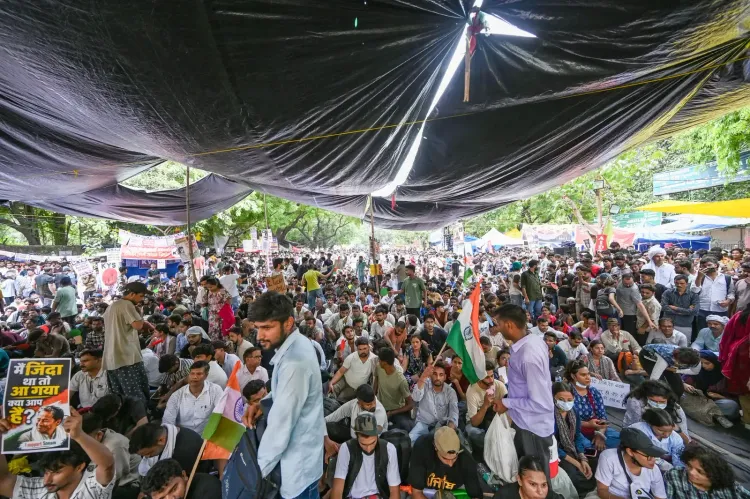
Solicitor General Tushar Mehta told the court that the Cockroach Janta Party (CJP) held a protest site for 17 days despite a single-day permit in July.
The court balanced the right to protest against the right to livelihood, citing daily-wage workers, street vendors, and small shopkeepers.
Delhi Police's use of facial recognition technology to identify protesters drew sharp debate, with the court questioning its legal basis.
Notice was issued on a Kirana Committee Delhi plea to halt protests during the festive season; organisers of anti-CEC protests are to be impleaded.
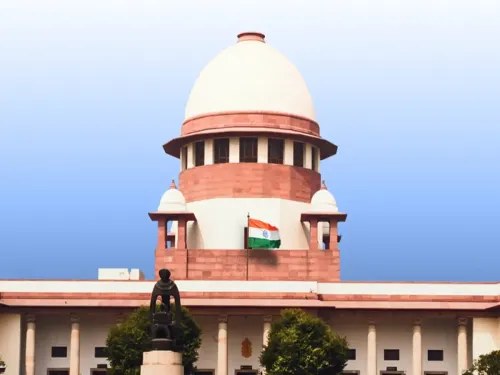
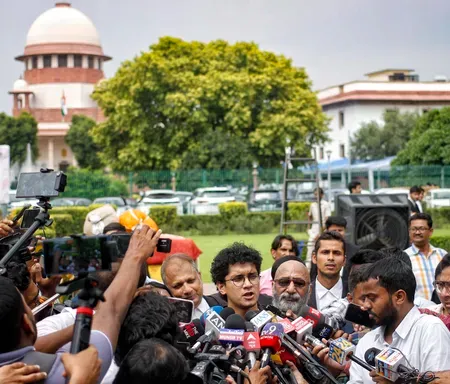
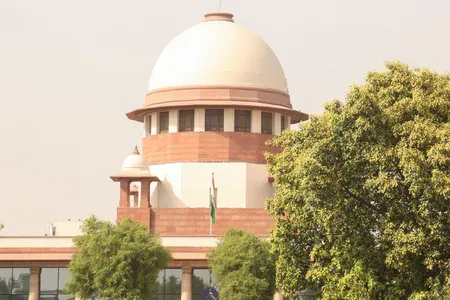
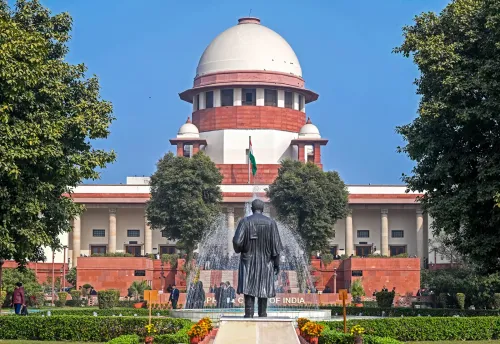
The Supreme Court of India on Tuesday, 3 November 2026, orally observed that the right to protest does not extend to the indefinite occupation of designated protest sites, stressing that such spaces must be allotted for specified periods so that multiple groups can exercise their constitutional rights. The remarks came from a Bench comprising Chief Justice of India (CJI) Surya Kant, Justice Joymalya Bagchi, and Justice V. Mohana, while hearing a batch of petitions arising from the October protests in Delhi against Chief Election Commissioner (CEC) Gyanesh Kumar.
Key Observations by the Bench
'You cannot occupy a site for all time to come. There are other protesters. Where will the farmers go? Where will the workers go? Where will the trade unions go? Where will the homeless go? Everybody has a right to protest,' the apex court remarked. The Bench further held that no organisation could claim exclusive rights over a public space simply because it had arrived first. 'You cannot exclude other people merely because you have occupied the site,' the CJI-led Bench said.
The court underlined that protest venues must be made available on a rotational basis, ensuring that the constitutional right to assemble peacefully does not become a privilege monopolised by a single group.
Balancing Protest Rights Against Livelihoods
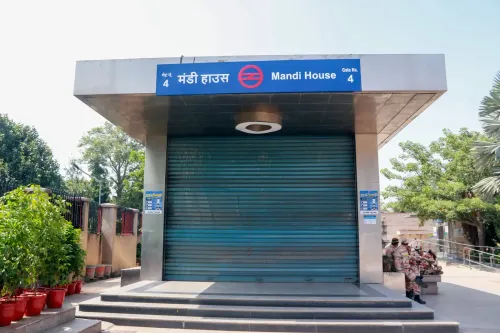
The Bench drew particular attention to the economic cost borne by daily-wage workers, street vendors, and small shopkeepers when protests disrupt commerce. 'If shops are closed because of protests, where will the shopkeepers and street vendors earn their livelihood? We are not talking about trade merely in terms of commercial establishments. We are talking about the source of livelihood of a daily-wage worker. Where does that person go for their daily bread?' the court asked.
This framing — pitting the right to protest squarely against the right to trade and earn a livelihood — signals that the court is moving toward a structured balancing test rather than treating either right as absolute.
Government's Submissions on Protest Duration and Parliament March
Solicitor General Tushar Mehta, appearing for the Centre, submitted that the Cockroach Janta Party (CJP) had been granted permission for a protest lasting only one day in July, but demonstrators continued to occupy the site for 17 days. He further submitted that protesters had subsequently marched towards Parliament without obtaining the requisite authorisation, arguing that public places and constitutional institutions — including Parliament and the Supreme Court — could not be used for demonstrations without prior permission.
Facial Recognition Technology and Privacy Concerns
Advocate Prashant Bhushan raised concerns about the Delhi Police's use of facial recognition technology (FRT) to identify protesters, questioning its compatibility with the right to privacy. Solicitor General Mehta countered that a person participating in a public protest could not claim the same expectation of privacy as in a private setting.
Justice Bagchi asked whether identifying protesters through National Crime Records Bureau (NCRB) data was permissible under existing law, given government claims that some identified individuals had criminal antecedents. Senior Advocate Hariharan argued that a prior criminal record does not extinguish the right to participate in a peaceful protest — a submission the Solicitor General called misconceived.
Senior Advocate Menaka Guruswamy broadened the concern beyond mere identification to the collection and storage of protesters' personal data. SG Mehta responded that the police independently verified an individual's identity before taking action and did not act solely on a FRT software match.
Notice Issued; Traders' Plea and Next Steps
The Supreme Court issued notice on a plea by the Kirana Committee Delhi seeking a halt to protests during the festive period. However, it directed traders' associations to implead the organisers of the anti-CEC protests as parties, observing that their grievances could not be fully adjudicated in the organisers' absence. The matter is expected to come up for further hearing after the impleadment is completed.
Point of View
The Bench implicitly rejects the 'first-occupier' doctrine that has allowed well-organised groups to entrench themselves indefinitely. The facial recognition debate is the more unsettled front: the court has not yet ruled on whether public assembly strips citizens of all data-privacy expectations, and the NCRB-based identification question remains open. How the court eventually rules on FRT could set a precedent that extends well beyond protest policing into the broader surveillance architecture of Indian public spaces.
NationPress
3 Nov 2026
Frequently Asked Questions
What did the Supreme Court say about the right to protest on 3 November 2026?
The Supreme Court observed that the right to protest does not permit any group to occupy a designated protest site indefinitely. The Bench, led by CJI Surya Kant, said such sites must be allotted for specified periods so that all groups — including farmers, workers, and trade unions — can exercise their constitutional rights.
Which case prompted these observations by the Supreme Court?
The observations arose from a batch of petitions related to the October 2026 protests in Delhi against Chief Election Commissioner Gyanesh Kumar. The hearings also covered a plea by the Kirana Committee Delhi seeking a halt to protests during the festive season.
Why did the Solicitor General raise the Cockroach Janta Party protest?
Solicitor General Tushar Mehta submitted that the Cockroach Janta Party (CJP) had been granted a one-day permit for a protest in July but occupied the site for 17 days. He also noted that protesters later marched towards Parliament without obtaining requisite permission.
What are the concerns about facial recognition technology at protests?
Advocate Prashant Bhushan raised concerns that Delhi Police's use of facial recognition technology (FRT) to identify protesters could violate the right to privacy. Senior Advocate Menaka Guruswamy extended the concern to the collection and storage of protesters' personal data. The Solicitor General argued that the police verified identities independently before acting on any FRT match.
What happens next in the Supreme Court proceedings?
The court issued notice on the Kirana Committee Delhi's plea and directed traders' associations to implead the organisers of the anti-CEC protests as parties to the proceedings. The matter will be heard further after impleadment is completed.