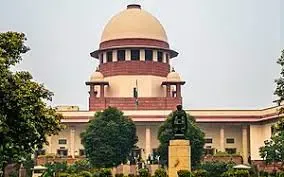
SC dismisses PIL on criminal ministers, cites PM's cabinet discretion
Synopsis
The Supreme Court refused to lay down guidelines for appointing ministers with criminal charges, leaving the door open to executive discretion — even as ADR data shows 47% of sitting ministers across India have pending criminal cases. The bench's reluctance to enter what it called a 'difficult constitutional exercise' keeps the 2014 Manoj Narula self-restraint doctrine as the only guardrail, and shifts the ball firmly back to Parliament.
Key Takeaways
The Supreme Court dismissed a PIL on 6 November 2026 seeking guidelines for appointing Ministers with criminal antecedents .
A bench led by CJI Surya Kant declined to curtail the discretion of the Prime Minister or Chief Ministers in Cabinet formation.
According to Association for Democratic Reforms (ADR) data cited in the plea, 47% of sitting Ministers have pending criminal cases; 27% face serious charges.
The court referenced the 2014 Manoj Narula vs.
Union of India judgment, which stressed self-restraint but created no enforceable bar.
The Union government introduced three Bills in Parliament in 2025 proposing removal of a minister under arrest for more than 30 days — a threshold the petitioner argued was insufficient.
With the PIL dismissed, criminal antecedents remain legally permissible for ministerial appointments, and the matter now rests with the legislature.
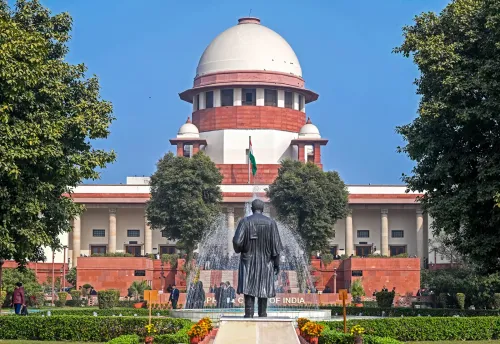
The Supreme Court on Friday, 6 November 2026 dismissed a public interest litigation (PIL) seeking constitutional safeguards and objective standards for the appointment of Ministers facing serious criminal charges at the Centre and in the states, declining to frame guidelines that could curtail the discretion of the Prime Minister or Chief Ministers in forming their Cabinets.
What the Court Said
A bench comprising Chief Justice of India (CJI) Surya Kant, Justice Joymalya Bagchi, and Justice V Mohana heard the matter and expressed reservations about judicially prescribing norms for ministerial appointments. Justice Bagchi observed that criminal cases could sometimes be initiated against political leaders by opponents as part of the democratic process, and cautioned that framing such guidelines would draw the apex court into a difficult constitutional exercise — particularly given the possibility of politically motivated prosecutions following a change of government.
The bench noted that the question of whether the Supreme Court should frame guidelines curtailing the PM's or Chief Ministers' Cabinet-formation discretion was itself constitutionally fraught.
The Petitioner's Arguments
Advocate Nisha Tiwari, appearing for petitioner Dilip Kumar Sharma, argued that executive discretion must operate within reasonable parameters. 'All that I am saying is that the exercise of discretion has to be reasonable. There have to be certain parameters governing that discretion,' she submitted.
Tiwari further contended that voters casting ballots for a legislator do not automatically endorse that person's elevation to the Cabinet. 'Whenever I cast my vote, I do not necessarily endorse somebody with criminal antecedents becoming a Cabinet Minister. With respect, there has to be a reasonable limit. That is all I am saying,' she argued.
The petition, filed under Article 32 of the Constitution, had invoked Articles 75(1) and 164(1) — the provisions governing ministerial appointments at the Centre and in states respectively — to seek a framework requiring objective suitability assessments before appointments, public disclosure through a 'Suitability Memorandum', and safeguards against portfolio allocation where a conflict of interest could arise from pending criminal proceedings.
The Data and Precedents Cited
Relying on data compiled by the Association for Democratic Reforms (ADR), the PIL claimed that 47 per cent of sitting Ministers across the country had declared pending criminal cases, while 27 per cent faced serious criminal charges. The petition argued that appointing such Ministers to sensitive portfolios — especially those involving control over police and prosecution machinery — could create structural conflicts of interest and undermine the right to a fair trial under Article 21.
The plea drew on the 2014 Constitution Bench judgment in Manoj Narula vs. Union of India, in which the Supreme Court declined to read an implied disqualification into the relevant Articles but stressed that the Prime Minister and Chief Ministers should exercise constitutional restraint. The petitioner argued that the convention of self-restraint recognised in that ruling had failed to produce meaningful results.
The petition also referenced recommendations from the Vohra Committee, the National Commission to Review the Working of the Constitution, the Second Administrative Reforms Commission, and the Justice J.S. Verma Committee on criminalisation of politics. Notably, it also cited three Bills introduced by the Union government in Parliament in 2025 proposing removal of a Prime Minister, Chief Minister, or Minister who remains under arrest for more than 30 days in connection with a serious criminal offence — while arguing that an arrest-based threshold alone would be insufficient.
What This Means Going Forward
With the PIL dismissed, the constitutional position remains as it stood after the Manoj Narula judgment: there is no legally enforceable bar on appointing ministers with criminal antecedents, and the matter rests on executive self-restraint. The ruling underscores the judiciary's reluctance to step into the political domain of Cabinet formation, even as civil society groups continue to flag data on the rising share of lawmakers and ministers facing criminal proceedings. The issue is likely to resurface in Parliament as the 2025 Bills on the subject await legislative action.
Point of View
Now over a decade old, has clearly not moved the needle — ADR's figure of 47% of sitting ministers with pending cases is higher, not lower, than when that judgment was delivered. The court is right to be wary of judicially rewriting Cabinet formation rules, but the 2025 Bills sitting unacted in Parliament suggest the executive is equally reluctant to bind itself. What is missing is not a court order but a legislative framework with teeth — something none of the four major committee recommendations cited in the PIL has yet produced.
NationPress
6 Nov 2026
Frequently Asked Questions
Why did the Supreme Court dismiss the PIL on ministers with criminal antecedents?
The Supreme Court dismissed the PIL because it was reluctant to frame guidelines that would curtail the constitutional discretion of the Prime Minister and Chief Ministers in appointing Cabinet members. The bench noted that criminal cases against political leaders could sometimes be politically motivated, making judicial intervention in this area constitutionally difficult.
What did the PIL filed by Dilip Kumar Sharma seek?
The PIL sought a framework requiring objective suitability assessments before ministerial appointments, public disclosure through a 'Suitability Memorandum', and safeguards against allotting portfolios where a conflict of interest could arise from a minister's pending criminal proceedings. It was filed under Article 32 invoking Articles 75(1) and 164(1) of the Constitution.
What does ADR data say about ministers with criminal cases in India?
According to data from the Association for Democratic Reforms (ADR) cited in the PIL, 47% of sitting Ministers across the country have declared pending criminal cases, while 27% face serious criminal charges. The petitioner argued this data showed that the convention of executive self-restraint had failed to produce results.
What is the Manoj Narula vs. Union of India judgment and why is it relevant?
The 2014 Constitution Bench judgment in Manoj Narula vs. Union of India declined to read an implied disqualification into the constitutional provisions governing ministerial appointments but stressed that Prime Ministers and Chief Ministers should exercise restraint when appointing persons with serious criminal antecedents. The PIL argued this self-restraint convention had failed, necessitating a formal framework.
What are the 2025 Bills on ministerial removal and why were they cited in the PIL?
The Union government introduced three Bills in Parliament in 2025 proposing removal of a Prime Minister, Chief Minister, or Minister who remains under arrest for more than 30 days in connection with a serious criminal offence. The petitioner cited them as evidence of legislative acknowledgment of the problem but argued an arrest-based threshold was insufficient for cases where ministers face serious charges without being arrested.