Shivraj Singh Chouhan Hails Amit Shah's Cooperative Vision
Synopsis
Union Agriculture Minister Shivraj Singh Chouhan on June 23 praised Amit Shah's stewardship of the cooperative sector, saying the 'Sahkar Se Samriddhi' slogan has become a living mantra for crores of Indian farmer families, crediting the ministry with transforming the sector's condition, vision, and direction.
Key Takeaways
Union Agriculture Minister Shivraj Singh Chouhan publicly endorsed the cooperative sector's direction under Amit Shah on June 23, 2026 .
He described 'Sahkar Se Samriddhi' ('Prosperity through Cooperation') as having moved beyond a slogan to become a 'living mantra' for crores of farmer families.
Chouhan credited Amit Shah's leadership with a three-dimensional transformation: the sector's condition, its vision, and its direction.
The Ministry of Cooperation was created in July 2021 as India's first standalone central ministry dedicated to the cooperative sector.
Key policy priorities under the ministry include computerisation of Primary Agricultural Credit Societies (PACS) and formation of new multi-state cooperative entities.
A new National Cooperative Policy and further PACS infrastructure funding remain under parliamentary consideration.
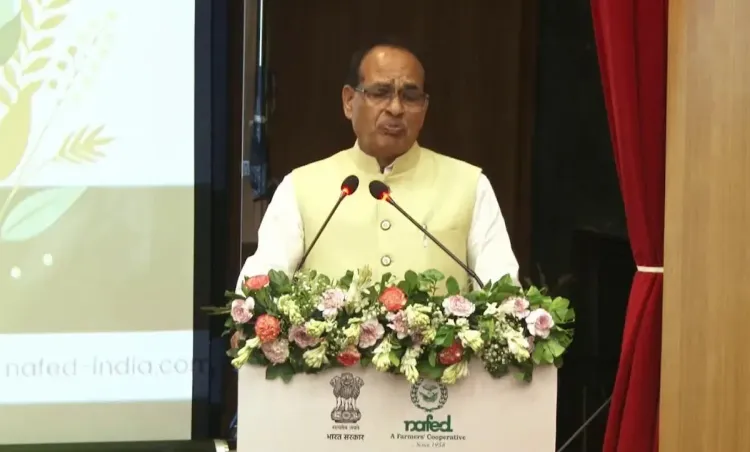
Union Agriculture Minister Shivraj Singh Chouhan on Tuesday, June 23, 2026, praised the cooperative sector's transformation under Union Minister of Cooperation Amit Shah, calling the 'Sahkar Se Samriddhi' framework a living reality for crores of farming families across India.
Posting on X, Chouhan wrote that 'Sahkar Se Samriddhi' ('Prosperity through Cooperation') has ceased to be merely a slogan and has become, in his words, 'a living mantra for crores of farmer families across the country.' He credited Amit Shah's leadership with bringing about a three-dimensional shift in the cooperative sector — its condition, its vision, and its direction.
Context
The Ministry of Cooperation was established as a standalone central ministry in July 2021, with Amit Shah appointed as its first minister. The creation of the ministry marked a significant structural shift: cooperative policy, previously dispersed across multiple ministries, was brought under a single, dedicated institutional roof. The move was described by the government as an effort to give the cooperative sector the focused attention it had historically lacked at the central level.
Chouhan's post appears to reference a specific example of welfare delivery through cooperatives, though the precise event or scheme milestone is not identified in the post. The broader message is one of institutional endorsement — a senior cabinet colleague publicly affirming the direction of cooperative policy.
Policy Backdrop
The 'Sahkar Se Samriddhi' framework is the official governing philosophy of the Ministry of Cooperation, positioning cooperative societies as a distinct third pillar of the economy alongside the public and private sectors. The approach draws on the 97th Constitutional Amendment of 2011, which granted constitutional recognition and autonomy to cooperative societies, while adding a new layer of central coordination and digitisation.
Key initiatives under the ministry's remit have included the computerisation of Primary Agricultural Credit Societies (PACS), the formation of new multi-state cooperative entities in sectors such as exports and organic produce, and efforts to bring unserved villages into the cooperative fold. The government has framed these steps as extending institutional credit and market access to farmers who have historically depended on informal channels.
Since 2014, successive BJP-led governments have sought to elevate cooperatives as a vehicle for rural prosperity, building on earlier cooperative legislation while introducing centralised policy coordination. Chouhan's statement fits squarely within this longer political and policy arc.
Stakeholders and Impact
The primary beneficiaries of cooperative sector reform are India's farming households and rural communities, particularly those with access to PACS and other primary cooperative institutions. Advocates argue that a strengthened cooperative network can provide affordable credit, collective bargaining power for produce, and access to government welfare schemes at the village level.
Chouhan, who served four terms as Chief Minister of Madhya Pradesh — a state with a large agrarian population — brings direct administrative experience with rural welfare delivery to his current national portfolio. His public endorsement of the cooperative ministry's work signals alignment at the cabinet level on the importance of the sector.
What's Next
Parliamentary deliberations on a new National Cooperative Policy and budgetary allocations for the infrastructure and digitisation of PACS remain closely watched by cooperative sector stakeholders. The government's ability to translate the 'Sahkar Se Samriddhi' vision into measurable outcomes — expanded membership, improved credit flow, and higher farmer incomes — will be the benchmark against which the ministry's record is ultimately assessed.
Point of View
Publicly reinforcing the political capital invested in the Ministry of Cooperation — a portfolio that Amit Shah has used to project a farmer-centric governance narrative ahead of state and national electoral cycles. The framing of 'Sahkar Se Samriddhi' as a 'living mantra' rather than a policy programme signals an effort to shift the discourse from institutional reform to felt impact, a harder claim to verify but a more potent one electorally. For the BJP, cooperative reform serves a dual purpose: deepening rural outreach and creating an institutional network that complements the party's organisational footprint in villages. The statement also reflects the broader pattern of senior ministers publicly attributing sectoral progress to specific leadership, a form of internal political signalling as much as public communication.
NationPress
23 Jun 2026
Frequently Asked Questions
What is 'Sahkar Se Samriddhi' and what does it mean?
'Sahkar Se Samriddhi' is a Hindi phrase meaning 'Prosperity through Cooperation.' It is the official slogan and governing philosophy of India's Ministry of Cooperation, established in 2021, which aims to use cooperative societies as vehicles for farmer welfare and rural development.
Why did the government create a separate Ministry of Cooperation?
The Ministry of Cooperation was created in July 2021 to give dedicated, centralised focus to the cooperative sector, which had previously been managed across multiple ministries. Amit Shah was appointed as its first minister.
What has Amit Shah done for the cooperative sector in India?
Under Amit Shah's leadership, the Ministry of Cooperation has pursued digitisation of Primary Agricultural Credit Societies (PACS), promoted new multi-state cooperative entities in areas such as exports and organic produce, and worked to bring unserved villages into the cooperative network.
What are Primary Agricultural Credit Societies (PACS)?
PACS are the most grassroots-level cooperative credit institutions in India, providing short-term credit and other services to farmers at the village level. The government has prioritised their computerisation and infrastructure upgrades as part of cooperative sector reform.
What did Shivraj Singh Chouhan say about cooperatives on June 23, 2026?
Chouhan posted on X that 'Sahkar Se Samriddhi' has become a living mantra for crores of farmer families, crediting Amit Shah's leadership with transforming the cooperative sector across three dimensions: its condition, its vision, and its direction.