India's UNSC bid 2028: Shringla says world seeks New Delhi's unique voice
Synopsis
India isn't just asking for a UNSC seat — it's arguing it occupies a diplomatic lane no other power does. Former Foreign Secretary Shringla's case: India bridges North-South and East-West divides, has won two non-permanent seats by wide margins, and brings a civilisational peace message that neither the West, China, nor Russia can credibly claim.
Key Takeaways
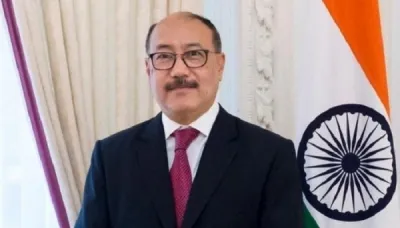
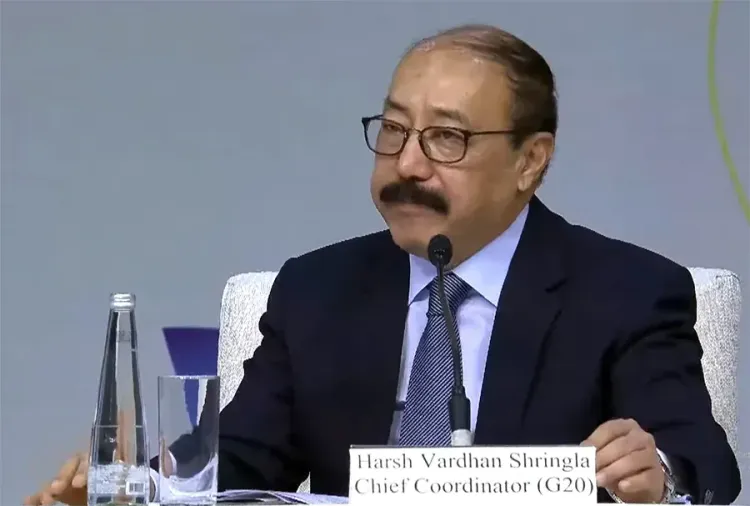
Harsh Vardhan Shringla , former Foreign Secretary and Rajya Sabha MP , said India's global perspective is uniquely sought after at the international level.
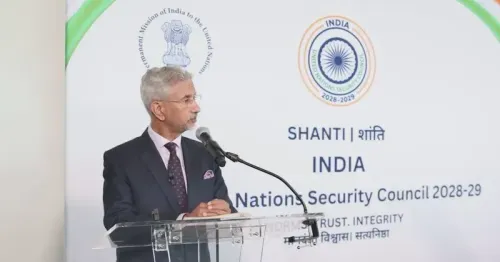
India is contesting an Asia-Pacific non-permanent seat at the UNSC for a two-year term starting 2028 .
Shringla cited India's past UNSC victories — in 2011 and 2019 — as evidence of strong international backing.
He argued the seat would reinforce India's long-standing claim to permanent UNSC membership and support the push for a reformed Security Council.
India positions itself as a bridge between the Global South and the West, and as a neutral voice on conflicts including Ukraine and the Middle East .
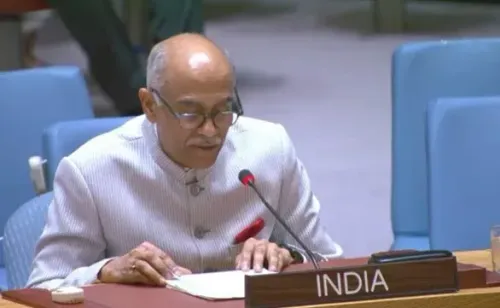
Former Foreign Secretary and Rajya Sabha MP Harsh Vardhan Shringla on Monday asserted that India has firmly established itself at the international high table, with the country's perspective now actively sought by global powers as New Delhi pursues an Asia-Pacific non-permanent seat at the United Nations Security Council (UNSC) for a two-year term beginning 2028.
India's Case for the UNSC Seat
Shringla, speaking to reporters on the sidelines of a diplomatic engagement, argued that India's candidacy is a natural extension of its growing global stature. 'We are today a country that is much sought after in the international high table. Prime Minister Narendra Modi is invited to G7 and BRICS meetings. We are able to bridge the gap between the North and South and East and West,' he said.
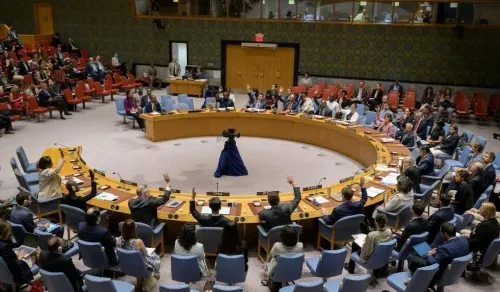
He underlined that the UNSC is the only organ within the United Nations whose resolutions carry binding authority on all member states — making India's presence on it a matter of strategic consequence, not merely symbolic prestige.
Why India's Voice Is Considered Distinct
Shringla argued that what sets India apart in global diplomacy is a civilisational tradition of seeking dialogue over confrontation. 'Our point of view is sought after by the world because they believe that India brings a unique perspective — one that can actually succeed in de-escalating situations, in providing a message of peace and amity. It is a different perspective from what the West brings or China brings or Russia brings; it is our own message based on centuries, if not millennia, of civilisation,' he emphasised.
He credited Prime Minister Narendra Modi for consistently placing India at the forefront of global diplomacy — whether on the Ukraine conflict, the Middle East, or West Asia — and said it was essential for that voice to be channelled through the internationally recognised mechanism of the UNSC.
Track Record of Strong Electoral Support
Shringla pointed to India's past UNSC election victories as evidence of broad international confidence. 'In 2011, when we were elected by an unprecedented margin. Similarly in 2019, before we started our term in 2020, we had again a very strong margin of support,' he noted.
He expressed confidence that India's contributions to global peace and security would again translate into a commanding electoral mandate in the upcoming vote, adding that most countries have not had the ability to represent the widest majority of UN member states — something India has historically achieved.
Reinforcing the Permanent Membership Claim
Beyond the immediate bid, Shringla framed a non-permanent seat as a platform to advance India's longer-term goal of permanent UNSC membership. A seat, he argued, would allow India to both articulate its positions through the Council and build the case for a reformed, more representative Security Council — a demand India has championed for decades.
As the 2028 election cycle approaches, India is now focused on consolidating the broadest possible coalition of supporting nations to secure the strongest possible mandate.
Point of View
India's abstentions at the UNSC have drawn as much criticism from the West as praise for neutrality. The civilisational-peace framing is compelling on the campaign trail for a non-permanent seat, but it will face harder tests if India actually sits at the table during a live crisis. The more durable case for India's UNSC bid is structural — a 1.4-billion-person democracy with the world's fifth-largest economy that remains outside the Council's permanent architecture is an anomaly that weakens the Council's legitimacy, not just India's ambitions.
NationPress
12 Oct 2026
Frequently Asked Questions
What UNSC seat is India contesting in 2028?
India is seeking an Asia-Pacific non-permanent seat at the United Nations Security Council for a two-year term beginning 2028. Non-permanent members are elected by the UN General Assembly and serve two-year terms without veto power.
Who is Harsh Vardhan Shringla and why does his view matter?
Harsh Vardhan Shringla is a former Foreign Secretary of India and a current Rajya Sabha MP with extensive experience in multilateral diplomacy. His assessment of India's UNSC prospects carries weight given his direct involvement in India's previous UN engagements.
How has India performed in past UNSC elections?
India won a non-permanent UNSC seat in 2011 by an unprecedented margin and again in 2019, serving a two-year term from 2021 to 2022. Shringla cited both victories as evidence of broad international confidence in India's diplomatic standing.
Why does India argue it deserves a permanent UNSC seat?
India argues that as the world's most populous nation, its fifth-largest economy, and a longstanding contributor to UN peacekeeping, its exclusion from permanent membership makes the Security Council unrepresentative. A non-permanent seat is seen as a platform to advance that reform agenda.
What is India's stated diplomatic positioning on global conflicts?
India positions itself as a bridge between the Global South and Western powers, and between East and West, advocating dialogue and de-escalation on conflicts including Ukraine and the Middle East. Shringla described this as a perspective rooted in India's civilisational tradition, distinct from Western, Chinese, or Russian approaches.