CM Siddaramaiah Marks 3 Years of Temple, Mutt Support in Karnataka
Synopsis
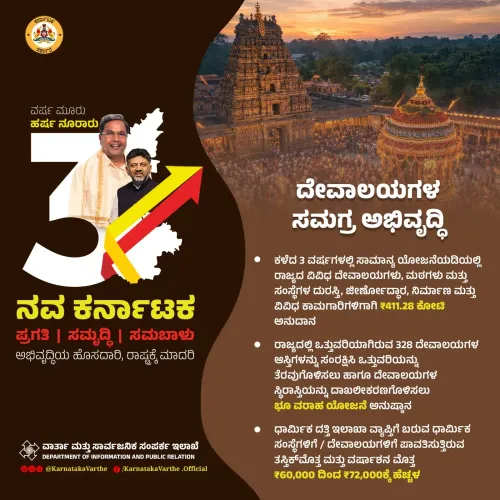
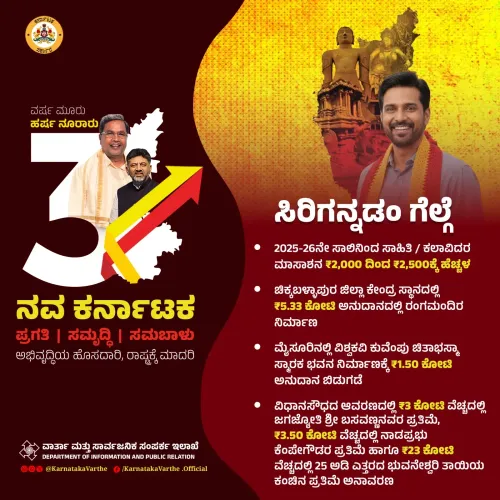
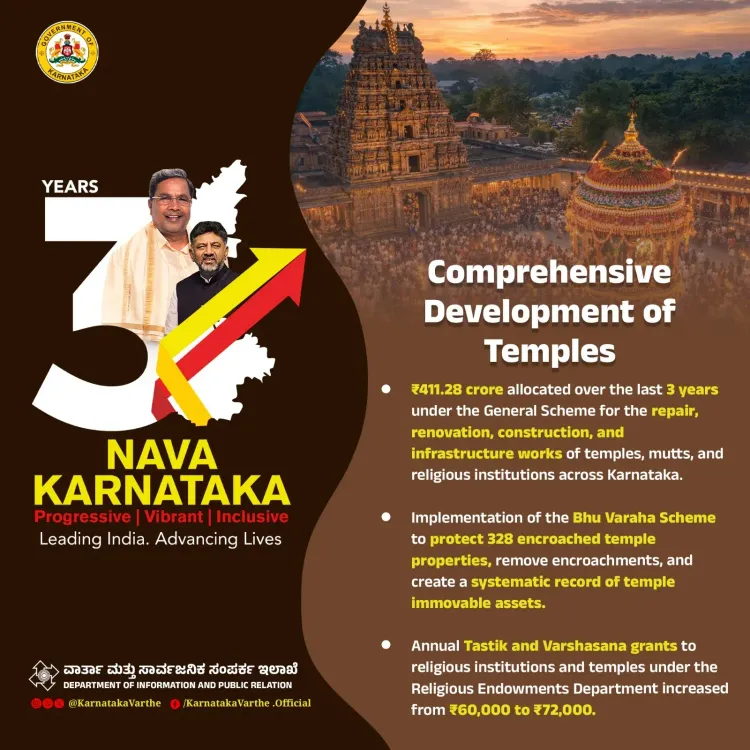
Marking three years of the Nava Karnataka government, Chief Minister Siddaramaiah has highlighted temple renovations, increased grants to religious institutions, mutt infrastructure support, and the Bhu Varaha Scheme for protecting temple properties as central achievements of his administration's cultural heritage agenda.
Key Takeaways
Karnataka CM Siddaramaiah marked three years of the Nava Karnataka government on 22 May 2026 with a post highlighting cultural and religious institution support.
The government claims to have undertaken renovation and infrastructure support for temples and mutts across Karnataka .
The Bhu Varaha Scheme has been cited as a mechanism to protect temple properties and lands statewide.
Grants to religious institutions have been increased and temple administration strengthened under the current administration.
Karnataka 's Muzrai department provides the administrative backbone for overseeing temple endowments and religious properties in the state.
The messaging forms part of a broader Congress effort to frame cultural preservation as a governance achievement ahead of future electoral cycles.
Karnataka Chief Minister Siddaramaiah on Friday, 22 May 2026, highlighted his government's three-year record of supporting religious and cultural institutions across the state, citing temple renovations, infrastructure grants to mutts, and the Bhu Varaha Scheme for protecting temple properties.
Context
Marking three years of the Nava Karnataka government, Siddaramaiah stated that his administration has worked to 'preserve not just infrastructure, but also the spiritual and cultural heritage that binds communities together.' The post, shared under the hashtags #3YearsOfNavaKarnataka and #GuaranteeSarkara, frames cultural preservation as a core pillar of the Congress government's governance record in Karnataka.
The Chief Minister pointed to renovation and infrastructure support for temples and mutts statewide, increased grants to religious institutions, and strengthened temple administration as evidence of the government's commitment to 'faith, heritage, and inclusive cultural development.'
Policy Backdrop
Karnataka maintains a dedicated administrative structure — the Muzrai department — specifically for overseeing temple properties, religious endowments, and the administration of Hindu religious institutions across the state. State governments, including previous Congress and coalition administrations, have periodically allocated funds for temple renovation and cultural preservation as part of broader heritage policy.
The Bhu Varaha Scheme is cited by the government as a mechanism to protect temple lands and properties, though specific details of its implementation and scale form part of the administration's stated agenda. Increasing grants to religious institutions and strengthening administrative oversight of temples are consistent with the state's long-standing policy of balancing development with cultural continuity.
Siddaramaiah previously served as Chief Minister from 2013 to 2018 and returned to the post in 2023 following the Congress party's victory in the Karnataka assembly elections. Cultural and religious institution support has been a recurring feature of his administrations.
Stakeholders and Impact
The primary beneficiaries of these measures are religious institutions — temples and mutts — along with the local communities and devotees who depend on them for cultural and spiritual life. Mutts, which serve as centres of religious learning and community welfare in Karnataka, have historically sought state support for infrastructure upkeep.
Broader communities across the state stand to benefit from the preservation of heritage sites and the administrative stability that stronger temple governance can provide. The Bhu Varaha Scheme's focus on protecting temple properties also addresses long-standing concerns about encroachment on religious endowment lands.
What's Next
Observers will watch the Karnataka state budget allocations for religious institutions in the coming fiscal cycle to assess whether grant levels are sustained or expanded. Any legislative proposals affecting temple administration structures or land records under the Muzrai department will also be closely tracked as the government enters the second half of its term.
With the Nava Karnataka government now three years into its tenure, the political messaging around cultural heritage is likely to intensify as the administration builds its record ahead of the next assembly election cycle.
Point of View
Using the three-year milestone to counter a common opposition narrative that Congress governments neglect Hindu religious institutions. By foregrounding the Bhu Varaha Scheme and Muzrai-linked administration, the messaging is designed to appeal to devotees and mutt communities — a constituency that cuts across caste lines in Karnataka. The 'inclusive cultural development' framing is notable: it allows the government to claim a secular, pluralist posture while simultaneously signalling active support for majority religious infrastructure. As Karnataka heads deeper into the second half of this assembly term, expect cultural heritage spending to feature prominently in the Congress party's electoral narrative.
NationPress
19 Sept 2026
Frequently Asked Questions
What is the Bhu Varaha Scheme in Karnataka?
The Bhu Varaha Scheme is a Karnataka government initiative cited by Chief Minister Siddaramaiah as a mechanism to protect temple properties and lands from encroachment or alienation, though its full scope and implementation details have not been independently verified from public record.
What is the Nava Karnataka government?
'Nava Karnataka' — meaning 'New Karnataka' — is the branding used by the Congress government led by Chief Minister Siddaramaiah, which came to power following the May 2023 Karnataka assembly elections.
What is the Muzrai department in Karnataka?
The Muzrai department is Karnataka's dedicated administrative body for overseeing Hindu religious institutions, temple endowments, and mutt properties across the state. It manages grants, land records, and governance of thousands of temples.
How long has Siddaramaiah been Chief Minister of Karnataka?
Siddaramaiah has been Chief Minister of Karnataka since May 2023. He previously served as Chief Minister from 2013 to 2018, making him one of the state's most experienced political figures.
Has the Karnataka government increased grants to temples and mutts?
Chief Minister Siddaramaiah has stated that his government increased grants to religious institutions and strengthened temple administration over the past three years, presenting it as a key cultural governance achievement of the Nava Karnataka administration.