Sitharaman Meets PM SVANidhi, Vishwakarma Beneficiaries
Synopsis
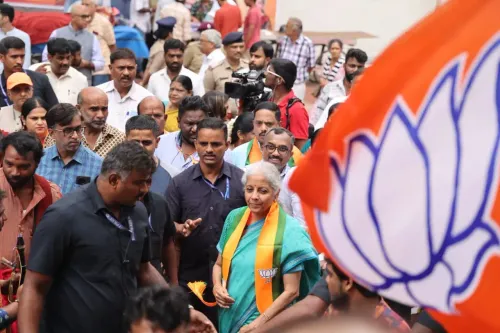
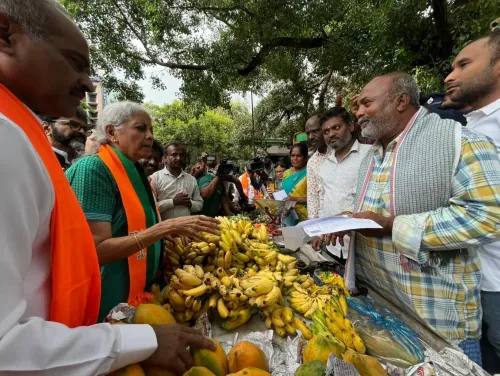
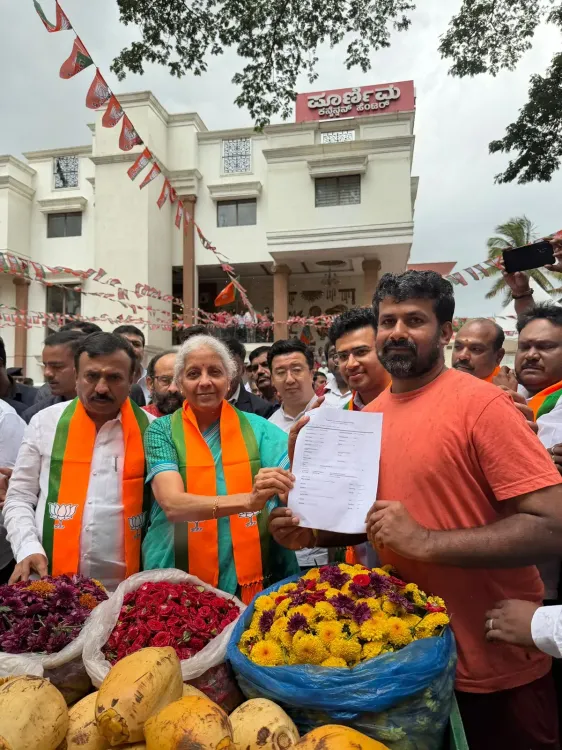
Union Finance Minister Nirmala Sitharaman met beneficiaries of PM SVANidhi and PM Vishwakarma at the Viksit Bharat Sankalpa Samavesh programme on 14 June 2026. Vendors and artisans shared how the two flagship welfare schemes have shaped their livelihoods, underscoring the Centre's focus on last-mile delivery for India's informal workforce.
Key Takeaways
Nirmala Sitharaman interacted with beneficiaries of PM SVANidhi and PM Vishwakarma at the Viksit Bharat Sankalpa Samavesh programme on 14 June 2026 .
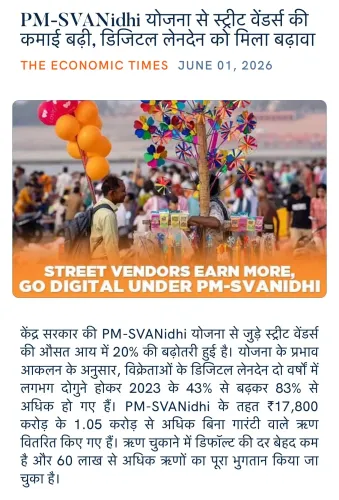
PM SVANidhi , launched in June 2020 , offers collateral-free working capital loans of up to Rs 50,000 to street vendors.
PM Vishwakarma , announced in the Union Budget 2023-24 , has an outlay of Rs 13,000 crore covering 18 traditional trades .
The event's bilingual Kannada-English post indicates the programme was held in Karnataka .
The interactions are part of an ongoing effort to monitor last-mile delivery of central welfare schemes under the Viksit Bharat 2047 vision.
Updated disbursement and repayment data for both schemes is expected in forthcoming parliamentary disclosures and the Economic Survey .
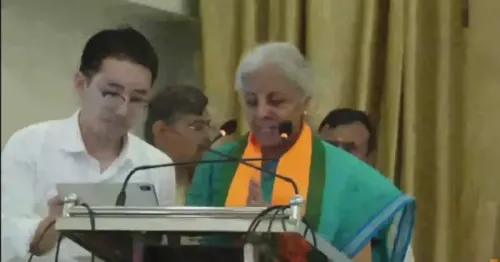
Union Finance Minister Nirmala Sitharaman interacted with beneficiaries of the PM SVANidhi and PM Vishwakarma schemes during the Viksit Bharat Sankalpa Samavesh programme on Sunday, 14 June 2026. Street vendors and traditional artisans shared first-hand accounts of how the two flagship welfare initiatives have affected their livelihoods.
Context
The Viksit Bharat Sankalpa Samavesh is an outreach programme under the government's Viksit Bharat 2047 vision, designed to bring senior ministers face-to-face with citizens who have enrolled in central welfare schemes. Sunday's interaction — conducted in part in Kannada, with the post carrying the bilingual note 'ವಿಕಸಿತ ಭಾರತ ಸಂಕಲ್ಪ ಸಮಾವೇಶ' (Viksit Bharat Sankalpa Samavesh) — suggests the event was held in Karnataka. Beneficiaries shared their experiences and the impact of the schemes on their daily earnings and livelihoods.
Sitharaman, who has held the Finance portfolio since 2019, oversees several micro-credit and artisan support programmes that form the backbone of the government's informal-sector strategy. Beneficiary-interaction events of this kind serve both as a monitoring mechanism and as a public demonstration of scheme uptake.
Policy Backdrop
PM SVANidhi — Pradhan Mantri Street Vendor's AtmaNirbhar Nidhi — was launched in June 2020 as part of the Atmanirbhar Bharat stimulus package to rehabilitate street vendors whose incomes were wiped out by COVID-19 lockdowns. The scheme provides collateral-free working capital loans of up to Rs 50,000 in successive tranches, rewarding timely repayment with higher credit limits.
PM Vishwakarma, announced in the Union Budget 2023-24 with an outlay of Rs 13,000 crore, targets traditional artisans and craftspeople across 18 trades — from blacksmiths and potters to weavers and goldsmiths. It bundles skill training, toolkit incentives, and concessional credit into a single pipeline, aiming to formalise and upgrade the centuries-old artisan economy.
Both schemes sit alongside Mudra loans and the National Rural Livelihoods Mission (NRLM) in a broader government push to extend formal financial access to India's vast informal workforce under the Atmanirbhar Bharat framework.
Stakeholders and Impact
The primary beneficiaries of Sunday's interaction were street vendors and traditional artisans — two segments of the informal economy that have historically lacked access to institutional credit. By attending such events personally, the Finance Minister signals that the Centre is actively monitoring last-mile delivery rather than relying solely on administrative data.
The Viksit Bharat Sankalp Yatra, which was rolled out nationally in November 2023 to saturate coverage of flagship welfare schemes, has evolved into a continuing series of state-level outreach events. These gatherings also allow officials to identify implementation gaps and grievances that may not surface through routine reporting channels.
What's Next
Parliamentary questions and the forthcoming Economic Survey are expected to carry updated disbursement figures and repayment data for both PM SVANidhi and PM Vishwakarma, providing a clearer picture of how deeply the schemes have penetrated their target populations. State-level saturation drives under the Viksit Bharat umbrella are likely to continue, particularly in states approaching assembly elections. The Finance Ministry's sustained engagement with beneficiaries at the ground level suggests that welfare-scheme outreach will remain a visible plank of the government's public communication strategy through the remainder of 2026.
Point of View
A constituency the government has been cultivating through successive budget announcements. By anchoring these interactions within the Viksit Bharat 2047 framework, the administration is tying short-term credit and skilling interventions to a longer developmental narrative. The sustained cadence of such events suggests the Finance Ministry views beneficiary outreach not merely as optics but as a feedback loop for refining scheme implementation.
NationPress
19 Sept 2026
Frequently Asked Questions
What is PM SVANidhi and who can benefit from it?
PM SVANidhi — Pradhan Mantri Street Vendor's AtmaNirbhar Nidhi — is a scheme launched in June 2020 that provides collateral-free working capital loans of up to Rs 50,000 to street vendors. It was introduced as part of the Atmanirbhar Bharat package to help vendors recover from income losses during COVID-19 lockdowns.
What is PM Vishwakarma and which trades does it cover?
PM Vishwakarma is a central government scheme announced in the Union Budget 2023-24 with an outlay of Rs 13,000 crore. It offers skill training, toolkit incentives, and concessional credit to traditional artisans and craftspeople across 18 trades, including blacksmiths, potters, weavers, and goldsmiths.
What is the Viksit Bharat Sankalpa Samavesh programme?
Viksit Bharat Sankalpa Samavesh is an outreach initiative under the government's Viksit Bharat 2047 vision that brings senior ministers into direct contact with citizens enrolled in central welfare schemes. It is aimed at ensuring last-mile delivery and gathering on-the-ground feedback on scheme implementation.
Why did Nirmala Sitharaman attend a beneficiary interaction event?
As Union Finance Minister, Sitharaman oversees several micro-credit and artisan support programmes. Attending beneficiary interactions allows the ministry to monitor scheme uptake, identify implementation gaps, and demonstrate the government's commitment to welfare delivery at the grassroots level.
Where was the Viksit Bharat Sankalpa Samavesh event held on 14 June 2026?
The post announcing the event was bilingual in English and Kannada, strongly indicating the programme took place in Karnataka. The specific city or venue was not confirmed in the available information.