Sitharaman: UPI, not slogans, is India's real Garibi Hatao
Synopsis
At the CD Deshmukh Lecture 2026 in New Delhi, Finance Minister Nirmala Sitharaman argued that UPI and digital technology have delivered on the decades-old 'Garibi Hatao' promise where political slogans alone could not, crediting small entrepreneurs enabled by digital connectivity as the real engine of inclusive growth.
Key Takeaways
Finance Minister Nirmala Sitharaman spoke at the C.D.
Deshmukh Lecture 2026 in New Delhi on 6 August 2026 .
She argued that technology — not political slogans — has driven real progress on poverty eradication in India.
UPI , launched by NPCI in August 2016 , was cited as the primary example of technology enabling small entrepreneurs through digital connectivity.
The Garibi Hatao slogan originated with Indira Gandhi's 1971 election campaign and persisted for decades without a concrete delivery mechanism.
Sitharaman's framing connects UPI to a broader stack — Aadhaar , Jan Dhan , and Digital India — as India's real financial inclusion infrastructure.
UPI's cross-border expansion and deeper welfare integration are expected to continue in upcoming budget cycles.
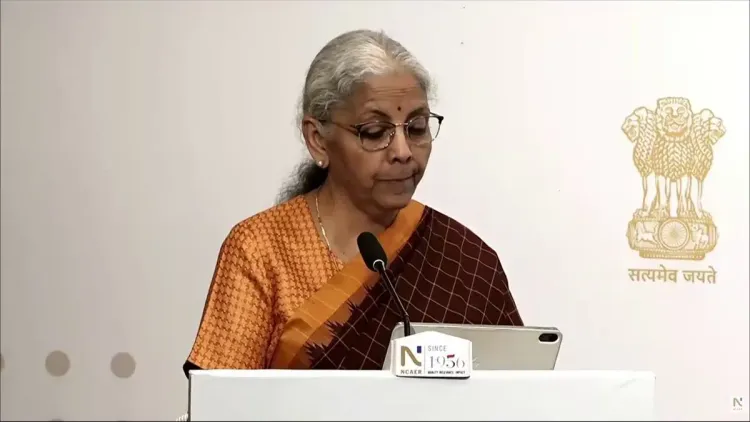
For decades, Garibi Hatao was a promise painted on banners and thundered at rallies. Union Finance Minister Nirmala Sitharaman argued on Thursday, 6 August 2026, in New Delhi, that it took technology — not sloganeering — to actually move the needle on poverty.
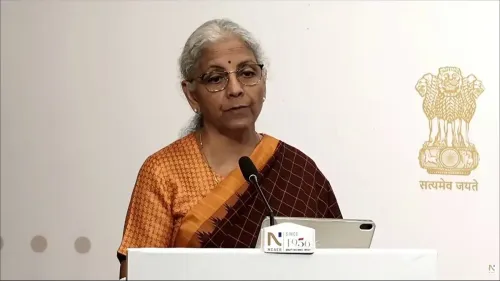
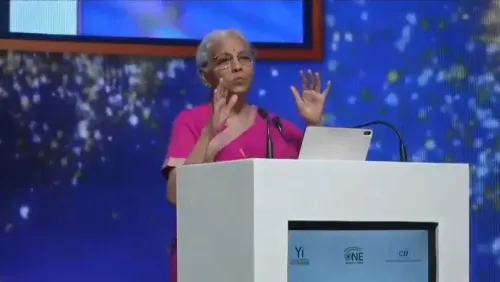
Speaking at the C.D. Deshmukh Lecture 2026, Sitharaman drew a direct line from a fifty-year-old political slogan to the smartphone-enabled street vendor of today. 'Technology in a democratic country has actually helped in Garibi Hatao, rather than slogans,' she said, pointing to the explosive spread of UPI as Exhibit A.
From Indira's slogan to NPCI's rails
Garibi Hatao — eradicate poverty — was the centrepiece of Indira Gandhi's campaign for the 1971 Lok Sabha elections, a rallying cry that swept her back to power. It endured as a rhetorical fixture across party lines for the next five decades. What it rarely produced, critics long argued, was a measurable mechanism.
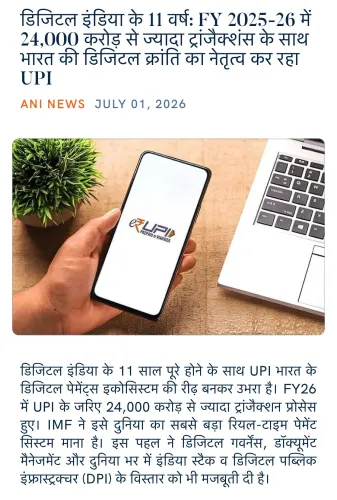
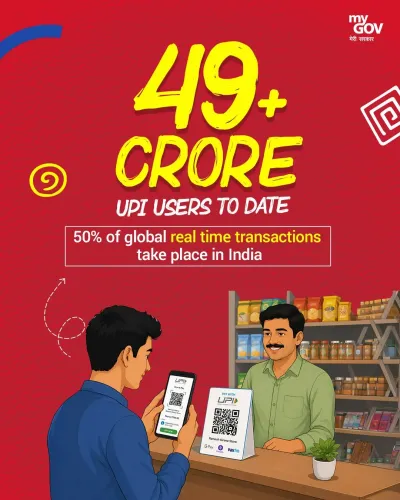
Enter UPI, launched by the National Payments Corporation of India (NPCI) in August 2016. Built on interoperable rails that let any bank account talk to any other in real time, it did something no slogan could: it handed a payment terminal to anyone with a feature phone and a QR code. The small entrepreneur 'in some corner who sells his product through digital connectivity' — Sitharaman's own framing — is now a node in a national economic network.
Technology as the missing redistribution engine
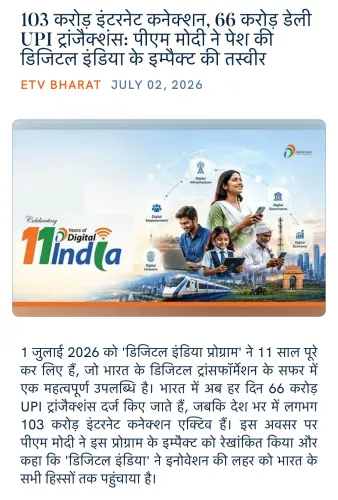
The Finance Minister's argument fits a broader policy logic that successive Indian governments have leaned into: that Aadhaar for identity, Jan Dhan for banking access, and UPI for transactions form a stack that delivers inclusion more efficiently than direct subsidy rhetoric. The Digital India programme, announced in 2015, laid the broadband and e-governance infrastructure underneath all of it.
Sitharaman did not cite specific poverty statistics — and the precise contribution of UPI alone to poverty reduction remains a subject of ongoing research. But her core point was structural: when a marginal entrepreneur can receive payment digitally, she enters the formal economy, builds a transaction history, and becomes legible to credit markets. That is a different kind of poverty intervention than a campaign poster.
The C.D. Deshmukh lecture's own symbolism
C.D. Deshmukh was independent India's first Indian-born RBI Governor and later a Union Finance Minister — a figure who presided over the architecture of post-independence economic institutions. Delivering this argument in a lecture named for him adds a layer of institutional weight: the claim is not just political, it is being made on terrain that belongs to economic history.
UPI's next frontier — cross-border linkages with countries including Singapore, UAE, and others — is already in motion, and its integration with welfare delivery pipelines is expected to deepen in upcoming budget cycles. The infrastructure Sitharaman is crediting for poverty reduction is still being built.
The slogan may be fifty years old. The argument about what finally gave it teeth is very much alive.
Point of View
Not redistribution rhetoric, as the defining poverty-reduction tool of the last decade. It reflects a consistent NDA narrative that links Aadhaar, Jan Dhan, and UPI into a unified 'JAM trinity' story of inclusion. The argument is politically sharp: by crediting technology rather than any specific scheme or leader, it sidesteps direct comparison while implicitly contrasting results with promises. Whether UPI alone can bear the causal weight Sitharaman assigns it remains contested in economic research, but the political architecture of the argument is well-constructed.
NationPress
6 Aug 2026
Frequently Asked Questions
What did Nirmala Sitharaman say at the CD Deshmukh Lecture 2026?
She argued that digital technology, particularly UPI, has done more to reduce poverty in India than the decades-old political slogan 'Garibi Hatao', crediting small entrepreneurs using digital payments as key beneficiaries.
What is the CD Deshmukh Lecture?
It is a lecture series named after C.D. Deshmukh, independent India's first Indian-born RBI Governor and a former Union Finance Minister, held to honour his contributions to Indian economic institutions.
What is Garibi Hatao and who started it?
'Garibi Hatao' meaning 'eradicate poverty' was a political slogan launched by former Prime Minister Indira Gandhi as the central theme of the 1971 Lok Sabha election campaign.
How does UPI help small entrepreneurs and reduce poverty?
UPI enables anyone with a smartphone or basic phone to send and receive payments digitally, allowing small vendors and micro-entrepreneurs to participate in the formal economy, build credit histories, and access financial services.
What is India's next step for UPI expansion?
India is actively expanding UPI to cross-border payment linkages with countries including Singapore and the UAE, and is expected to deepen its integration with government welfare delivery systems in future budget cycles.