Sonowal Highlights 81% Port Capacity Rise in 12 Years
Synopsis
Union Minister Sarbananda Sonowal on 24 June 2026 cited an 81% rise in port capacity, a 652% surge in waterway cargo and India's world number-one ship-recycling rank as proof of transformative maritime growth under 12 years of PM Modi's governance.
Key Takeaways
Minister Sarbananda Sonowal posted on 24 June 2026 highlighting maritime milestones under 12 years of the Modi government.
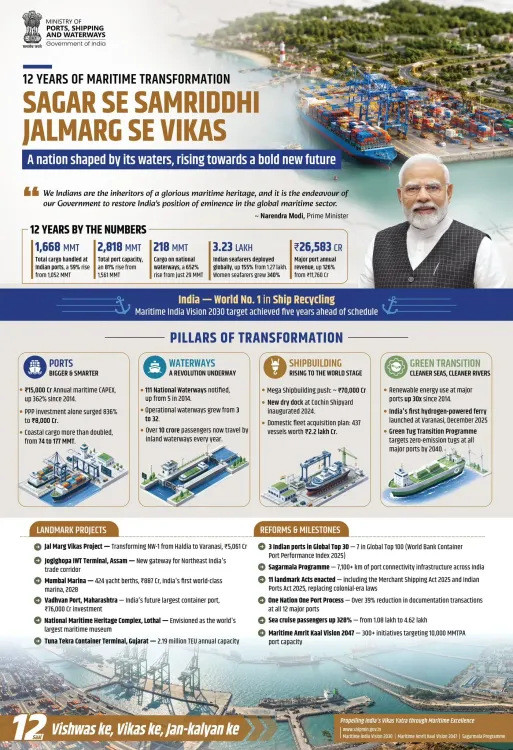
India's port capacity has risen by 81 per cent since 2014 , according to the minister's claims.
National waterways cargo has recorded a 652 per cent increase over the same period.
India has achieved the rank of world's number-one ship recycler , ahead of schedule, anchored by the Alang Shipbreaking Yard in Gujarat.
Key policy drivers include the Sagarmala Project (2015) , the National Waterways Act (2016) , and Maritime India Vision 2030 .
The post is part of the BJP's #12YearsOfSeva communication campaign marking a decade-plus of the Modi administration.
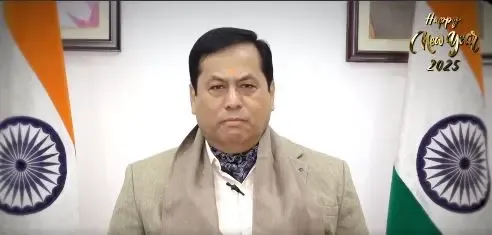
Union Minister of Ports, Shipping and Waterways Sarbananda Sonowal on Wednesday, 24 June 2026 cited sweeping gains across India's maritime sector, crediting 12 years of governance under Prime Minister Narendra Modi for transforming port capacity, inland waterway cargo volumes and ship recycling into global benchmarks.
Context
Posting under the hashtag #12YearsOfSeva, Minister Sonowal listed three headline figures: port capacity up by 81 per cent, national waterways cargo up by 652 per cent, and India reaching the position of world's number-one ship recycler — a milestone he said was achieved ahead of schedule. The post is part of a wider BJP communication drive marking a dozen years since the Modi government took office in May 2014.
Sonowal, a senior BJP leader and former Chief Minister of Assam, has helmed the ports and waterways portfolio since 2021 and has consistently framed maritime growth as central to the Atmanirbhar Bharat agenda.
Policy Backdrop
The figures cited by the minister sit within a layered policy architecture built over the past decade. The Sagarmala Project, launched in 2015, initiated port-led development by modernising berths, improving road and rail connectivity to ports, and fostering coastal economic zones. A year later, the National Waterways Act of 2016 declared 111 national waterways, opening the inland network to systematic cargo development under the Inland Waterways Authority of India.
The Maritime India Vision 2030, unveiled in 2021, set structured targets for capacity expansion, green shipping and self-reliance, providing the strategic scaffold within which the current numbers are being reported. On ship recycling, regulatory upgrades in 2019 aligned Indian standards with the Hong Kong Convention, helping formalise and scale operations at facilities such as the Alang Shipbreaking Yard in Gujarat — the world's largest ship-recycling complex by tonnage.
These strands also connect to the PM Gati Shakti national master plan, which treats ports and waterways as critical nodes in a multimodal freight network designed to reduce logistics costs and carbon emissions simultaneously.
Stakeholders and Impact
The claimed 652 per cent surge in national waterways cargo, if sustained, represents a structural shift for logistics companies and inland waterway operators who have long argued that river freight is cheaper and cleaner than road transport. Port authorities across major gateways — from Jawaharlal Nehru Port in Mumbai to Deendayal Port in Kandla — have been the primary beneficiaries of the capacity expansion drive.
For the ship-recycling industry, the world number-one ranking is commercially significant: it positions Alang and associated yards as preferred destinations for end-of-life vessels globally, generating employment and raw steel supply for domestic industries. Environmental compliance upgrades have also been central to sustaining this standing in the face of competition from Bangladesh and Turkey.
What's Next
The ministry's next major data checkpoint is expected in the forthcoming annual economic survey and ministry performance report, which will either validate or contextualise the figures Sonowal cited. Parliament may also take up proposed updates to shipping and recycling legislation in the coming session. Analysts will watch whether the Maritime India Vision 2030 mid-term review, due in the next planning cycle, recalibrates targets in light of the growth trajectory the minister has outlined. A greener, self-reliant maritime sector, as Sonowal framed it, will ultimately be judged by whether capacity gains translate into lower freight costs and measurable emissions reductions for the broader economy.
Point of View
Designed to convert infrastructure metrics into electoral messaging ahead of state-level contests. The choice of three specific figures — port capacity, waterway cargo and ship-recycling rank — signals the party's intent to own the maritime-infrastructure story as a visible, tangible proof-point of governance delivery. The framing of 'greener and self-reliant' also aligns the ministry's record with two politically potent themes — climate consciousness and Atmanirbhar Bharat — broadening the appeal beyond core infrastructure audiences. Whether the numbers withstand independent scrutiny in the next economic survey will determine how durable this narrative proves to be.
NationPress
24 Jun 2026
Frequently Asked Questions
By how much has India's port capacity increased in the last 12 years?
According to Minister Sarbananda Sonowal, India's port capacity has increased by 81 per cent over the 12 years of the Modi government since 2014, driven by the Sagarmala Project and related port modernisation initiatives.
Is India the world's number one in ship recycling?
Minister Sonowal stated on 24 June 2026 that India has achieved the position of world number one in ship recycling ahead of schedule, a ranking underpinned by the Alang Shipbreaking Yard in Gujarat and regulatory upgrades aligned with the Hong Kong Convention.
What is the Sagarmala Project?
The Sagarmala Project is a port-led development programme launched by the Indian government in 2015 to modernise ports, improve road and rail connectivity to coastal hubs, and promote coastal economic zones as part of a broader maritime growth strategy.
What is Maritime India Vision 2030?
Maritime India Vision 2030 is a strategic roadmap unveiled in 2021 that sets targets for port capacity expansion, green shipping adoption and self-reliance across India's maritime sector, providing the policy framework for the growth figures cited by Minister Sonowal.
What is the #12YearsOfSeva campaign?
#12YearsOfSeva ('12 years of service') is a BJP communication campaign marking 12 years of the Narendra Modi government since it came to power in May 2014 , under which ministers are highlighting sectoral achievements across infrastructure, economy and governance.