Sonowal: Modi govt reforms made India top maritime manpower hub
Synopsis
Union Minister Sarbananda Sonowal on June 25, 2026 credited the Modi government with bold seafarer welfare reforms, asserting that India has been established as a premier global supplier of maritime manpower — a claim rooted in the country's ILO convention commitments, Indian Maritime University expansion, and Maritime India Vision 2030 targets.
Key Takeaways
Union Minister Sarbananda Sonowal on June 25, 2026 stated the Modi government has undertaken bold reforms positioning India as a premier global maritime manpower supplier.
India acceded to the ILO Maritime Labour Convention 2006 in 2015 , aligning domestic seafarer welfare rules with international standards.
The Indian Maritime University , established in 2008 , standardises maritime education and expands the pool of certified officers and ratings.
Maritime India Vision 2030 includes explicit maritime manpower development targets alongside port and shipping capacity goals.
The Directorate General of Shipping oversees certification, training approvals, and welfare compliance for Indian seafarers serving global fleets.
Future policy focus is expected on new welfare rules, training-capacity targets, and India's stance at upcoming IMO and ILO maritime sessions.
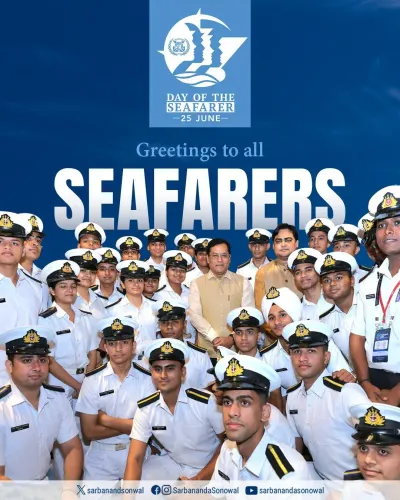
Union Minister of Ports, Shipping and Waterways Sarbananda Sonowal on Thursday, June 25, 2026, credited the Narendra Modi-led government with undertaking bold reforms for seafarer welfare that have positioned India as a premier global supplier of maritime manpower.
Context
Sonowal's post, shared on X, stated that the government has 'undertaken bold reforms for the welfare of seafarers that have positioned us as a premier global supplier of maritime manpower.' The remark underscores the Union Ministry of Ports, Shipping and Waterways' continuing emphasis on India's role not merely as a port-infrastructure builder but as a dominant exporter of skilled maritime labour to global shipping companies.
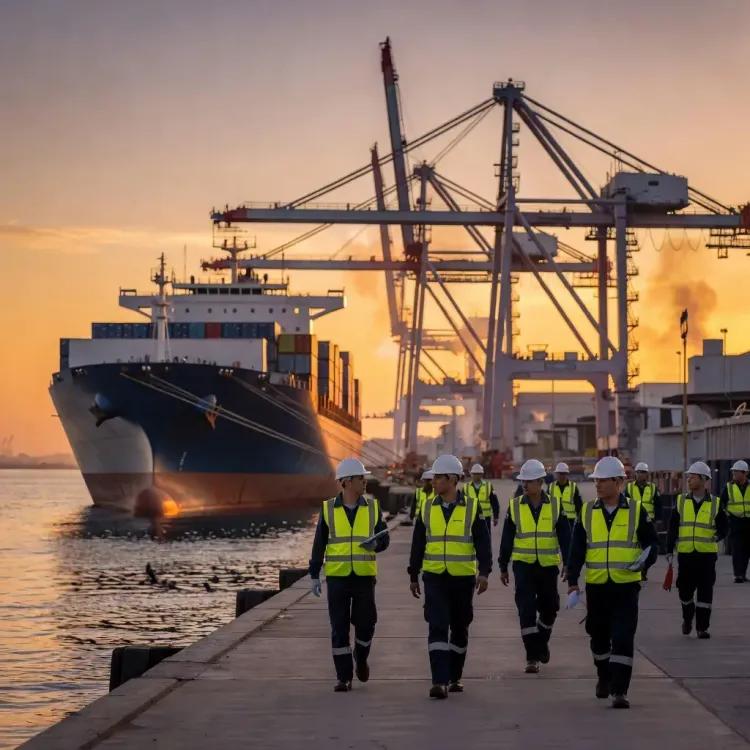
India has long been among the world's largest suppliers of seafarers, with hundreds of thousands of certified officers and ratings serving aboard vessels operated by international shipping lines. Maintaining and expanding that position requires a steady pipeline of trained personnel alongside a regulatory environment aligned with global standards.
Policy Backdrop
India acceded to the International Labour Organization's Maritime Labour Convention 2006 in 2015, committing the country to aligning domestic rules on seafarer working conditions, wages, and welfare with internationally accepted benchmarks. The Directorate General of Shipping, the nodal regulatory body, oversees certification, training-institute approvals, and welfare oversight for Indian seafarers.
The Indian Maritime University, established by an Act of Parliament in 2008, was designed to standardise maritime education across the country and widen the pool of certified officers and ratings. More recently, Maritime India Vision 2030 — the government's overarching blueprint for the sector — set explicit targets for maritime manpower development alongside port-capacity and shipping-tonnage goals. Sonowal's ministry has positioned seafarer welfare and training-capacity expansion as integral pillars of this broader vision.
The Sagarmala Programme, which focuses on port-led development and coastal connectivity, runs in parallel, reflecting the government's strategy of advancing both physical maritime infrastructure and human-capital supply simultaneously.
Stakeholders and Impact
The primary beneficiaries of any seafarer welfare reform are the estimated hundreds of thousands of Indian seafarers who work aboard vessels globally, often spending months away from home. Improved welfare standards — covering areas such as repatriation rights, medical care, minimum wages, and grievance redressal — directly affect their quality of life at sea.
For global shipping companies, India's position as a reliable, large-scale supplier of trained maritime personnel is a strategic asset. Regulatory credibility and consistent training quality determine whether international operators continue to prefer Indian crew over those from competing labour-supply nations. Any reform that strengthens certification rigour or welfare compliance reinforces India's attractiveness in that market.
What's Next
Attention will now turn to the specifics of the reforms Sonowal referenced, including any new seafarer welfare rules, revised training-capacity targets, or updated certification frameworks that may be formalised under the next phase of Maritime India Vision. India's positions at upcoming sessions of the International Maritime Organization and the ILO will also be closely watched as indicators of how the government intends to shape global maritime labour standards. A formal policy announcement or legislative update from the Directorate General of Shipping would give concrete shape to the minister's claims.
Point of View
Complementing the more visible infrastructure narrative around port capacity and Sagarmala. By invoking seafarer welfare alongside global manpower supply, the ministry is signalling that regulatory credibility — not just training volumes — is central to India's competitive position. The claim lands at a moment when rival labour-supply nations are also investing in certification upgrades, making India's ILO-aligned framework a potential differentiator. Whether the 'bold reforms' translate into measurable welfare outcomes or remain aspirational will depend on what the Directorate General of Shipping formalises in the months ahead.
NationPress
25 Jun 2026
Frequently Asked Questions
What reforms has the Modi government made for Indian seafarers?
The Modi government has pursued seafarer welfare reforms aligned with the ILO Maritime Labour Convention 2006, which India acceded to in 2015, covering working conditions, wages, and welfare standards. Specific new measures referenced by Minister Sonowal in June 2026 are yet to be formally detailed by the Directorate General of Shipping.
How many Indian seafarers work globally?
India is one of the world's largest suppliers of maritime manpower, with hundreds of thousands of certified officers and ratings serving aboard vessels operated by international shipping companies, though precise current figures are subject to periodic updates by the Directorate General of Shipping.
What is Maritime India Vision 2030?
Maritime India Vision 2030 is the government's comprehensive blueprint for the maritime sector, setting targets for port capacity, shipping tonnage, and maritime manpower development, with seafarer training and welfare identified as strategic pillars.
What is the role of the Directorate General of Shipping in seafarer welfare?
The Directorate General of Shipping is India's nodal maritime regulatory body, responsible for seafarer certification, approval of training institutes, and oversight of welfare compliance in line with domestic law and international conventions such as the ILO Maritime Labour Convention.
What is Sarbananda Sonowal's role in the Indian government?
Sarbananda Sonowal is the Union Minister of Ports, Shipping and Waterways in the Modi government. He is a senior BJP leader and former Chief Minister of Assam, and oversees policy for India's ports, shipping industry, and inland waterways.