Anurag Thakur Backs Rs 9,585 Crore Delhi-NCR Truck, Bus Scrappage Scheme
Synopsis
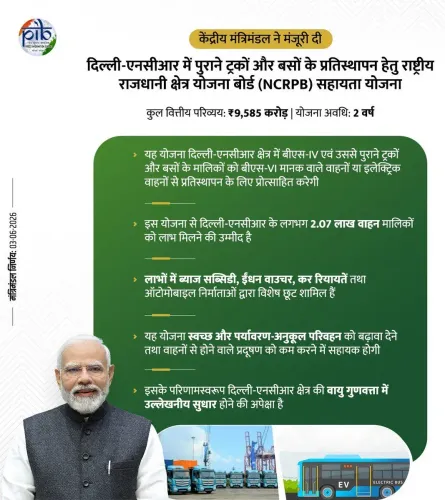
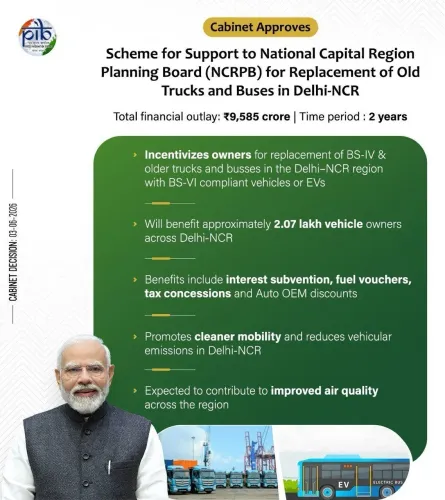
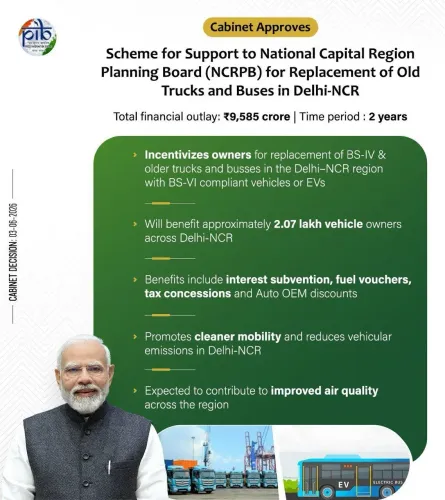
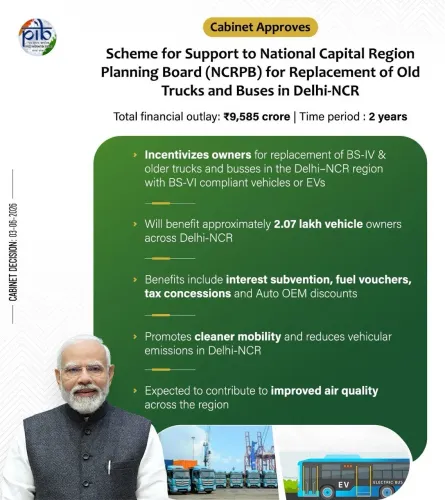
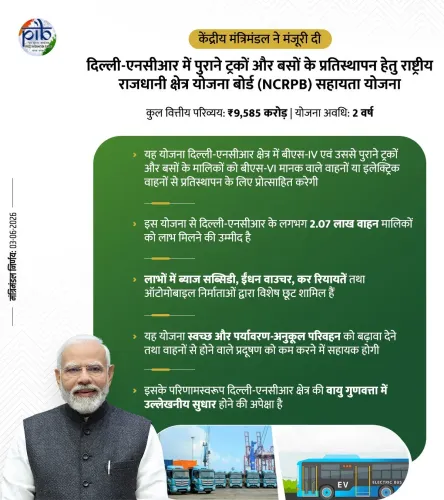
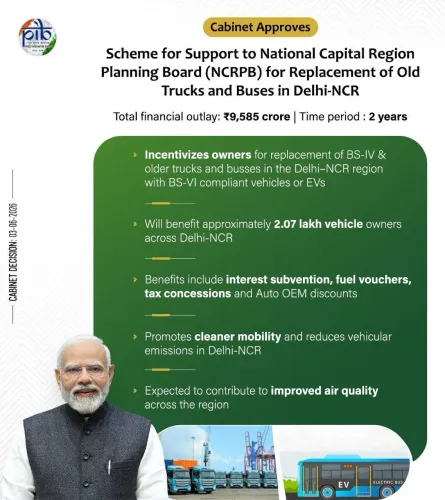
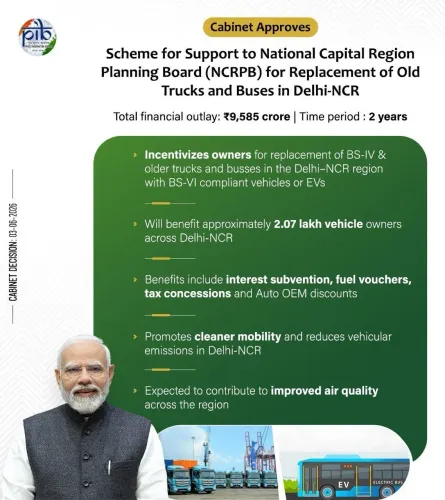
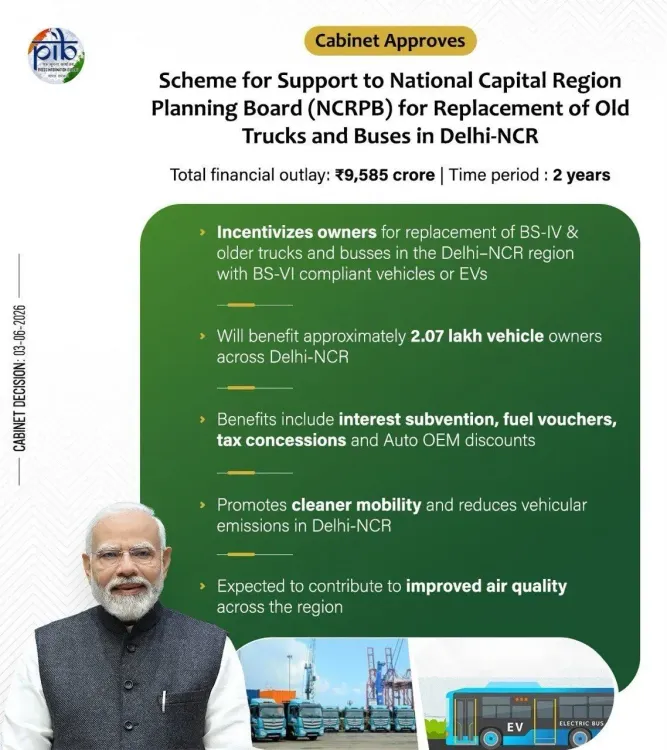
BJP MP Anurag Thakur has endorsed a Rs 9,585 crore Union government scheme to scrap old BS-IV trucks and buses across Delhi-NCR and replace them with BS-VI and electric vehicles. He said the programme will benefit over 2 lakh owners and mark a major step towards cleaner air in the National Capital Region.
Key Takeaways
Anurag Thakur backed a Rs 9,585 crore scheme to replace old trucks and buses in Delhi-NCR.
The scheme targets scrapping of BS-IV vehicles in favour of BS-VI and electric mobility.
Over 2 lakh commercial vehicle owners are projected as beneficiaries.
The move builds on the 2021 Vehicle Scrappage Policy and the April 2020 BS-VI rollout.
It aligns with the National Clean Air Programme and India's climate commitments.
Implementation details and AQI impact in Delhi-NCR will be the key metrics to watch.
BJP Lok Sabha MP Anurag Thakur on Wednesday welcomed a Union government scheme aimed at replacing old trucks and buses across Delhi-NCR, calling it a decisive push for cleaner air in the capital region. In a post on X, the former Union Minister for Information & Broadcasting endorsed the initiative as part of a broader transition to BS-VI and electric mobility.
'A visionary and much-needed initiative by the Narendra Modi government,' Thakur wrote, describing the Rs 9,585 crore outlay as a 'powerful step towards cleaner air'. He said the programme would benefit over 2 lakh owners by scrapping polluting BS-IV vehicles and promoting cleaner alternatives, bringing what he termed 'transformative change' to air quality in the National Capital Region.
Context
Thakur, who represents Hamirpur in Himachal Pradesh and previously held the Youth Affairs & Sports portfolio, has frequently amplified central government policy announcements on social platforms. His latest post frames the scrappage push as both an environmental and economic intervention, with commercial vehicle owners positioned as direct beneficiaries.
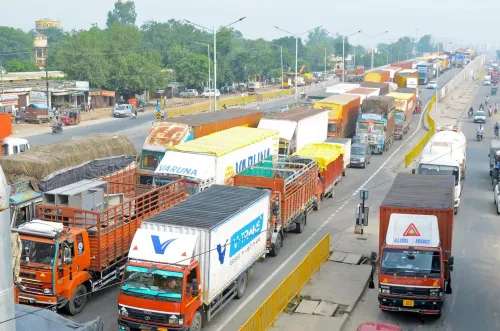
The Delhi-NCR region has for years figured among the country's most polluted urban clusters, with vehicular emissions repeatedly identified as a leading contributor alongside stubble burning, construction dust and industrial activity. Heavy-duty diesel trucks and ageing buses are a particular focus of regulators given their disproportionate share of particulate and nitrogen oxide output.
Policy backdrop
The announcement sits within a policy arc that began with the nationwide rollout of Bharat Stage VI emission norms in April 2020, leapfrogging BS-V to align Indian standards with global benchmarks on tailpipe pollutants. A year later, the Centre unveiled the Vehicle Scrappage Policy in 2021, designed to incentivise the retirement of high-emission vehicles and seed a formal recycling industry.
The Delhi-NCR-specific intervention referenced by Thakur extends that framework, layering targeted fiscal support for commercial fleet operators on top of the existing scrappage architecture. It also dovetails with the National Clean Air Programme, the umbrella mission to reduce particulate concentrations across non-attainment cities, and with India's stated climate commitments on transport-sector emissions.
Stakeholders and impact
The most immediate stakeholders are truck and bus operators running older BS-IV fleets, many of whom face mounting compliance costs and restrictions on entry into the capital. The transition pathway points them towards BS-VI replacements or, where viable, electric trucks and buses — a segment that has begun to scale on public procurement orders and state transport tenders.
For residents of Delhi and adjoining districts in Haryana, Uttar Pradesh and Rajasthan, the scheme's value will ultimately be measured in air quality readings during the winter months, when the region's Air Quality Index routinely slips into 'severe' territory. Manufacturers of BS-VI vehicles, electric mobility firms and the nascent organised scrappage industry stand to gain from sustained demand.
What's next
Attention now turns to state-level implementation guidelines, the mechanism for disbursing scrappage incentives, and the timeline over which the 2 lakh-strong target cohort is expected to switch fleets. Observers will also be tracking whether the intervention produces a measurable shift in Delhi-NCR's annual AQI trajectory in the seasons after rollout.
Thakur closed his post with a call for collective action, writing, 'Together, we move towards a greener, healthier future for all.' The political messaging signals that the ruling party intends to keep clean-air policy central to its governance pitch in the National Capital Region.
Point of View
The 2021 Vehicle Scrappage Policy and now a Delhi-NCR-specific fleet replacement push. By foregrounding both the environmental gain and the 2 lakh-strong beneficiary base, the BJP is attempting to fuse clean-air politics with commercial-vehicle owner outreach in a region where AQI is a recurring political flashpoint. The real test, however, will be administrative: incentive disbursal speed, electric vehicle supply, and whether winter pollution readings actually move. Until then, the scheme remains a strong signal of intent within an established policy continuum.
NationPress
18 Oct 2026
Frequently Asked Questions
What is the Rs 9,585 crore Delhi-NCR scrappage scheme?
It is a Union government scheme cited by BJP MP Anurag Thakur to replace old trucks and buses in Delhi-NCR by scrapping BS-IV vehicles and promoting BS-VI and electric mobility, with over 2 lakh owners projected as beneficiaries.
Who will benefit from the Delhi-NCR truck and bus scrappage scheme?
Over 2 lakh commercial vehicle owners operating old trucks and buses in the National Capital Region are the primary beneficiaries, alongside residents who stand to gain from cleaner air.
What are BS-VI emission norms in India?
BS-VI, or Bharat Stage VI, are stricter vehicle emission standards rolled out nationwide from April 2020, replacing BS-IV norms to cut particulate matter and nitrogen oxide emissions.
How does this scheme link to India's Vehicle Scrappage Policy?
The Delhi-NCR initiative extends the 2021 Vehicle Scrappage Policy, which set up a national framework for retiring old, high-emission vehicles and incentivising replacements with compliant models.
Why is Delhi-NCR air quality a recurring concern?
Delhi-NCR routinely records among the worst air quality readings in India, driven by vehicular emissions, stubble burning, construction dust and industrial activity, with winter months seeing severe AQI spikes.