Tharoor Backs Dropping 'Middle East' for 'West Asia'
Synopsis
Congress MP Dr. Shashi Tharoor has called for 'Middle East' to be replaced by 'West Asia' in global strategic vocabulary, endorsing an article that declares the older term expired. India's MEA has used 'West Asia' as standard since the 1950s, and Tharoor's intervention renews pressure on diplomats and media worldwide to follow suit.
Key Takeaways
Shashi Tharoor on June 10, 2026 publicly endorsed retiring the term 'Middle East' in favour of 'West Asia.' India's Ministry of External Affairs has officially used 'West Asia' in diplomatic documents since the 1950s , across all governments.
The term 'Middle East' is criticised as a Eurocentric construct originating in 19th-century British imperial cartography. 'West Asia' covers the Gulf states, the Levant, and Iran and positions the region relative to the Indian subcontinent .
The debate has parallels with the retirement of similar terms such as 'Far East' and 'Near East' from formal international usage.
Tharoor's standing as a former UN Under-Secretary-General gives the call added weight in multilateral and diplomatic circles.
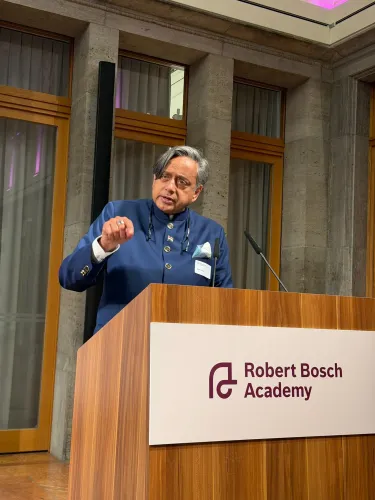
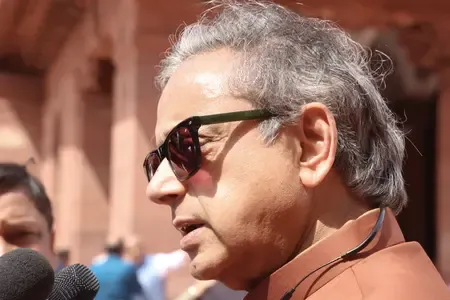
Congress MP Dr. Shashi Tharoor on Wednesday, June 10, 2026, endorsed a call to retire the term 'Middle East' from strategic discourse, arguing that 'West Asia' should become the standard vocabulary for diplomats and thinkers worldwide. The Thiruvananthapuram MP praised a piece he described as 'terrific' for concluding that the term 'Middle East' has, in his words, 'expired.'
Context
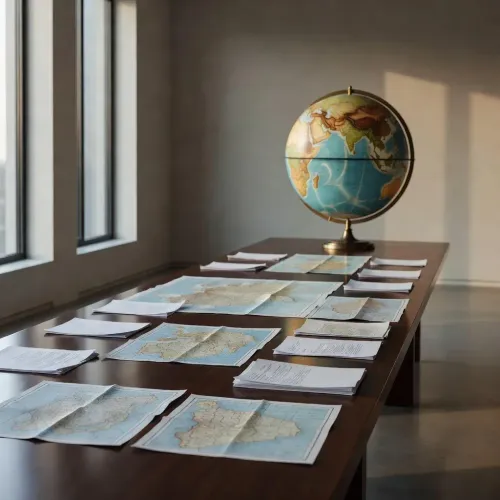
Tharoor shared the article with the observation that it is 'time for West Asia to dawn in the vocabulary of all strategic thinkers.' While he did not name the publication, his endorsement amplifies a debate that has simmered in academic and diplomatic circles for decades. The term 'Middle East' is widely regarded by Asian and Global South scholars as a Eurocentric construct rooted in 19th-century British imperial cartography, positioning the region relative to London rather than to Asia.
'West Asia,' by contrast, locates the same geography — the Gulf states, the Levant, and Iran — relative to the Indian subcontinent, reflecting an Asian-centred worldview. For a country like India, which sits immediately to the east of the region, the term is both geographically precise and politically neutral.
Policy Backdrop
India's Ministry of External Affairs has used 'West Asia' as its standard terminology in annual reports and diplomatic correspondence since the 1950s, making it one of the earliest major democracies to formalise the usage. This preference has remained consistent across successive Indian governments, cutting across party lines.
The terminology debate is not merely semantic. It reflects a broader assertion by Asian and Global South nations that international discourse should not be filtered through a Western geographic lens. Similar arguments have been made about terms such as 'Far East' and 'Near East,' both of which have largely faded from formal use in recent decades.
Stakeholders and Impact
The immediate audience for Tharoor's post is the community of strategic thinkers, diplomats, and foreign-policy commentators — particularly those in India and across Asia — who still default to 'Middle East' in English-language writing. Indian think tanks, university international-relations departments, and parliamentary committees that discuss the region are among those whose usage could shift if the argument gains traction.
Media organisations are also implicated: most major English-language outlets continue to use 'Middle East' as their house style, meaning any meaningful shift in nomenclature would require editorial-policy changes at scale. For Indian diplomats already trained in MEA style, the change is already institutionalised; the push is aimed at the broader global conversation.
What's Next
Observers will watch whether Tharoor's intervention — backed by his profile as a former UN Under-Secretary-General and a sitting member of Parliament's Standing Committee on External Affairs — prompts renewed discussion in Indian think-tank publications and parliamentary debates on the region. Any uptick in exclusive use of 'West Asia' in future MEA documents or in Indian academic journals would signal that the argument is moving from advocacy to practice.
The broader implication is that as India asserts greater influence in global affairs, its preferred terminology may increasingly set the standard for how the region is discussed in multilateral forums and international institutions.
Point of View
He is effectively pressuring English-language strategic communities — particularly outside India — to align with nomenclature that New Delhi has practised for seven decades. The timing matters: as India's global profile rises, its terminological preferences carry more normative weight than they once did. The real test will be whether this remains a recurring talking point or translates into style-guide changes at think tanks and multilateral bodies.
NationPress
28 Oct 2026
Frequently Asked Questions
Why does India use 'West Asia' instead of 'Middle East'?
India's Ministry of External Affairs has used 'West Asia' as its official term since the 1950s because it positions the region relative to the Indian subcontinent rather than to Europe, making it geographically accurate from an Asian perspective.
What is wrong with the term 'Middle East'?
Critics argue 'Middle East' is a Eurocentric label coined in 19th-century British imperial cartography that orients the region relative to London, not to Asia. Many Asian and Global South scholars consider it outdated and geographically misleading.
What did Shashi Tharoor say about 'West Asia'?
On June 10, 2026, Tharoor endorsed an article concluding that the term 'Middle East' has 'expired' and called on all strategic thinkers to adopt 'West Asia' in its place.
Which countries are included in 'West Asia'?
'West Asia' generally refers to the Gulf states, the Levant, and Iran — the same region conventionally called the 'Middle East' in Western usage.
Has India always called it West Asia?
Yes. India's official diplomatic and foreign-policy documents have consistently used 'West Asia' since at least the 1950s, a practice maintained by every government regardless of party.