Agnipath second term 'win-win' for forces and Agniveers, says IAF's SWAC officer
Synopsis
The IAF's South Western Air Command has publicly endorsed the Centre's Agnipath extension, with a senior officer confirming that the second two-year term drops the 25 per cent absorption cap — meaning every Agniveer who meets discipline, fitness, and performance benchmarks can now become a regular cadet. It is the clearest official signal yet that the scheme is being structurally recalibrated.
Key Takeaways
AVM Gurjot Singh Bhullar of IAF's SWAC described the second two-year Agniveer extension as a 'win-win' at a press conference in Gandhinagar on 5 November 2026 .
The second engagement removes the 25 per cent absorption cap that applied during the first tenure.
Retention criteria for the second term: discipline , medical fitness , and job output — meeting all three qualifies an Agniveer for regular cadet status.
Agniveers in SWAC serve in air defence, fighter operations, helicopter operations, sensor management , and administrative roles.
AVM Bhullar said internal competition among Agniveers — driven by the original 25 per cent absorption limit — has improved morale, fitness, and performance across squadrons.
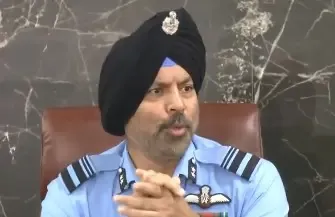
Air Vice Marshal Gurjot Singh Bhullar, Senior Officer-in-Charge Administration at the Indian Air Force's (IAF) South Western Air Command (SWAC), headquartered in Gandhinagar, on 5 November 2026 described the Centre's decision to offer Agniveers a second two-year service extension as a 'win-win situation' for both the soldiers and the armed forces. Speaking at a press conference, he said the move stemmed from feedback gathered after assessing Agniveers currently serving across commands.
What the Second Engagement Means
Under the revised framework, the second service term removes the earlier 25 per cent absorption cap that applied to the first tenure. According to AVM Bhullar, retention in the second engagement will hinge solely on three minimum criteria: discipline, medical fitness, and job output. 'If one meets those criteria, the Agniveers will be absorbed as a regular cadet into the armed forces,' he said.
He characterised the overall Agnipath scheme as 'collective refinement', indicating that the two-year extension has been calibrated to address grievances raised by serving Agniveers while simultaneously meeting the IAF's operational manpower needs.
Roles Agniveers Play Across the SWAC
Describing the operational footprint of Agniveers within SWAC, AVM Bhullar said they are deployed in core roles spanning air defence, fighter operations, helicopter operations, sensor management, and radar systems, as well as administrative functions such as airmen's messes, station quarters, and guard duties. He declined to disclose exact numbers but confirmed that a 'sizeable chunk' of Agniveers is currently serving the command. 'Whether they belong to the South Western Command or any other command, the distribution is almost equal and well balanced,' he added.
Competition as a Quality Driver
AVM Bhullar argued that the initial design of the Agnipath scheme — absorbing the best-performing 25 per cent into permanent service — fosters healthy competition among recruits. 'If there is a station with one hundred Agniveers and they are all competing against one another in a squadron, their work output, motivation level, morale, physical fitness, and overall performance improve because everyone wants to prove themselves,' he said, calling this one of the scheme's most significant positive outcomes.
Why the IAF Wants Trained Agniveers Retained
Responding to questions about demand for Agniveers beyond their initial term, the officer underscored the value of retaining personnel already trained on sophisticated and costly equipment. 'When we have a trained individual, it is a very good package for us,' he said, noting that the forces require 'technologically aligned, well-motivated' manpower. This comes amid broader public debate over the Agnipath scheme since its rollout, with critics questioning long-term career security for recruits who are not retained after the first four-year cycle. The second-term option, reportedly backed by field assessments, is now being positioned as a structural response to those concerns.
How smoothly the revised framework is implemented across all commands — and whether absorption rates in the second engagement live up to official assurances — will be closely watched by serving Agniveers and policy observers alike.
Point of View
But its value depends entirely on how 'discipline, medical fitness, and job output' are assessed and by whom. The lack of disclosed numbers from SWAC is telling: official confidence about the scheme's success has not yet translated into transparency about retention rates. If the Centre is serious about repositioning Agnipath as a career pathway rather than a short-service contract, independent audit of absorption outcomes will be the credibility test that statements alone cannot pass.
NationPress
6 Nov 2026
Frequently Asked Questions
What is the second two-year extension under the Agnipath scheme?
The Centre has introduced an option for Agniveers to serve a second two-year term after completing their initial engagement. Unlike the first tenure, this second term carries no 25 per cent absorption cap — Agniveers who meet criteria for discipline, medical fitness, and job output can be absorbed as regular cadets in the armed forces.
Who announced the win-win characterisation of the Agnipath extension?
Air Vice Marshal Gurjot Singh Bhullar, Senior Officer-in-Charge Administration at the IAF's South Western Air Command in Gandhinagar, made the statement at a press conference on 5 November 2026. He said the decision was based on feedback and field assessments of currently serving Agniveers.
What roles are Agniveers performing in the IAF's South Western Air Command?
According to AVM Bhullar, Agniveers in SWAC are deployed in air defence, fighter operations, helicopter operations, sensor management, radar systems, and basic administrative functions including airmen's messes, station quarters, and guard duties.
How does the second-term absorption differ from the first tenure?
In the first four-year Agnipath cycle, only 25 per cent of Agniveers could be absorbed into permanent service. The second two-year engagement removes this cap entirely, meaning all Agniveers who satisfy the minimum criteria — discipline, medical fitness, and job output — are eligible for regular cadet induction.
Why does the IAF say competition among Agniveers benefits the forces?
AVM Bhullar argued that the original 25 per cent absorption limit creates healthy competition within squadrons, lifting overall performance, morale, and physical fitness. He cited this competitive dynamic as one of the scheme's most significant positive outcomes.