Women must lead India's energy transition, say climate activists at New Delhi event
Synopsis
India's energy transition is racing ahead on capacity targets — but activists at a New Delhi climate event on 9 July say it is structurally leaving women out. Author Neha Saigal and Clean Air Punjab's Amrita Rana argue that without women at the policy table and in village-level energy decisions, the shift to green power risks being neither just nor durable.
Key Takeaways
Climate activists and entrepreneurs at a New Delhi event on 9 July called for greater women's participation in India's energy transition .
Author Neha Saigal described women as 'key architects' of a just energy transition, drawing on five case studies from across India.
Saigal said structural shifts in policy, finance, and governance are needed — not just skilling programmes.
Amrita Rana of Clean Air Punjab, Amritsar , said current government policies offer inadequate opportunities for women in clean energy.
Rana urged the government to provide subsidies and introduce reserved seats for women in clean energy initiatives.
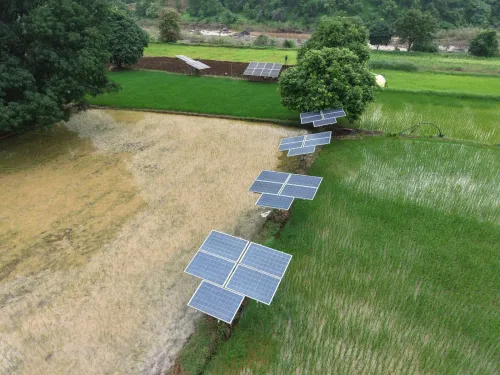
Both speakers stressed decentralised renewable energy models as key to bringing rural women into energy decision-making.
Entrepreneurs and climate activists on Thursday, 9 July called for placing women at the centre of India's energy transition, arguing that the sector has historically been male-dominated and that a truly just transition cannot happen without gender-equal decision-making. The remarks came during a climate talk event in New Delhi focused on women's role in shaping the country's clean energy future.
Women as architects of the energy transition
Neha Saigal, author of 'Powering the Future: Women Leading India's Energy Transition', said the primary purpose of the event was to highlight how women are not peripheral but central to both energy transition and broader climate solutions in India. 'I think women so far have not been central to the energy discourse in India but actually they are the key architects and leaders of the energy transition in order to have a just transition,' she said.
Saigal's book draws on five stories from different parts of India, illustrating 'how women are playing a critical role in defining the new energy paradigm towards a green economy in India.' She described energy as having 'traditionally been a masculine space' and emphasised that the goal is to make it 'a gender equal space where women have space in decision making and participate in energy conversations in their communities.'
Structural barriers holding women back
On the challenges obstructing greater women's participation, Saigal pointed to deep-rooted social norms. 'We live in a society that is already gender unequal. The social norms in our country are such that women are not able to participate as much when it comes to decisions around energy,' she said.
She argued that meaningful change requires structural intervention — shifts in policy, finance, and governance — rather than skilling programmes alone. 'It requires working at the fundamentals of making norms that allow women to be equal players in the energy transition, while also ensuring that there are decentralised models of renewable energy that allow women even in villages to participate in this conversation,' Saigal added.
Voices from the ground: Clean Air Punjab
Amrita Rana, founding member of Clean Air Punjab based in Amritsar, was equally emphatic. 'Energy transition can be successful only when women are involved in it,' she said, adding that women must be present at the policy-framing table for outcomes to genuinely reflect gender equality.
Rana said India's current policies do not provide adequate opportunities for women in the clean energy sector. Drawing on her experience running a door-to-door campaign around pink autos in Amritsar, she observed: 'Women are not waiting for opportunities, they are instead waiting for systems to believe in them.' She urged the government to extend subsidies and introduce reserved seats for women in clean energy programmes.
What needs to change
Both speakers converged on the need for decentralised renewable energy models that enable rural women to participate — not just as beneficiaries but as decision-makers. This comes amid a broader global push to mainstream gender in climate policy, with frameworks such as the UN's Gender Action Plan under the UNFCCC calling for equal representation in national climate delegations. India's own renewable energy targets — 500 GW of non-fossil capacity by 2030 — make the inclusion question more urgent: who shapes the transition will determine who benefits from it.
With the country's clean energy sector expanding rapidly, advocates argue that systemic reform — not incremental skilling — is the only route to making India's energy transition both green and gender-just.
Point of View
The just transition risks being just a transition.
NationPress
8 Oct 2026
Frequently Asked Questions
Why is women's participation important in India's energy transition?
Women are disproportionately affected by energy access and pollution, yet are largely excluded from decision-making in the sector. Activists argue that without women at the policy table and in community-level energy projects, the transition to clean energy will be neither equitable nor fully effective.
What is the book 'Powering the Future: Women Leading India's Energy Transition' about?
Written by Neha Saigal, the book presents five stories from different parts of India showing how women are shaping the country's shift to a green economy. It argues that women are the key architects of a just energy transition, despite being largely absent from mainstream energy discourse.
What structural changes are activists calling for?
Speakers at the event called for reforms in policy, finance, and governance to make the energy sector gender-equal. They also urged the government to provide subsidies, introduce reserved seats for women in clean energy programmes, and build decentralised renewable energy models that enable rural women to participate.
What did Clean Air Punjab's Amrita Rana say about current government policy?
Rana said India's existing policies do not provide adequate opportunities for women in the clean energy sector. She cited her door-to-door campaign experience in Amritsar to argue that women are ready to participate — but are waiting for systems that believe in them, not just opportunities.
How does this issue connect to India's broader renewable energy goals?
India has set a target of 500 GW of non-fossil energy capacity by 2030. Advocates argue that who shapes this transition will determine who benefits from it, making gender inclusion a matter of both equity and policy effectiveness, not just social justice.