Bhupender Yadav reviews PAVAN-I3C air quality command centre in Delhi

Synopsis
India's Environment Minister has reviewed PAVAN-I3C — a new digital nerve centre that fuses 30+ data streams, 111 air quality stations, 2,300+ industries, and 3,200+ construction sites into a single screen. Paired with an NCR construction ban from 5–20 November, it signals a structural shift from fragmented winter-pollution firefighting to real-time, data-driven enforcement.
Key Takeaways
Bhupender Yadav reviewed the PAVAN-I3C air quality command centre in New Delhi on 30 October 2026 .
PAVAN (Platform for Air Quality Vigilance and Analytics for NCR) integrates more than 30 APIs and data streams from multiple agencies onto a single platform.
The system monitors 111 CAAQMS stations , over 2,300 industries , and more than 3,200 active construction sites across Delhi-NCR.
All construction and demolition (C&D) activities in the NCR will be halted from 5 to 20 November to curb seasonal pollution.
The platform operates on a 'Detect, Analyse, Act' principle, aiming to eliminate data silos and hold polluters accountable in real time.
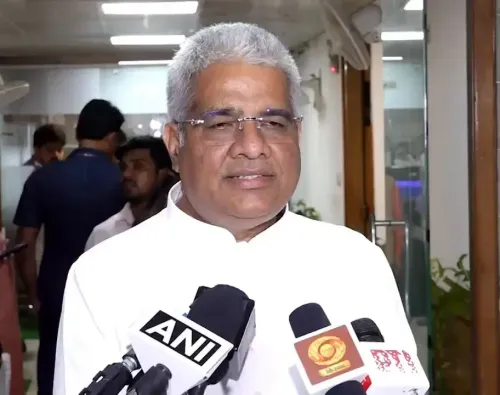
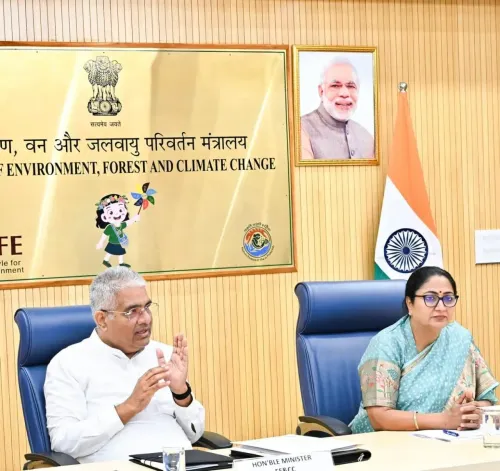
Union Minister for Environment, Forest and Climate Change Bhupender Yadav on Friday, 30 October 2026, visited and reviewed the operational readiness of the Commission for Air Quality Management's (CAQM) newly launched Integrated Command and Control Centre (I3C) in New Delhi, underscoring the need for proactive — rather than reactive — steps to combat air pollution across the National Capital Region (NCR).
What is PAVAN-I3C
The centre has been christened PAVAN — short for Platform for Air Quality Vigilance and Analytics for NCR — according to an official statement. Developed as a single-window digital nerve centre, PAVAN-I3C integrates more than 30 APIs and data streams, drawing together air quality readings, emissions data, meteorological inputs, satellite feeds, camera surveillance, mobility patterns, public complaints, and compliance records from multiple agencies onto one unified platform.
The system also aggregates data from 111 Continuous Ambient Air Quality Monitoring Stations (CAAQMS) operational across Delhi-NCR, over 2,300 industries, more than 3,200 active construction sites, and traffic congestion hotspots — giving regulators an unprecedented, granular view of pollution sources in near real-time.
What the Minister Said
Addressing officials after his review, Yadav stated: "Clean air cannot be secured by any one agency or any one State acting alone. The I3C brings every data stream that matters onto a single screen, so that a farm fire, a polluting stack or an uncovered construction site is seen, flagged and acted upon in real time."
He added: "This is a paradigm shift from reacting to pollution to anticipating it, and every implementing agency must now act in real-time on these alerts without delay." Yadav further emphasised that the launch of PAVAN-I3C marks a definitive turning point by eliminating operational lag, dismantling data silos, and enabling State Pollution Control Boards (SPCBs) to work under a single, verified source of information — capable of holding polluters accountable within minutes.
How the Platform Works
Operating on the principle of 'Detect, Analyse, Act', PAVAN-I3C offers real-time and historical analysis of pollution levels, identification of pollution sources, trend assessment, and field-level compliance tracking against prescribed standards and action plans. Non-conforming industries, non-compliant polluting sources, and traffic congestion hotspots are flagged for swift action through the platform.
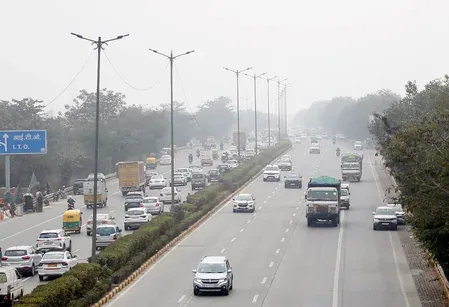
Notably, this initiative comes as Delhi-NCR enters its most critical air quality window — the winter months, when a combination of crop stubble burning, falling temperatures, and low wind speeds routinely pushes the Air Quality Index (AQI) into the 'severe' category. The CAQM's move to centralise data reflects lessons from years of fragmented enforcement, where agencies often operated in isolation with delayed or inconsistent information.
Construction Halt and Immediate Measures
In a significant near-term intervention, Yadav announced that all construction and demolition (C&D) activities across the NCR region will be halted from 5 November to 20 November in a bid to rein in particulate pollution during the most vulnerable weeks of the pollution season. This measure has been deployed in previous years as well, though enforcement consistency has drawn criticism from independent environment watchdogs.
What Comes Next
The PAVAN-I3C platform is expected to serve as the operational backbone for CAQM's Graded Response Action Plan (GRAP) enforcement this winter. With all key agencies now plugged into a common data environment, the Centre has indicated that accountability for non-compliance will be faster and more traceable than in previous seasons. How effectively the system translates real-time alerts into on-ground action — particularly across state boundaries — will be the true measure of its impact.
Point of View
But the history of Delhi's winter pollution crises is littered with command centres, task forces, and action plans that fell short at enforcement. The platform's value will be determined not by how many data streams it ingests, but by whether cross-state agencies — Delhi, Haryana, Punjab, UP — actually respond to its alerts at the same speed. The 5–20 November construction ban is a familiar seasonal lever; what remains untested is whether real-time compliance tracking will finally close the gap between data visibility and field accountability.
NationPress
30 Oct 2026
Frequently Asked Questions
What is PAVAN-I3C and what does it do?
PAVAN-I3C (Platform for Air Quality Vigilance and Analytics for NCR) is CAQM's new Integrated Command and Control Centre in Delhi that consolidates over 30 data streams — including air quality, satellite, emissions, and compliance data — onto a single platform for real-time pollution monitoring and enforcement across the NCR region.
How many sources does PAVAN-I3C monitor?
The platform integrates data from 111 Continuous Ambient Air Quality Monitoring Stations (CAAQMS), over 2,300 industries, more than 3,200 active construction sites, and traffic congestion hotspots across Delhi-NCR.
What is the NCR construction ban announced by Bhupender Yadav?
All construction and demolition (C&D) activities across the NCR region will be halted from 5 to 20 November 2026 as a seasonal measure to reduce particulate pollution during the period when air quality typically deteriorates the most.
Why was PAVAN-I3C launched?
The platform was developed to eliminate the operational lag and data silos that have historically hampered coordinated air quality enforcement across Delhi-NCR. It enables State Pollution Control Boards and other agencies to act on a single, verified source of information and hold polluters accountable in real time.
Who is responsible for overseeing PAVAN-I3C?
The Commission for Air Quality Management (CAQM) developed and operates PAVAN-I3C, with Union Minister for Environment, Forest and Climate Change Bhupender Yadav reviewing its operational readiness on 30 October 2026.