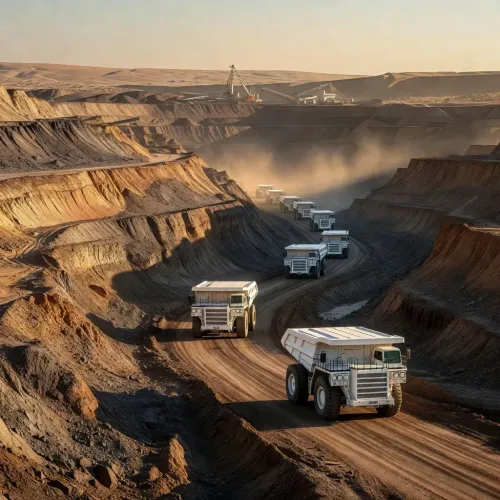
China's coal-to-liquids plant boosts coal value 700% in Ningxia
Synopsis
China's Ningxia coal-to-liquids plant — the world's largest — has boosted coal's economic value by 700%, converting 24 million tonnes in 2025 into rocket fuel and lubricants, as the Strait of Hormuz blockade pushed oil above US$100 per barrel and exposed China's dependence on Middle East crude.
Key Takeaways
China Energy Group Ningxia Coal Industry Co Ltd brought the world's largest coal-to-liquids plant to full operations in Ningxia Hui autonomous region in July 2026 .
The facility processed 24 million tonnes of coal in 2025 — a quarter of Ningxia's total annual coal output — and boosts coal's economic value by approximately 700 per cent .
Outputs include rocket propellants and industrial lubricants, with reported supply links to China Aerospace Science and Technology Corporation .
The project gained urgency after the Strait of Hormuz blockade cut off Middle Eastern crude, which previously accounted for more than 40 per cent of China's oil imports, driving prices above US$100 per barrel .
The plant uses indirect coal liquefaction — heating coal with oxygen and steam to produce syngas — a technology also associated with Sasol and Synfuels China Technology .
Coal accounts for more than 90 per cent of Ningxia's regional energy consumption, making synthetic fuel conversion central to the area's economic and energy strategy.
China Energy Group Ningxia Coal Industry Co Ltd has brought the world's largest coal-to-liquids facility to full operations in northwest China's Ningxia Hui autonomous region, converting coal into high-value oil products — including rocket propellants and industrial lubricants — at a sevenfold increase in economic value, according to a report published by Science and Technology Daily on Wednesday, 24 August 2026. The plant processed 24 million tonnes of coal in 2025, equivalent to a quarter of Ningxia's total annual coal output.
Why It Matters
The timing of the plant's ramp-up is strategically significant. China reportedly sourced more than 40 per cent of its crude oil from the Middle East before the Strait of Hormuz was blocked amid the US-Israel war on Iran. At the height of the disruption, international oil prices climbed above US$100 per barrel, making domestic coal-to-liquids conversion an economically compelling alternative.
According to the report, the project has generated substantial economic returns while simultaneously reducing China's dependence on imported crude oil — a dual benefit that aligns with Beijing's long-standing energy security priorities.
The Technology Behind the Conversion
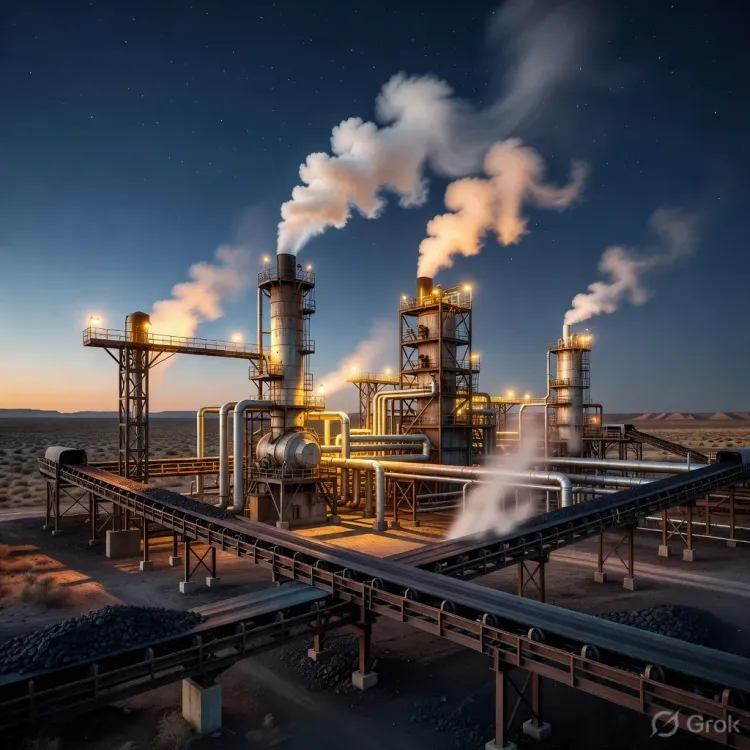
The facility employs a process known as indirect coal liquefaction, which involves heating coal with oxygen and steam to produce a synthetic gas composed of carbon monoxide and hydrogen. This syngas is then chemically processed into liquid hydrocarbons suitable for a range of applications, from aerospace fuels to precision machine lubricants.
The technology has antecedents in programmes developed by firms including Sasol of South Africa and domestically by Synfuels China Technology, though the Ningxia facility represents the largest single deployment of this approach globally, according to the report.
Ningxia's Coal-Dependent Energy Profile
China's energy endowment — abundant in coal, limited in oil, and scarce in natural gas — has long shaped its industrial strategy. In Ningxia specifically, coal accounts for more than 90 per cent of the region's total energy consumption, making it a natural candidate for coal-conversion investment.
The region's heavy reliance on coal also means that value-added processing, rather than raw extraction, represents the most viable path to economic diversification and energy self-sufficiency.
Competitive Backdrop and Strategic Implications
China's acceleration of coal liquefaction capacity places it at the forefront of synthetic fuels technology at a moment when global supply chains for conventional crude remain under stress. Organisations such as China Aerospace Science and Technology Corporation stand to benefit directly, given the plant's reported capacity to supply rocket-grade liquid fuels — a detail that underscores the dual-use strategic value of the facility.
With geopolitical pressure on energy supply routes showing no signs of easing, the Ningxia plant's output volumes and cost competitiveness will be closely watched by energy planners and industry analysts alike.
What's Next
The key question going forward is whether China will scale this model to other coal-rich regions, and at what pace. The economic viability of coal-to-liquids is highly sensitive to global oil prices; should prices retreat significantly below US$100 per barrel, the margin calculus could shift. Observers will also watch whether the National Development and Reform Commission formalises coal liquefaction as a strategic infrastructure priority in upcoming energy policy frameworks.
Point of View
And coal liquefaction is now the fastest available domestic hedge. What mainstream coverage tends to underplay is the dual-use dimension: a plant capable of producing rocket-grade propellants for entities like China Aerospace Science and Technology Corporation sits at the intersection of energy security and defence industrial capacity. The 700 per cent value uplift figure also signals that Beijing is reframing coal not as a legacy fuel to be phased out, but as a feedstock for high-value synthetic products — a narrative that complicates global decarbonisation timelines and may accelerate similar programmes in other coal-abundant economies.
NationPress
9 Oct 2026
Frequently Asked Questions
What is China's coal-to-liquids plant in Ningxia and what does it produce?
The plant, operated by China Energy Group Ningxia Coal Industry Co Ltd , is the world's largest coal-to-liquids facility and began full operations in northwest China's Ningxia Hui autonomous region in July 2026 . It converts coal into liquid oil products including rocket propellants and industrial lubricants, boosting the raw coal's economic value by approximately 700 per cent .
Why is China investing in coal-to-liquids technology now?
China accelerated its coal liquefaction push after the Strait of Hormuz was blocked during the US-Israel war on Iran , disrupting oil imports from the Middle East , which previously supplied more than 40 per cent of China's crude oil. International oil prices rose above US$100 per barrel at the peak of the disruption, making domestic coal-to-liquids conversion both strategically necessary and commercially viable.
How much coal does the Ningxia plant process?
The facility processed 24 million tonnes of coal in 2025 , according to a Science and Technology Daily report. That volume represents approximately a quarter of Ningxia 's total annual coal output, reflecting the plant's dominant position in the region's energy economy.
What technology does the Ningxia coal-to-liquids plant use?
The plant uses indirect coal liquefaction , a process that heats coal with oxygen and steam to generate a synthetic gas of carbon monoxide and hydrogen, which is then converted into liquid hydrocarbons. Similar technology has been commercialised by Sasol in South Africa and domestically by Synfuels China Technology , though the Ningxia plant is reported to be the world's largest deployment.
Who benefits most from China's coal liquefaction expansion?
Domestic aerospace and defence sectors stand to benefit directly — the plant reportedly supplies rocket-grade fuels relevant to organisations such as China Aerospace Science and Technology Corporation . More broadly, China's energy planners and coal-rich provinces gain a model for reducing crude oil import dependency, while the National Development and Reform Commission may use the Ningxia project as a template for wider national energy policy.