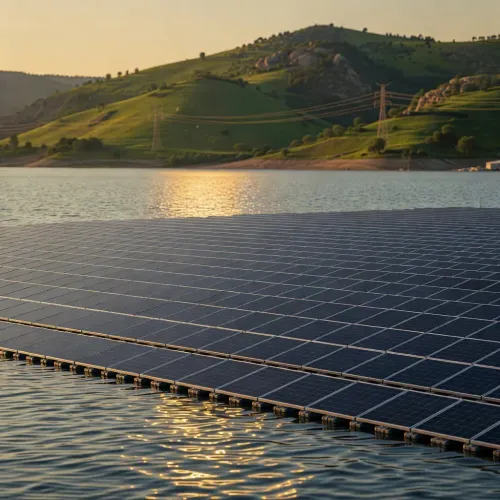
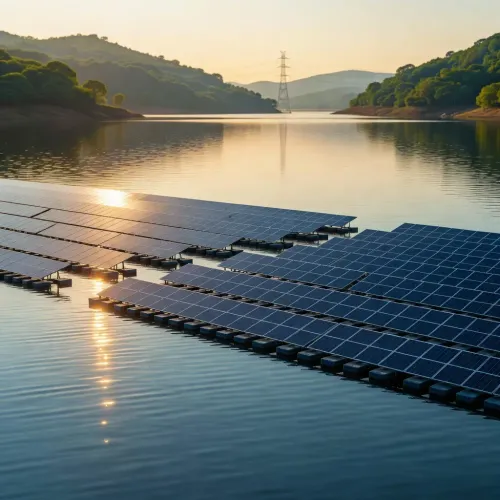
China deploys world's first 100kW bamboo-frame floating solar farm off Shandong
Synopsis
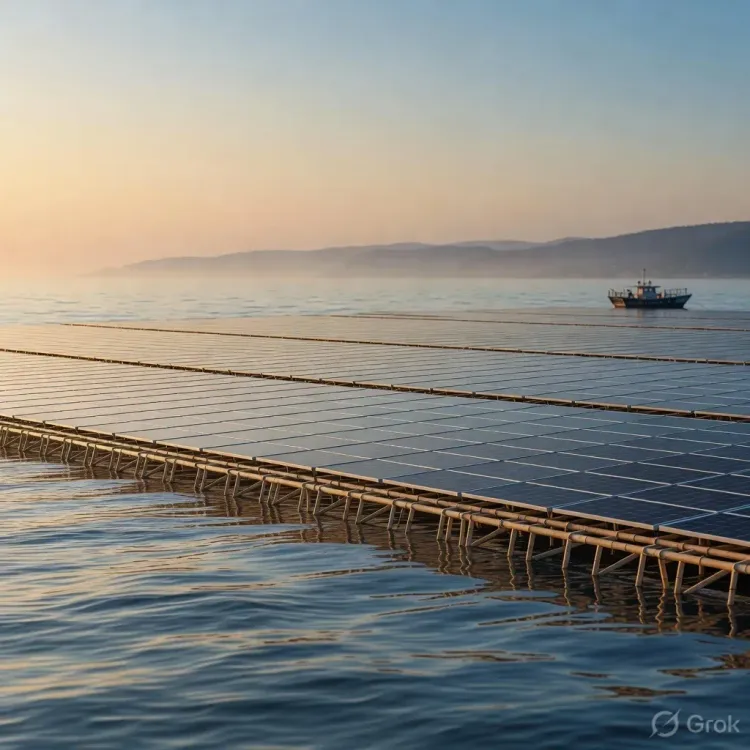
China has launched Jilin-2, the world's first 100kW bamboo-frame floating solar farm off Yantai, Shandong — a tenfold scale-up from its 2023 prototype — designed to power a green hydrogen, ammonia, and methanol production project and dramatically cut the marine environmental footprint of offshore solar.
Key Takeaways
Jilin-2 , the world's first 100kW floating solar platform built with bamboo composite frames, has been deployed off Yantai, Shandong .
The platform was announced by Yantai CIMC Raffles Ocean Technology Group in late June 2026 .
It represents a 10x capacity increase over the earlier 10kW Jilin-1 prototype built in 2023 .
Jilin-2 will supply power to an integrated hydrogen, ammonia, and methanol production project.
The project was co-developed by CIMC Offshore Engineering Research Institute , China Forestry Group Corporation , and Beijing Forestry University .
According to CIMC Raffles , the bamboo design 'significantly reduces marine environmental impact' versus steel or HDPE structures.
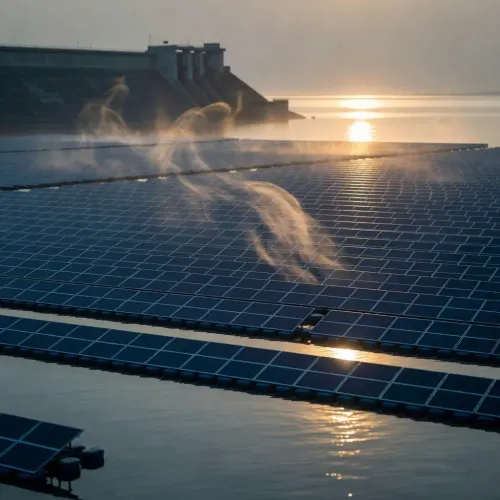
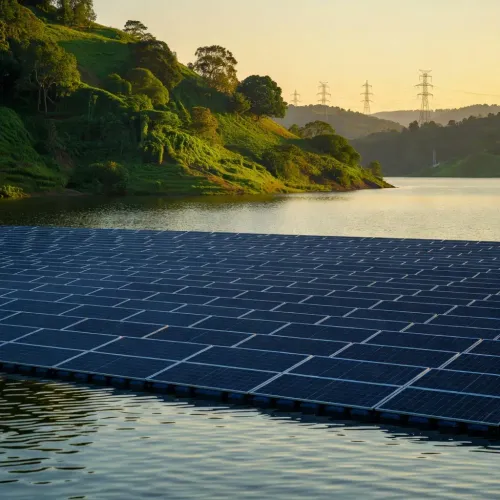
China has commissioned the world's first 100-kilowatt (kW) floating solar farm constructed with bamboo composite frames, marking a significant step toward greener offshore renewable energy infrastructure. The platform, named Jilin-2, was deployed at a demonstration base off the coast of Yantai in Shandong province and will feed power into an integrated hydrogen, ammonia, and methanol production project.
What Jilin-2 is and how it works
Jilin-2 is built from composite bamboo tubes and pipes, replacing the steel or high-density polyethylene (HDPE) structures typically used in offshore floating solar installations. Yantai CIMC Raffles Ocean Technology Group announced the deployment in late June 2026, describing the platform as a direct evolution of an earlier 10kW prototype called Jilin-1, which was developed in 2023.
Why it matters
According to the company, bamboo-based construction 'significantly reduces marine environmental impact' compared to conventional steel or HDPE alternatives. Bamboo is a fast-growing, carbon-sequestering material, and its use in offshore energy infrastructure could offer a scalable pathway for coastal nations seeking to lower the ecological footprint of floating photovoltaic projects. The platform directly serves a green-fuel production chain — hydrogen, ammonia, and methanol — amplifying its downstream climate relevance.
Who developed it
Jilin-2 was jointly developed by the CIMC Offshore Engineering Research Institute — the research arm of CIMC Raffles — alongside China Forestry Group Corporation and Beijing Forestry University. The collaboration between an ocean-engineering conglomerate and forestry institutions underscores the cross-sector nature of the innovation, blending marine engineering with sustainable materials science.
The competitive backdrop
Floating solar, or floatovoltaics, is a rapidly expanding segment of the global renewables market, with installations growing across Asia, Europe, and South America. Most commercial deployments rely on HDPE pontoons or steel frames. China already leads the world in total installed floating solar capacity, and the Jilin-2 project positions Chinese firms at the frontier of next-generation, low-impact offshore designs. The 10x capacity jump from Jilin-1 to Jilin-2 in roughly three years signals an accelerating development curve.
What's next
The Yantai demonstration base will serve as a live testing environment for the bamboo composite platform under real marine conditions. Should Jilin-2 prove structurally durable and cost-competitive, the technology could inform larger commercial-scale deployments across China's eastern coastline and potentially attract interest from Southeast Asian markets where bamboo is abundant. Analysts and industry observers will be watching durability data closely as the platform operates through its first full seasonal cycle.
Point of View
One of its most abundant biological resources, is now being engineered into offshore infrastructure, reducing dependence on petrochemical-derived HDPE and imported specialty steel. This mirrors the broader pattern seen in EV batteries and solar panels, where China converts domestic resource abundance into global technology leadership. The real test will be long-term structural integrity in saltwater environments — if bamboo composites hold, the cost and carbon calculus for floating solar shifts meaningfully for tropical and subtropical coastal markets across Southeast Asia and beyond.
NationPress
27 Aug 2026
Frequently Asked Questions
What is the Jilin-2 floating solar farm?
Jilin-2 is the world's first 100kW floating solar platform built with bamboo composite tubes and pipes, deployed off the coast of Yantai in Shandong province, China. It was announced by Yantai CIMC Raffles Ocean Technology Group in late June 2026 and is designed to power a hydrogen, ammonia, and methanol production project.
Why is bamboo being used instead of steel or plastic for floating solar?
According to CIMC Raffles, bamboo-based construction 'significantly reduces marine environmental impact' compared to conventional steel or high-density polyethylene structures. Bamboo is fast-growing, renewable, and carbon-sequestering, making it an environmentally preferable structural material for offshore installations.
How does Jilin-2 compare to the earlier Jilin-1 prototype?
Jilin-2 delivers 100kW of capacity, a tenfold increase over the 10kW Jilin-1 prototype that was developed in 2023. The scale-up demonstrates rapid progression in bamboo composite offshore engineering over roughly three years.
Who built the Jilin-2 bamboo floating solar platform?
Jilin-2 was co-developed by the CIMC Offshore Engineering Research Institute (the research arm of CIMC Raffles), China Forestry Group Corporation, and Beijing Forestry University. The collaboration spans ocean engineering, state forestry, and academic expertise.
What impact could bamboo floating solar have on the global renewables market?
If Jilin-2 proves structurally durable in marine conditions, bamboo composite platforms could offer a lower-cost and lower-carbon alternative to HDPE or steel floating solar systems, particularly relevant for Southeast Asian markets where bamboo is abundant. China already leads global floating solar capacity, and this technology could reinforce that position.