India Targets 10% Share in Global 6G Patents, Says Scindia
Synopsis
Union Minister Jyotiraditya M. Scindia highlights India's ambitious plan to capture a significant share of global 6G patents and enhance its research framework through the Anusandhan National Research Foundation. This initiative aims to boost innovation and connectivity across the nation.
Key Takeaways
India aims for 10% share in global 6G patents.
Bharat 6G Alliance has expanded from 14 to 85 institutions .
Anusandhan National Research Foundation operational since February 2024 .
Government allocated Rs 14,000 crore for research funding.
RDI Scheme to provide Rs 1.0 lakh crore for innovation in critical tech areas.
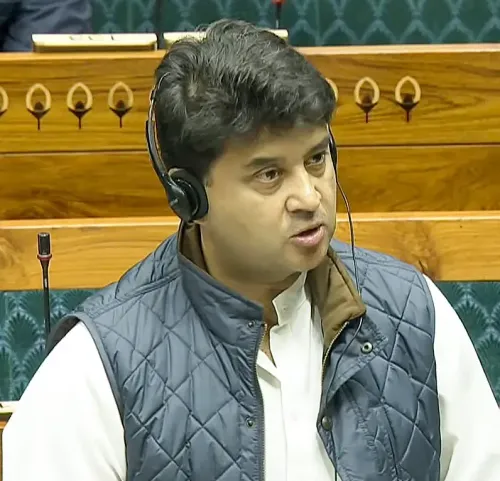
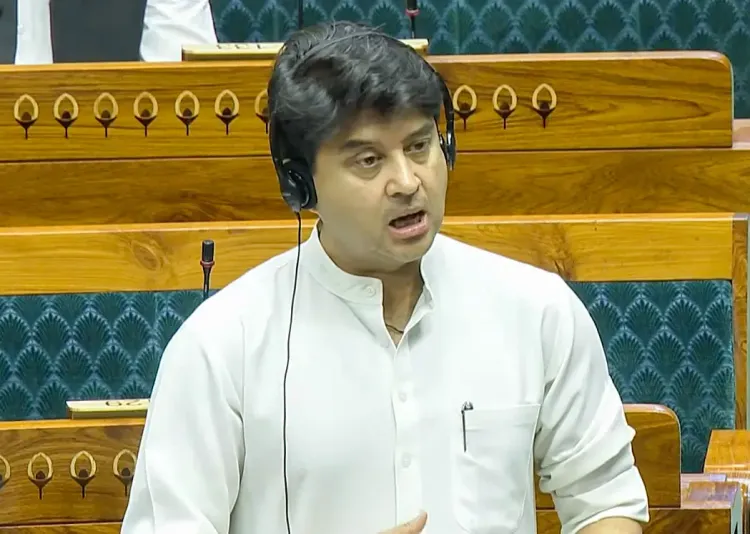
New Delhi, March 25 (NationPress) The Union Minister for Communications and the Development of the North Eastern Region, Jyotiraditya M. Scindia, announced in the Lok Sabha on Wednesday that India is making significant strides with the Bharat 6G Alliance and enhancing its research ecosystem via the Anusandhan National Research Foundation.
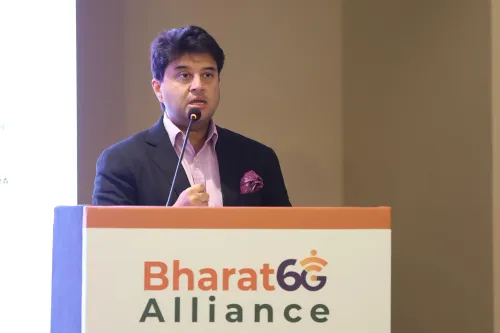
Scindia emphasized that under the guidance of PM Modi, the Bharat 6G Alliance has grown tremendously, with India's goal to secure nearly 10 percent of the global 6G patents, having already contributed approximately 4,000 patents.
India’s proposal for universal connectivity has garnered acceptance from international organizations, including the 3rd Generation Partnership Project (3GPP) and the International Telecommunication Union (ITU).
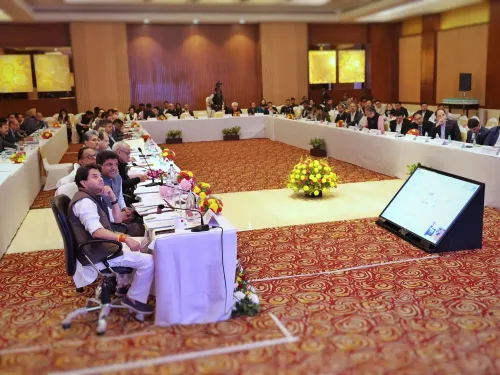
Initially comprising 14 institutions, the Bharat 6G Alliance has now expanded to 85. Seven specialized working groups have been formed to focus on areas such as spectrum, devices, technology and components, alliances, green sustainability, outreach, and 6G use cases.
Scindia pointed out that the ministry conducts a quarterly review of all seven working groups to ensure continuous progress.
In response to an inquiry, he mentioned that the Anusandhan National Research Foundation (ANRF) was established under PM Modi's leadership and became operational in February 2024, aiming to invigorate innovation and research within the country.
The foundation is governed by a Governing Council and an Executive Council to facilitate effective and transparent decision-making.
ANRF seeks to raise Rs 50,000 crore in funds from 2023 to 2028, with a budgetary allocation of Rs 14,000 crore from the Central Government, while the remainder will be sourced from donations from various entities, including public and private sectors, philanthropic organizations, foundations, and international bodies.
Further elaborating, Scindia indicated that this budgetary provision is designated to support crucial programs aimed at promoting advanced research, including initiatives like the Mission for Advancement in High Impact Areas, EV Mission, 2D Innovation Hub, MedTech Mission, AI for Science and Engineering, and the CRM Research Programme.
Moreover, several grant opportunities such as the Advanced Research Grant, Prime Minister Early Career Research Grant, and Inclusivity Research Grant have been launched to enhance participation in research and innovation.
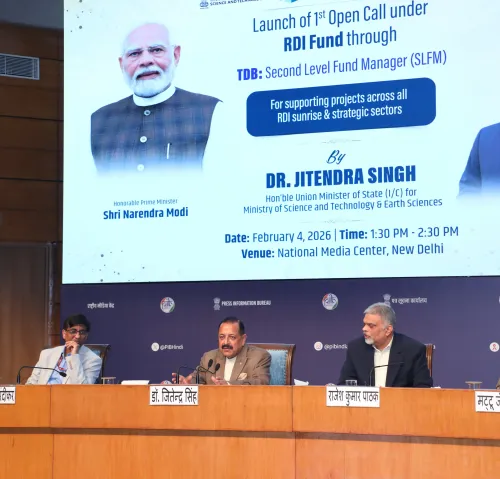
The government has also introduced the Rs 1.0 lakh crore Research, Development and Innovation (RDI) Scheme to provide sustained financial support for research and innovation in vital and emerging technology sectors that are essential for national growth and global competitiveness.
The Department of Science and Technology serves as the nodal department for the implementation of the RDI Scheme.
The minister added that this scheme aims to stimulate private sector investment in research and development, supporting innovation in key areas such as energy security and climate action, deep technologies like quantum computing, robotics, and space technologies, as well as artificial intelligence and advanced digital technologies, alongside biotechnology and medical devices.
Point of View
I recognize the strategic importance of India's goal to capture a significant share of global 6G patents. The establishment of the Bharat 6G Alliance and the Anusandhan National Research Foundation illustrates a commitment to innovation and technological advancement, essential for maintaining global competitiveness.
NationPress
22 Sept 2026
Frequently Asked Questions
What is the Bharat 6G Alliance?
The Bharat 6G Alliance is a coalition aimed at enhancing India's capabilities in 6G technology, established under the guidance of PM Modi.
What is the goal of the Anusandhan National Research Foundation?
The Anusandhan National Research Foundation aims to boost innovation and research in India, facilitating funding and support for various technological initiatives.
How many patents has India contributed to global 6G technology?
India has contributed approximately 4,000 patents towards global 6G technology.
What is the budget for the Anusandhan National Research Foundation?
The foundation aims to raise Rs 50,000 crore from 2023 to 2028, with an initial budgetary provision of Rs 14,000 crore from the Central Government.
What are some initiatives supported by the RDI Scheme?
The RDI Scheme supports initiatives in crucial areas such as energy security, climate action, artificial intelligence, and biotechnology.