Nvidia Flags Performance Per Watt as Core AI Factory Metric
Synopsis
Nvidia's corporate account on 14 July 2026 identified performance per watt as the core metric for AI factories in power-constrained settings, reflecting the semiconductor industry's multi-year pivot toward energy efficiency as AI compute demand strains global electricity grids.
Key Takeaways
Nvidia declared 'performance per watt' the foundational metric for every AI factory operating in a power-constrained environment.
The post opens a thread, signalling a deeper corporate communication on energy efficiency in AI infrastructure.
Nvidia 's Hopper architecture, launched in 2022 , was an early milestone in the company's performance-per-watt push for AI workloads.
Data centre operators and AI developers are the primary stakeholders, as the metric directly affects electricity costs and compute density.
Grid capacity constraints in the US , Europe , and Asia — alongside US export controls — have made energy efficiency a geopolitical as well as an engineering priority.
For India 's AI compute buildout, performance-per-watt benchmarks will increasingly influence hardware procurement and infrastructure planning.
Chip giant Nvidia on Tuesday, 14 July 2026 declared that 'performance per watt' is the foundational metric for every AI factory operating in a power-constrained environment, signalling the company's sharpened focus on energy efficiency as the central axis of next-generation AI infrastructure.
Context
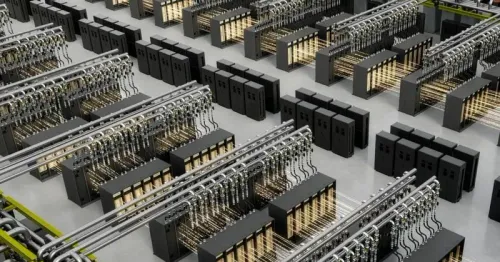
The post, shared from Nvidia's official corporate account, opens a thread — indicated by the thread symbol — centred on the idea that raw compute power alone no longer defines competitive AI infrastructure. The phrase 'performance per watt' refers to how much useful AI computation a chip or system delivers for every watt of electricity consumed. In power-constrained environments — where grid capacity, cooling limits, or energy costs cap how much electricity a data centre can draw — this ratio becomes the decisive engineering and commercial variable.
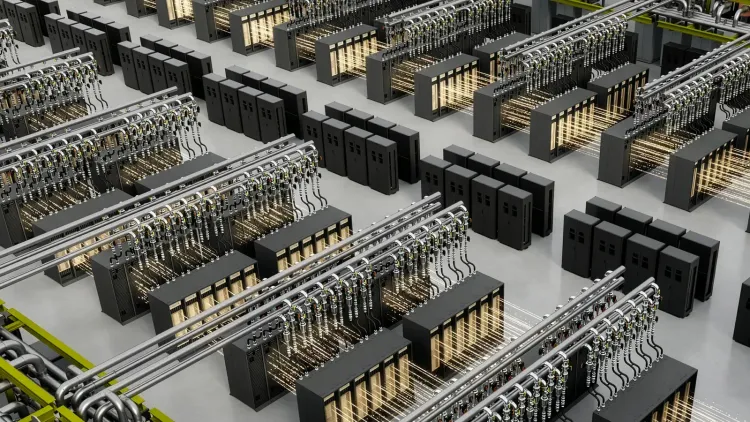
Nvidia has been building toward this framing for several years. The company's 2022 launch of its Hopper GPU architecture explicitly stressed performance-per-watt gains for AI workloads, positioning energy efficiency as a first-class design goal alongside raw throughput. The term 'AI factory' is itself a Nvidia-coined descriptor for large-scale, power-optimised clusters used for both AI training and inference at industrial scale.
Policy Backdrop
The emphasis on energy efficiency does not exist in a vacuum. Across the United States, Europe, and parts of Asia, data centre operators are confronting hard limits on available grid capacity, prompting regulators and utilities to scrutinise the electricity appetite of AI infrastructure. US export controls on advanced semiconductors have simultaneously pushed chip designers to extract more value from each generation of silicon, making efficiency a geopolitical as well as an engineering imperative.
Hyperscale cloud providers and competing chipmakers have launched parallel efficiency programmes, creating an industry-wide race in which performance-per-watt benchmarks are becoming the standard currency for procurement decisions. For India, where government-backed AI compute initiatives are accelerating and grid reliability varies by region, the metric carries direct relevance for domestic data centre planning.
Stakeholders and Impact
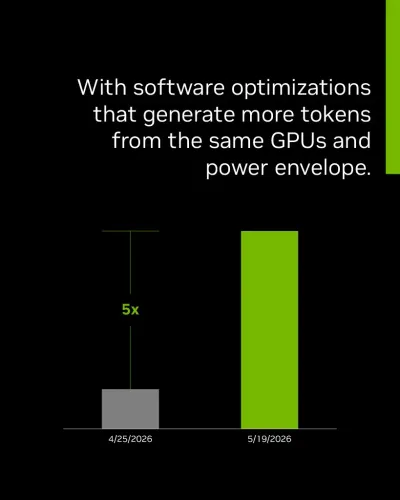
The primary audiences for this signal are data centre operators and AI developers who make capital-allocation decisions about which hardware to deploy at scale. A higher performance-per-watt ratio translates directly into lower operating expenditure on electricity and cooling, and into the ability to pack more AI capacity into a fixed power envelope — a critical advantage as electricity costs rise globally.
For India's expanding AI ecosystem — spanning public-sector compute missions and private cloud buildouts — the framing reinforces that energy-efficient GPU architectures will be a decisive factor in infrastructure tenders and long-term total-cost-of-ownership calculations. Smaller AI startups operating on constrained budgets stand to benefit most from hardware that delivers more computation per unit of energy.
What's Next
Nvidia's next major architecture disclosures and any new power-efficiency benchmarks released at upcoming developer or investor events will be closely watched to see how the company translates this metric-first philosophy into silicon. Industry observers will track whether competitors respond with rival benchmarks or adopt performance-per-watt as the common standard for AI hardware evaluation. As AI training clusters continue to drive exponential electricity demand, the companies that lead on this metric are likely to shape both procurement norms and regulatory conversations around sustainable AI infrastructure.
Point of View
Not merely a technical observation — it sets the terms of debate for the next cycle of AI hardware procurement. By framing energy efficiency as the foundational metric, Nvidia is simultaneously responding to regulatory pressure on data centre electricity consumption and pre-empting competitor narratives around raw compute benchmarks. For emerging markets such as India, where grid constraints are real and AI infrastructure investment is accelerating, this framing could shape how government and private buyers evaluate chip vendors. The broader arc here is a semiconductor industry transitioning from a 'more is more' scaling era to one where the politics of energy and the economics of efficiency are inseparable from product strategy.
NationPress
14 Jul 2026
Frequently Asked Questions
What does performance per watt mean in AI?
Performance per watt measures how much useful AI computation — such as model training or inference — a chip or system delivers for every watt of electricity it consumes. A higher ratio means more AI work done for the same energy cost, which is critical when data centres face grid or cooling limits.
Why is Nvidia focusing on energy efficiency for AI?
AI training clusters now consume enormous amounts of electricity, and many data centres are hitting hard grid capacity limits. Nvidia is emphasising energy efficiency because it allows operators to deploy more AI compute within a fixed power envelope and reduces operating costs.
What is an AI factory according to Nvidia?
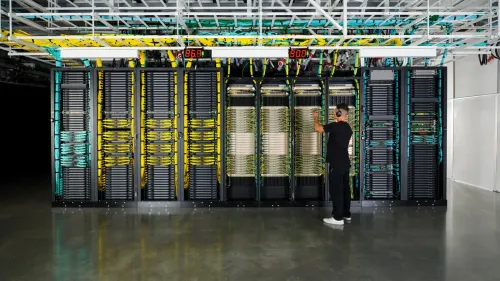
Nvidia uses the term 'AI factory' to describe large-scale, power-optimised clusters purpose-built for AI training and inference at industrial scale, distinguishing them from general-purpose data centres.
How does Nvidia's efficiency focus affect India's AI plans?
India is expanding its AI compute infrastructure through public and private initiatives, but regional grid reliability varies. Nvidia's performance-per-watt emphasis means Indian data centre planners and government compute missions will likely weigh energy efficiency heavily when selecting GPU hardware.
What was Nvidia's Hopper architecture and why does it matter here?
Nvidia launched the Hopper GPU architecture in 2022 , explicitly targeting performance-per-watt improvements for AI workloads. It marked an early, concrete step in the company's strategy to make energy efficiency a primary design goal alongside raw computational throughput.