SpaceX Starship orbital debut could spawn debris worse than ASAT tests
Synopsis
A University of Texas aerospace professor warns that if SpaceX's Starship explodes during its first-ever orbital attempt in September 2026, the debris cloud could be 'a few scales larger' than Russia's 2021 anti-satellite missile test — the single most damaging deliberate debris event in history.
Key Takeaways
SpaceX is targeting September 2026 for Starship Flight 14 , the rocket's first attempt to reach Earth orbit.
Moriba Jah , professor of aerospace engineering at The University of Texas at Austin , says an in-orbit Starship explosion could generate debris 'a few scales larger' than Russia 's November 2021 Cosmos-1408 anti-satellite test.
The 2021 Russian ASAT test had direct, detrimental consequences for SpaceX 's own Starlink satellite constellation, according to Jah .
Experts cite Kessler Syndrome — a self-sustaining collision cascade — as the worst-case long-term outcome of a large in-orbit breakup.
Regulatory bodies including the FAA and the International Telecommunication Union are expected to scrutinise the mission's debris-mitigation plans ahead of launch.
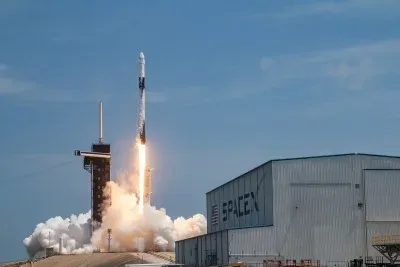
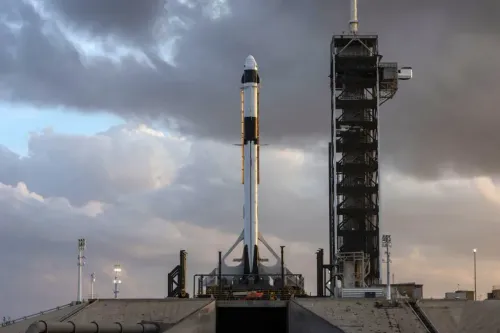
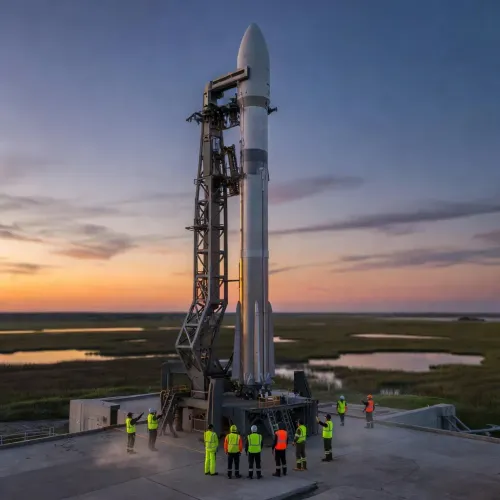
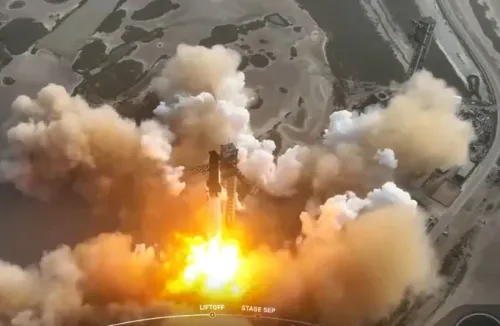
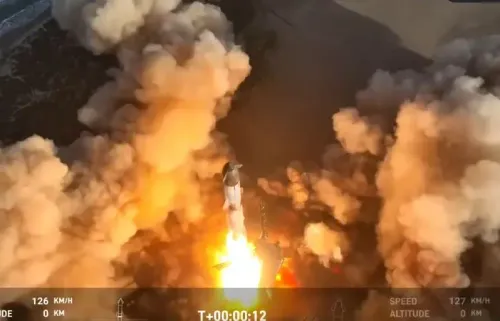
SpaceX's Starship — the world's largest and most powerful rocket — is preparing for its 14th test flight and first-ever orbital attempt later in September 2026, but aerospace experts are warning that an in-flight catastrophe in orbit could generate a debris field larger than any previously recorded in-orbit incident, including a deliberate anti-satellite missile strike.
The orbital debris risk, explained
According to Moriba Jah, a professor of aerospace engineering at The University of Texas at Austin, the sheer size of Starship's upper stage means a catastrophic in-orbit breakup would be categorically different from past debris events. 'If something like that happened in low-Earth orbit, it would be like the Russian anti-satellite test, but probably a few scales larger in terms of the amount of debris it would generate,' Jah said. He stressed that the risk 'needs to be of concern' for the broader spaceflight community.
Why the Russia comparison matters
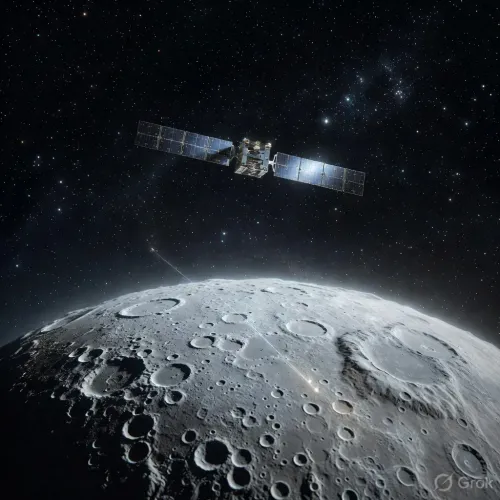
In November 2021, Russia intentionally destroyed a defunct Soviet-era intelligence satellite, Cosmos-1408, in a test that scattered thousands of trackable fragments across low-Earth orbit. Jah noted that the Russian test had direct, detrimental consequences for the operation of SpaceX's own Starlink satellite constellation — the very network that Elon Musk's company relies on for commercial revenue. A Starship-scale event would dwarf that episode by 'a few scales,' he said.
What makes Starship different
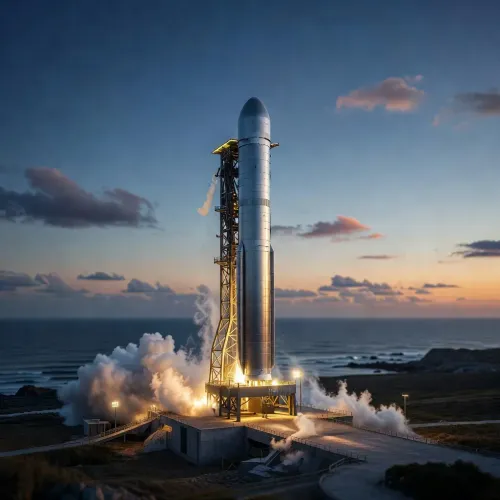
Starship and its Super Heavy booster together form the tallest and heaviest launch system ever built. The spacecraft has completed 13 test flights to date, none of which reached Earth orbit. The upcoming mission would mark the first time the vehicle attempts an orbital trajectory, raising the stakes significantly: debris generated in orbit remains in space far longer and poses sustained collision risks to other satellites and crewed platforms.
Broader implications for low-Earth orbit
Experts have long warned about the Kessler Syndrome — a theoretical cascade where one collision triggers a chain of further collisions, progressively rendering orbital altitudes unusable. A Starship breakup, given the vehicle's mass and volume, could accelerate that risk for constellations operated by commercial providers and agencies including the European Space Agency and programmes such as Artemis. Regulatory bodies including the FAA and the International Telecommunication Union are expected to scrutinise the mission's debris-mitigation plans closely.
What to watch next
All eyes will be on SpaceX's official launch window announcement and the FAA's launch licence conditions for Flight 14. The debris-risk debate is likely to intensify as the launch date approaches, with orbital-safety advocates and rival launch operators closely monitoring every regulatory filing. How SpaceX addresses contingency scenarios — including controlled reentry plans if the upper stage fails to reach a stable orbit — will be the defining question before ignition.
Point of View
By virtue of its mass alone, the single largest uncontrolled debris risk ever placed in low-Earth orbit. What mainstream reporting misses is the irony that SpaceX's own Starlink mega-constellation — already the most collision-exposed network in orbit — would be among the first casualties of a Starship breakup, creating a commercial self-harm scenario with no historical precedent. The episode also exposes a regulatory gap: existing FAA launch-licence frameworks were designed for much smaller vehicles, and debris-mitigation rules have not kept pace with the scale of next-generation rockets. Geopolitically, the comparison to Russia's Cosmos-1408 test is pointed — what a state actor did deliberately in 2021 and was widely condemned for, a commercial launch failure could replicate accidentally and at greater magnitude.
NationPress
17 Oct 2026
Frequently Asked Questions
What is the debris risk from SpaceX Starship's orbital flight?
If Starship 's upper stage were to explode in low-Earth orbit, aerospace experts say it could generate a debris field 'a few scales larger' than Russia 's 2021 Cosmos-1408 anti-satellite test — the most damaging deliberate debris event on record. The vehicle's unprecedented size and mass are the primary factors driving that assessment.
When is SpaceX Starship Flight 14 launching?
SpaceX is expected to launch Starship Flight 14 — the rocket's 14th test flight and first orbital attempt — later in September 2026 . An official launch window and FAA licence details had not been confirmed at the time of reporting.
What was the Cosmos-1408 anti-satellite test?
In November 2021 , Russia intentionally destroyed the defunct Soviet-era intelligence satellite Cosmos-1408 using an anti-satellite missile, scattering thousands of debris fragments across low-Earth orbit. Professor Moriba Jah of The University of Texas at Austin noted the test had direct, detrimental consequences for SpaceX 's Starlink constellation.
What is Kessler Syndrome and why does it matter for Starship?
Kessler Syndrome is a theoretical scenario in which one orbital collision triggers a cascade of further collisions, progressively making key orbital altitudes unusable. A Starship breakup, given the vehicle's mass, could accelerate this risk and affect satellites operated by commercial providers, the European Space Agency , and crewed programmes like Artemis .
Who is responsible for regulating Starship's debris risk?
In the United States , the FAA issues launch licences and sets debris-mitigation conditions for commercial rockets including Starship . Internationally, the International Telecommunication Union coordinates orbital spectrum and satellite safety standards, and both bodies are expected to scrutinise SpaceX 's contingency plans for Flight 14 .