Vikram-1 launch: India becomes 3rd nation with private orbital rocket
Synopsis
India has joined the US and China in an exclusive club — nations where a private company has successfully launched an orbital rocket. Skyroot Aerospace's Vikram-1, lifting off from Sriharikota under Mission Aagaman, is not just a technical milestone; it signals that India's liberalised space sector is now producing real commercial capability, not just ambition.
Key Takeaways
Skyroot Aerospace successfully launched Vikram-1 — India's first privately developed orbital rocket — under Mission Aagaman on 18 July .
India became only the third country in the world, after the US and China , where a private company has achieved orbital launch capability.
The four-stage, seven-storey rocket lifted off from Satish Dhawan Space Centre, Sriharikota and targets a Low Earth Orbit at ~450 km .
Vikram-1 is named after Dr Vikram Sarabhai and is designed for rapid, on-demand small-satellite launch services.
Skyroot operates from Hyderabad's GMR Aerospace and Industrial Park SEZ , underscoring the role of India's SEZ ecosystem in enabling the achievement.
Vice President Radhakrishnan , Home Minister Shah , Defence Minister Singh , Health Minister Nadda , and Commerce Minister Goyal all extended congratulations via posts on X.
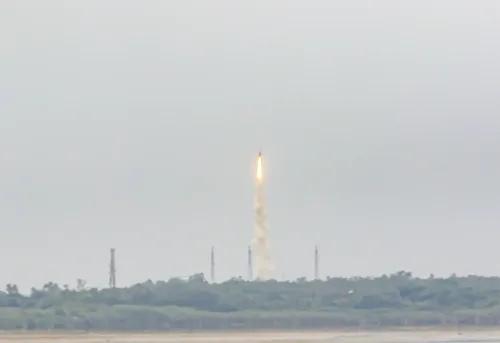
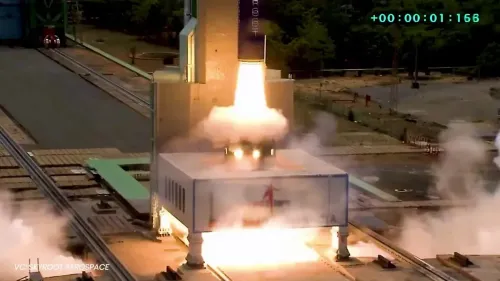
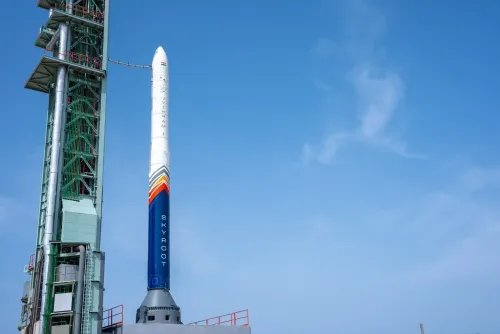
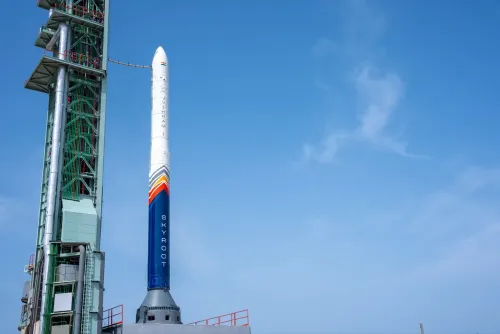
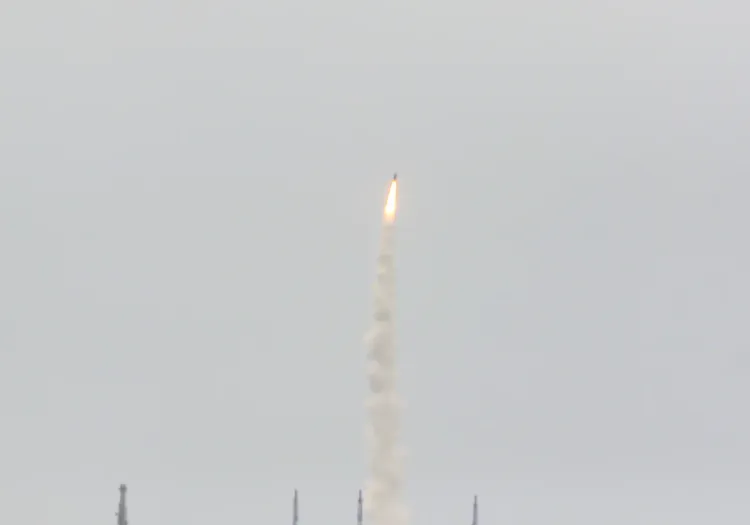
Hyderabad-based Skyroot Aerospace on 18 July successfully launched Vikram-1 — India's first privately developed orbital rocket — under Mission Aagaman, making India only the third country in the world, after the United States and China, where a private company has demonstrated orbital launch capability. The four-stage rocket lifted off from the First Launch Pad at the Satish Dhawan Space Centre (SDSC-SHAR) in Sriharikota, Andhra Pradesh, and is headed for a Low Earth Orbit (LEO) at an altitude of approximately 450 km.
Historic Milestone for India's Private Space Sector
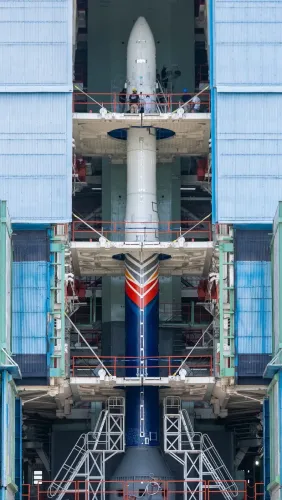
Named after Dr Vikram Sarabhai, the father of India's space programme, the seven-storey Vikram-1 is designed to provide rapid, on-demand launch services for small satellites. The rocket's successful insertion into orbit marks the first time an Indian private enterprise has independently placed an orbital vehicle into space — a feat that underscores the maturation of the country's commercial space ecosystem. Skyroot Aerospace operates out of Hyderabad's GMR Aerospace and Industrial Park SEZ, which has emerged as a hub for high-tech aerospace manufacturing.
What Leaders Said
Vice President C.P. Radhakrishnan, in a post on X, called the launch 'a new chapter in India's space journey, showcasing the growing strength of our private space sector, advancing indigenous innovation, and reinforcing India's emergence as a global space power,' adding that the mission 'reflects the immense potential of India's rapidly expanding space economy.'
Home Minister Amit Shah, also posting on X, said India's 'space ambition reaches new horizon' with this launch, describing Vikram-1 as 'a firm step towards realising' Prime Minister Narendra Modi's vision of making space more accessible. Defence Minister Rajnath Singh called the flight test 'a significant step forward in strengthening India's private space ecosystem,' crediting sector reforms for opening new opportunities for young innovators and enterprises.
Union Health Minister J.P. Nadda noted that Skyroot Aerospace has become 'the first Indian private company to place an orbital rocket into space,' while Union Commerce and Industries Minister Piyush Goyal highlighted the role of the Make in India initiative and SEZ ecosystem in enabling the achievement, describing it as a 'remarkable milestone' that reflects 'transformative space sector reforms.'
Why This Launch Matters
India's entry into the exclusive club of nations with private orbital launch capability has significant commercial implications. The global small-satellite launch market is expanding rapidly, and Vikram-1's success positions Indian private players to compete for international payloads. This comes amid a broader liberalisation of India's space sector, which in recent years has opened up regulatory pathways for private participation — a shift that observers say is now bearing tangible results.
Notably, this is the first orbital success for Skyroot Aerospace, which had previously conducted a sub-orbital test of its Vikram-S rocket in November 2022 — the first privately developed rocket launched from Indian soil. Mission Aagaman, therefore, represents a significant leap from sub-orbital demonstration to full orbital delivery.
What Comes Next
The mission is expected to strengthen India's position in the global commercial launch market for small satellites. Industry analysts will closely watch whether Skyroot can convert this milestone into a commercial launch manifest, and whether other Indian private launch vehicle developers — currently in various stages of development — can follow suit. The success of Vikram-1 is likely to accelerate investor interest and policy attention toward India's broader space economy.
Point of View
Not a ceremonial milestone — India has moved from watching SpaceX and Rocket Lab redefine the launch market to fielding its own private orbital contender. The harder question now is commercial: can Skyroot convert a successful demonstration into a competitive launch manifest against entrenched global players? India's space reforms opened the door; this launch walked through it. Whether the ecosystem can scale — in manufacturing cadence, launch frequency, and payload competitiveness — will determine if this is a one-off achievement or the start of a durable industry.
NationPress
17 Oct 2026
Frequently Asked Questions
What is Vikram-1 and who built it?
Vikram-1 is India's first privately developed orbital rocket, built by Hyderabad-based Skyroot Aerospace. It is a four-stage, seven-storey launch vehicle named after Dr Vikram Sarabhai, the father of India's space programme, and is designed to deliver small satellites into Low Earth Orbit on a rapid, on-demand basis.
What is Mission Aagaman?
Mission Aagaman is the name of the orbital launch mission under which Vikram-1 was flown. The rocket lifted off from the First Launch Pad at the Satish Dhawan Space Centre in Sriharikota, Andhra Pradesh, targeting a Low Earth Orbit at approximately 450 km altitude.
Why is the Vikram-1 launch historically significant?
The launch made India only the third country in the world — after the United States and China — where a private company has successfully demonstrated orbital launch capability. It also marks the first time an Indian private enterprise has independently placed an orbital vehicle into space.
How does this compare to Skyroot's earlier launch?
Skyroot Aerospace previously conducted a sub-orbital test of its Vikram-S rocket in November 2022 — the first privately developed rocket launched from Indian soil. Mission Aagaman represents a major step up from that sub-orbital demonstration to a full orbital delivery mission.
What does this mean for India's space economy?
The successful launch positions Indian private players to compete in the global small-satellite launch market, which is expanding rapidly. It is expected to accelerate investor interest in India's space sector and may encourage other domestic private launch vehicle developers currently in development to fast-track their programmes.