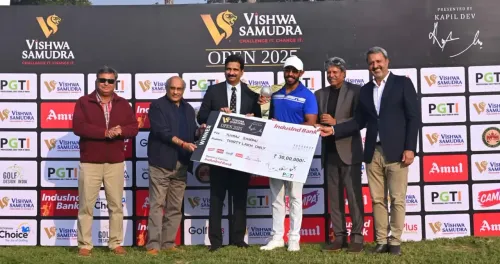
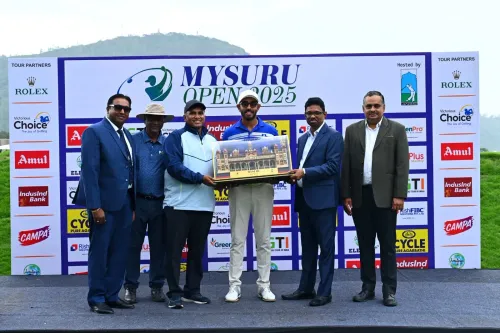
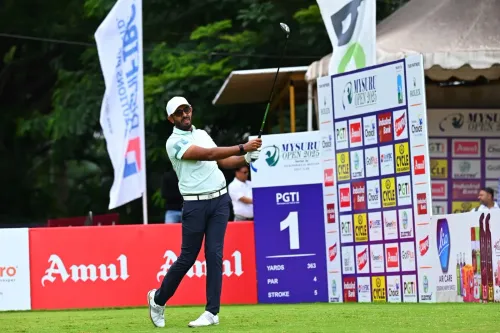
Yuvraj Sandhu: India has golf talent but lacks ecosystem for world champions
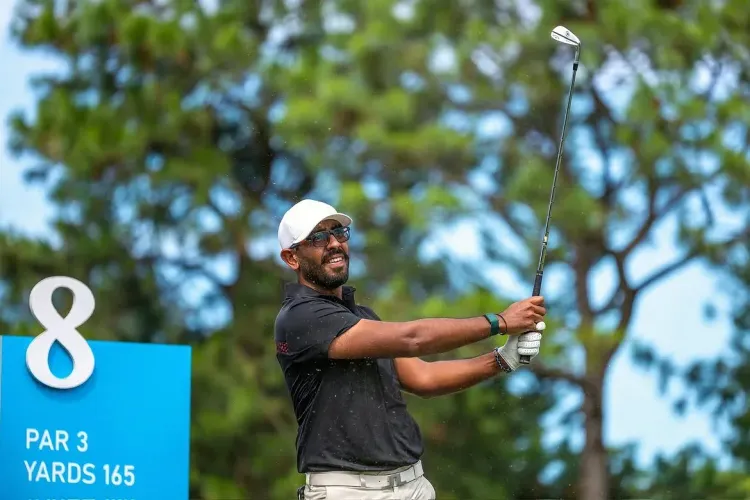
Synopsis
India's No. 1 golfer Yuvraj Sandhu isn't pulling punches: the country has the talent and the hunger, but not the professional ecosystem — coaching teams, management, and sponsorship infrastructure — to convert that raw material into consistent global winners. His candid account of a 2023 career crisis and subsequent comeback gives weight to a broader argument that Indian golf needs structural reform, not just star power.
Key Takeaways
Yuvraj Sandhu , India's No.
1 ranked golfer , says the country's gap with global golf is structural, not talent-related.
He identifies two urgent priorities: overhauling junior pathways and improving sponsorship and management infrastructure for travelling professionals.
Sandhu revealed a career low in 2023 when a shoulder injury and missed cuts on the Asian Tour left him close to losing his tour card.
He credits an off-season reset with his support team for enabling what he called a 'dream season' the following year.
Sandhu described representing India at the Olympics as a matter of pride, saying he is committed to 'keep putting in work' to qualify.
He described professional golf as a 'cutthroat industry' where players must re-earn their status every season through points and prize money.
India's top-ranked golfer Yuvraj Sandhu has said that the country's inability to produce consistent winners on the DP World Tour and PGA Tour is not a talent problem — it is a structural one. In an exclusive interview, the 29-year-old from New Delhi argued that the missing piece is a professional ecosystem that trains golfers to think and compete like world-class athletes from the earliest stages of their development.
The Ecosystem Gap
'I honestly feel there is no dearth of talent or skill or hunger in the country when it comes to professional golf,' Sandhu said. 'One thing I feel is that we can get better in terms of the transition from amateur golf to professional golf — and that is the ecosystem around it.'
By ecosystem, Sandhu means a comprehensive support structure: coaches, physiotherapists, sports psychologists, and management professionals who work on 'the minutest of details' required to compete internationally. He believes that if this foundation is laid early, Indian golfers can routinely play the best golf of their lives on the biggest stages.
Pressure, Process and the Mental Game
Sandhu offered a candid account of what goes through his mind when a title is within reach. 'The loudest voice in my head is: you've done this a couple of times, so just keep your head down and keep doing it,' he said. His guiding philosophy — 'pressure is a privilege' — took years to internalise.
'It is the best that is coming out of you in those pressure moments if you just stick to what your craft is,' he explained. Sandhu credits the tournaments he failed to close as equally formative: 'Had those situations not happened, I wouldn't have learned to win tournaments back-to-back or win by the margins that I have.'
A Career-Threatening Slump and the Comeback
Sandhu revealed that 2023 — the period immediately after the COVID-19 disruptions — was the lowest point of his career. Battling a shoulder injury, he missed several cuts on the Asian Tour and came close to losing his tour card. 'I was overpushing myself into practice. I was exhausting myself in my workouts,' he recalled.
The turnaround came during an off-season reunion with his support team, who shifted the conversation away from results and toward perspective. 'I was going from a young boy to becoming a man,' Sandhu said. That reset, he argues, directly enabled what he described as a 'dream season' the following year, built on 'smart work and letting go.'
The Uncomfortable Truths of Professional Golf
Sandhu was equally candid about the financial and logistical realities that fans rarely see. Constant back-to-back travel is gruelling, he said, and the costs of competing professionally — flights, accommodation, equipment, and coaching — are far higher than most outsiders appreciate. 'It is a very cutthroat industry where if you slacken even a little bit, you don't get to be out there again,' he said. Every season, he noted, is 'a clean slate' where players must re-earn their status through points and prize money.
Olympic Ambitions and the Road Ahead
Sandhu described representing India at the Olympics as a source of deep pride rather than just ambition. 'More than responsibility, I feel honoured to represent the country in whichever tournament I get to play,' he said, adding that he watches the Indian flag during European Tour events and feels gratitude each time.
On what Indian golf needs most, Sandhu identified two priorities: overhauling junior pathways — including how children and parents are introduced to the sport — and improving sponsorship and management infrastructure for travelling professionals. 'India definitely has the capacity to host world-class international tournaments,' he said. 'It definitely has the capacity to develop world-class athletes as well. We just need more people with a stronger passion combined with a long-term vision.'
With his Olympic target firmly in view and a career rebuilt on hard-won lessons, Sandhu is positioning himself as both India's current standard-bearer in golf and the most vocal advocate for the systemic change he believes will produce the next generation of global contenders.
Point of View
Yet the conveyor belt to the DP World Tour and PGA Tour remains broken — and the reason is exactly what he identifies: a missing professional ecosystem, not missing talent. The more pointed question is why the Golf Federation of India and corporate sponsors have not closed this gap despite years of similar calls. Sandhu's own 2023 crisis — nearly losing his Asian Tour card — illustrates how even the country's best golfer operates without the safety net that top European and American juniors take for granted. His Olympic ambition is real, but it will require institutional backing, not just personal resolve.
NationPress
6 Oct 2026
Frequently Asked Questions
What does Yuvraj Sandhu say is holding Indian golf back?
Sandhu argues that India lacks the professional ecosystem — coaching staff, sports science support, and management infrastructure — needed to take talented golfers to the world-class level. He is clear that the problem is not a shortage of talent or hunger, but a gap in the structural support system surrounding players.
What career crisis did Yuvraj Sandhu face and how did he recover?
In 2023, Sandhu came close to losing his Asian Tour card after missing several cuts while battling a shoulder injury and over-training. He recovered during an off-season break with his support team, who helped him shift focus from results to perspective — a reset he credits for his strong performances the following season.
What are Yuvraj Sandhu's Olympic ambitions?
Sandhu has expressed a strong desire to represent India at the Olympics, describing it as a source of pride and honour rather than just a competitive goal. He says he is focused on consistent performance and believes qualification will follow if he keeps putting in the work.
What changes does Sandhu want to see in Indian golf?
Sandhu has called for two key reforms: a stronger junior pathway that introduces children and parents to golf's professional potential from an early age, and better sponsorship and management support for players competing on international tours, where travel and operational costs are the biggest financial burden.
What is the financial reality of professional golf that fans don't see?
Sandhu says the glamour associated with professional golf — travel, prestige events, luxury brand sponsorships — masks a brutal financial reality. Players must cover substantial travel and competition costs week after week, and must re-earn their tour status every season by accumulating points and prize money. Missing that threshold means starting over.