Bhojshala verdict: Ayodhya seers hail MP High Court ruling as Sanatan Dharma victory

Synopsis
The Madhya Pradesh High Court's declaration of the Bhojshala complex as a temple has set off a wave of celebration among Ayodhya's saints, who are framing it as a judicial vindication of Sanatan Dharma. The verdict reignites a long-running religious dispute and raises questions about what comes next — legally and on the ground.
Key Takeaways
The Madhya Pradesh High Court declared the disputed area of the Bhojshala complex a temple on 15 May .
Mahamandaleshwar Vishnu Das Maharaj said namaz at the site would no longer be possible following the verdict.
Mahant Sitaram Das of Saket Bhavan Temple, Ayodhya Dham , expressed gratitude to the court, citing ‘Satyamev Jayate’.
Saints collectively described the ruling as a victory of Sanatan Dharma and praised the judiciary and legal teams involved.
Some seers also demanded action against namaz being offered on public roads in West Bengal , calling for law and order to be upheld.
The verdict has triggered strong reactions from religious and political circles across India .
Saints and seers in Ayodhya on Friday, 15 May welcomed the Madhya Pradesh High Court's ruling that declared the disputed portion of the Bhojshala complex a temple, calling the decision a ‘historic victory’ for Sanatan Dharma and expressing gratitude to the judiciary for what they described as a just verdict.
Key Reactions from Ayodhya's Religious Community
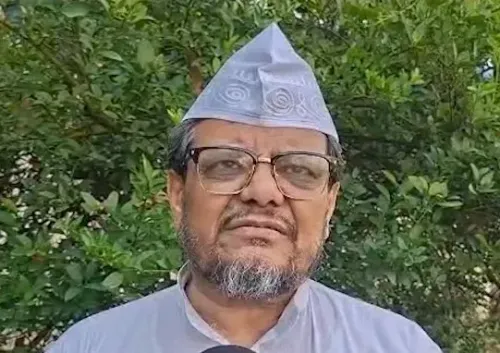
Mahamandaleshwar Vishnu Das Maharaj said the ruling was historic and asserted that namaz would no longer be offered at the site. “The decision delivered by the High Court is a historic one. Muslim community members used to offer namaz there, but now that will not be possible,” he said.
Mahant Sitaram Das of Saket Bhavan Temple in Ayodhya Dham also welcomed the ruling, expressing gratitude to the court. “The decision given by the High Court today is highly commendable, and I express my gratitude to the court. Satyamev Jayate,” he said.
Mahant Dr Deveshacharya Ji Maharaj termed the verdict a moment of pride for followers of Sanatan traditions, expressing happiness over the outcome.
Collective Response and Broader Significance
Several saints in Ayodhya collectively described the High Court ruling as a victory of Sanatan Dharma, and appreciated the efforts of judges, lawyers, and all those involved in presenting the case before the court. According to the saints, the verdict has brought widespread happiness among the religious community in Ayodhya.
The Bhojshala complex in Madhya Pradesh has long been a contested site, with both Hindu and Muslim communities staking claim over its religious character. The High Court's declaration in favour of its status as a temple marks a significant development in a dispute that has persisted for years.
Seers Also Raise West Bengal Namaz Issue
Notably, some saints used the occasion to raise a separate concern — the controversy surrounding the offering of namaz on public roads in West Bengal. They demanded strict action against public obstruction and urged authorities to ensure that religious activities do not cause inconvenience to the general public, calling for law and order to be maintained.
Political and National Reactions
The verdict has triggered strong reactions from religious groups and political circles across the country, with the ruling expected to reignite debate over the status of disputed religious sites in India. This comes amid a broader national conversation about the legal resolution of long-standing religious disputes through the judiciary.
With the High Court verdict now delivered, the focus shifts to whether the ruling will be challenged in a higher court and how authorities in Madhya Pradesh will manage the site going forward.
Point of View
Making judicial restraint in implementation as important as the verdict itself. What is often missed in the immediate reaction is the question of enforcement: who controls the site, under what protocol, and with what safeguards for minority religious practice. The extension of the Bhojshala debate into an unrelated West Bengal namaz controversy by some seers also signals how individual verdicts are increasingly being used as platforms for broader political messaging — a trend that complicates the judiciary's role as a neutral arbiter.
NationPress
16 Sept 2026
Frequently Asked Questions
What did the Madhya Pradesh High Court rule about the Bhojshala complex?
The Madhya Pradesh High Court declared the disputed area of the Bhojshala complex a temple. The site had long been contested by both Hindu and Muslim communities over its religious character, and the verdict has been welcomed by Hindu religious groups as a vindication of their claim.
Why is the Bhojshala complex disputed?
The Bhojshala complex in Madhya Pradesh has been claimed by both Hindu and Muslim communities. Hindus consider it a temple dedicated to Goddess Saraswati, while Muslims have historically used a portion of the complex for Friday prayers. The site's dual-use status has been a source of prolonged legal and religious dispute.
How did Ayodhya's saints react to the Bhojshala verdict?
Saints and seers in Ayodhya described the ruling as a ‘historic victory’ for Sanatan Dharma. Mahamandaleshwar Vishnu Das Maharaj said namaz at the site would no longer be possible, while Mahant Sitaram Das expressed gratitude to the court and cited ‘Satyamev Jayate’.
What is the significance of the Bhojshala verdict for India's religious disputes?
The verdict is significant as it follows a broader pattern of courts adjudicating long-standing religious site disputes in India. It has triggered national reactions from both religious and political circles and is expected to raise questions about potential appeals and site management going forward.
What other issue did Ayodhya seers raise alongside the Bhojshala reaction?
Some saints also raised the issue of namaz being offered on public roads in West Bengal, demanding strict action against public obstruction. They urged authorities to ensure religious activities do not inconvenience the general public and called for law and order to be maintained.