IMF, World Bank, WTO warn of high uncertainty as global economy weathers Mideast war
Synopsis
Four of the world's most powerful economic institutions — the IMF, World Bank, IEA, and WTO — have jointly declared the global economy resilient but far from safe. Their explicit call to reopen the Strait of Hormuz underscores how the Middle East conflict is still squeezing energy markets and shipping routes, with the uneven fallout hitting vulnerable economies hardest.
Key Takeaways
The IMF , World Bank Group , IEA , and WTO issued a joint statement on 9 July calling the global economy 'broadly resilient' despite the Middle East war .
The institutions warned that uncertainty remains high, with energy markets and goods transit still under strain.
Fuel and fertiliser prices declined between the group's June and July meetings, offering some relief.
The four bodies explicitly called for progress toward reopening the Strait of Hormuz and upholding freedom of navigation globally.
The coordination group, formed in April , pledged continued monitoring and readiness to scale up support for vulnerable countries.
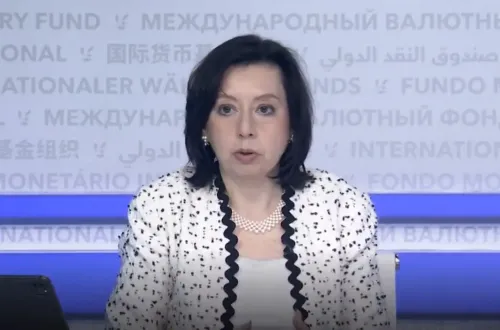
The International Monetary Fund (IMF), World Bank Group (WBG), International Energy Agency (IEA), and World Trade Organization (WTO) said on Wednesday, 9 July that the global economy has remained broadly resilient in the face of the Middle East conflict, but cautioned that uncertainty is still elevated and called for sustained international cooperation to protect trade flows, energy supplies, and economic stability.
Joint Statement from Four Global Institutions
The four organisations issued a joint statement following a meeting of their high-level coordination group — established in April to manage the energy, trade, and economic fallout from the conflict. The group said it reviewed global developments, assessed conditions in vulnerable countries, and discussed ways to sharpen the coordination of assistance.
'We met to take stock of energy, trade, and economic developments, to discuss the situation in vulnerable countries, and to further coordinate our support to those in need,' the statement said.
Resilience with Uneven Impact
The institutions acknowledged that while the global economy had broadly absorbed the shock, the effects have varied sharply across countries and sectors. 'The global economy has been broadly resilient to the shock from the war in the Middle East, even as some economies have experienced a slowdown in growth and an uptick in inflation,' the statement noted.
The group added that 'the impact has been highly uneven, affecting energy supplies, food security, various commodities, and economic activity across many countries and regions and creating deeper concerns about growth and price stability.' Fuel and fertiliser prices had declined since the group's previous meeting in June, which the organisations welcomed — though they stressed that risks have not dissipated.
Strait of Hormuz and Trade Strains
A notable element of the joint statement was an explicit call for progress toward reopening the Strait of Hormuz, a critical chokepoint for global oil and gas shipments. 'We encourage further progress toward a resolution to the conflict and the reopening of the Strait of Hormuz,' the four bodies said.
The statement warned that 'energy markets and transit of goods are still facing strains,' and urged governments globally to 'uphold the principle of freedom of navigation in the Strait and globally.' This comes amid persistent disruptions to shipping routes that have raised freight costs and complicated supply chains across Asia, Europe, and Africa.
What the Institutions Are Urging
The four organisations called on governments and the international community to remain vigilant and continue working together. Specific priorities cited include supporting economic recovery, protecting jobs and livelihoods, strengthening energy and food security, improving port infrastructure and trade facilitation, and building broader resilience to future shocks.
The institutions also pledged continued monitoring and readiness to act. 'We will strengthen our readiness to act further if needed and will continue adapting our support to countries as the situation evolves,' the statement said, adding that this includes 'helping them build greater energy, food, trade, and economic resilience.'
Context and What Comes Next
The coordination group was formed in April as the Middle East conflict disrupted energy markets, shipping lanes, and global commerce. Since then, the four institutions have held regular consultations to align policy responses and support economically stressed nations. The group's emphasis on the Strait of Hormuz signals that maritime security remains a central concern for global economic planners. Further coordinated assessments are expected as the situation on the ground continues to evolve.
Point of View
' with vulnerable economies bearing a disproportionate share of inflation and growth slowdowns. Four institutions speaking in one voice is itself a signal of how seriously they view the tail risks. The call to reopen the Strait of Hormuz is not diplomatic boilerplate; it is an admission that one of the world's most critical energy chokepoints remains constrained, and that no institutional coordination can fully substitute for a geopolitical resolution. India, as a major energy importer and trade-dependent economy, sits squarely in the crosshairs of both the Hormuz disruption and the commodity price volatility the group is monitoring.
NationPress
8 Oct 2026
Frequently Asked Questions
What did the IMF, World Bank, IEA, and WTO say about the global economy on 9 July?
The four institutions said in a joint statement that the global economy has been 'broadly resilient' to the shock from the Middle East war, even as some economies have seen slower growth and higher inflation. They warned that uncertainty remains high and called for continued international cooperation.
Why are the institutions calling for the Strait of Hormuz to reopen?
The Strait of Hormuz is a critical transit point for global oil and gas shipments, and its disruption has strained energy markets and raised costs for importing nations. The four bodies urged governments to uphold freedom of navigation there and globally to protect energy security and trade flows.
Have commodity prices improved since the conflict began?
Fuel and fertiliser prices declined between the group's June and July meetings, which the institutions welcomed. However, they cautioned that risks remain elevated and that the war's economic impacts could linger.
Which countries are most affected by the Middle East conflict's economic fallout?
The joint statement said the impact has been 'highly uneven,' with vulnerable countries facing deeper concerns around growth, price stability, food security, and energy supply. The coordination group has specifically discussed assessing and supporting these economies.
What is the high-level coordination group and when was it formed?
The coordination group is a joint body comprising the IEA, IMF, World Bank Group, and WTO, established in April to respond to the energy, trade, and economic consequences of the Middle East conflict. It has since held regular consultations to align policy responses and direct support to stressed economies.