Union Minister JP Nadda Declares No Fertiliser Shortage in States
Synopsis
Union Minister for Chemicals and Fertilisers, Jagat Prakash Nadda, assures Parliament of a steady supply of chemical fertilisers for the kharif 2025 and rabi 2025–26 seasons, highlighting government efforts to combat counterfeit products.
Key Takeaways
No shortage of chemical fertilisers reported for kharif 2025 and rabi 2025–26.
Government initiatives in place to ensure quality fertilisers.
4,30,541 raids conducted to curb black marketing and counterfeit products.
New urea units have significantly increased production capacity.
Major fertilisers like Urea, DAP, MOP, and NPKS are adequately supplied.
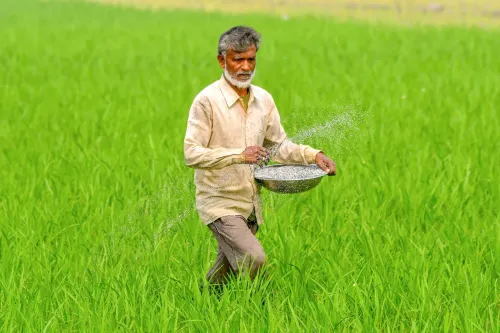
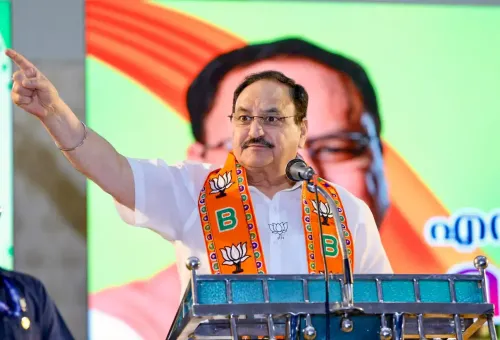
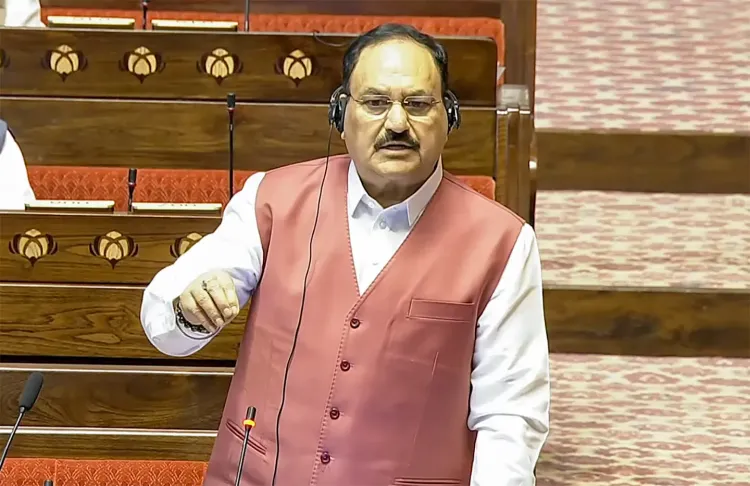
New Delhi, March 13 (NationPress) Union Minister for Chemicals and Fertilisers Jagat Prakash Nadda announced in Parliament on Friday that there has been no report of a shortage of chemical fertilisers across various states during the kharif 2025 and the ongoing rabi 2025–26 seasons.
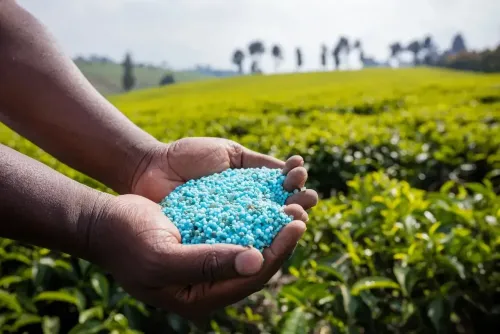
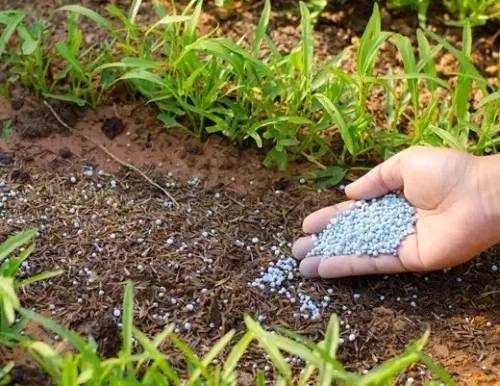
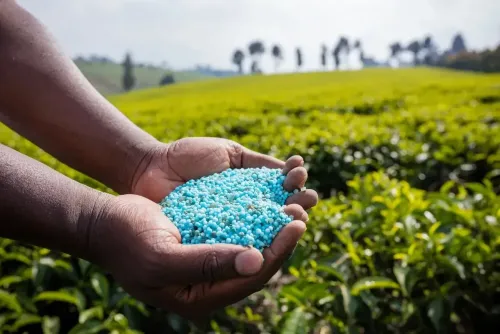
The minister emphasized that the supply of key fertilisers, including Urea, DAP, MOP, and NPKS, has been sufficient nationwide.
During the period of April to January in the fiscal year 2025–26, IFFCO units produced 41,24,000 metric tonnes of urea, which marks an increase from 40,66,000 metric tonnes in the same timeframe of 2024–25, showcasing consistent production levels.
Regarding urea, the Government introduced the New Investment Policy (NIP) – 2012 on January 2, 2013, followed by amendments on October 7, 2014, aimed at encouraging new investments in the urea sector to achieve self-sufficiency in urea production. As part of NIP-2012, six new urea units have been established, comprising four units created by Joint Venture Companies (JVCs) of designated PSUs and two units by private enterprises, as explained by the minister.
The JVCs include the Ramagundam urea unit of Ramagundam Fertilisers and Chemicals Ltd (RFCL) located in Telangana, along with three units of HURL situated at Gorakhpur (Uttar Pradesh), Sindri (Jharkhand), and Barauni (Bihar).
Private sector facilities comprise the Panagarh urea unit of Matix Fertilisers and Chemicals Ltd in West Bengal and the Gadepan-III urea unit of Chambal Fertilisers and Chemicals Ltd (CFCL) in Rajasthan.
Each of these units is equipped with an installed capacity of 12.7 Lakh Metric Tonnes per annum (LMTPA) and utilizes the latest energy-efficient technologies. Collectively, they have contributed an additional 76.2 LMTPA of urea production capacity, as highlighted by the minister.
The Lok Sabha was also informed that the Government of India has implemented strict measures to ensure the availability of quality fertilisers for farmers while combating the production and distribution of counterfeit fertilisers in the nation.
In a written statement to the Lok Sabha, Minister of State for Chemicals and Fertilisers Anupriya Patel explained that the Fertiliser Control Order, governed by the Essential Commodities Act, explicitly forbids the manufacturing or sale of fertilisers that fail to meet established standards. State Governments serve as the designated enforcement authorities tasked with addressing violations, including the cancellation or suspension of licenses and legal repercussions under the Essential Commodities Act, which can result in imprisonment for durations ranging from three months to seven years.
The Government of India closely monitors enforcement actions taken by States against incidents of black marketing, hoarding, substandard fertilisers, and diversion on a weekly basis. Since April 2025, approximately 4,30,541 raids have been conducted nationwide, resulting in 15,544 show-cause notices, 6,620 license suspensions or cancellations, and 794 FIRs filed against offenders, the minister detailed.
Furthermore, according to reports from State Governments, the majority of states have confirmed that there have been no factories or companies involved in the production of counterfeit chemical fertilisers in the past five years.
Nonetheless, some states have reported incidents, and actions were taken accordingly. These include Chhattisgarh, Haryana, Karnataka, and Madhya Pradesh, which collectively reported 16 cases. Maharashtra took action against 19 manufacturers linked to counterfeit fertilisers, while Rajasthan acted against 42 manufacturers suspected of producing dubious fertilisers; Uttar Pradesh reported 36 such cases in the last five years, the minister concluded.
Frequently Asked Questions
What did Union Minister Nadda announce regarding fertilisers?
Union Minister Nadda announced that there is no shortage of chemical fertilisers reported across states for kharif 2025 and the ongoing rabi 2025–26 seasons.
What steps has the government taken to ensure fertiliser quality?
The government has implemented the Fertiliser Control Order to prohibit the manufacturing of substandard fertilisers and conducts regular enforcement actions against violations.
How many raids have been conducted to tackle fertiliser-related issues?
Since April 2025, over 4,30,541 raids have been conducted, resulting in multiple show-cause notices and FIRs against offenders.
Have there been any reports of counterfeit fertilisers?
Yes, while most states reported no such cases, some states like Maharashtra and Rajasthan took actions against manufacturers involved in counterfeit fertilisers.
What is the installed capacity of the new urea units?
Each of the new urea units established has an installed capacity of 12.7 Lakh Metric Tonnes per annum.