Pakistan 'power triangle' risks repeat of 1971 break-up: Report
Synopsis
An essay by Baloch Siddik Azad argues that the military-bureaucracy-politician triangle that lost Pakistan its eastern wing in 1971 is repeating the pattern in Balochistan. The argument draws on HRCP findings of enforced disappearances and the IMF's corruption warnings, and it says the problem is the system, not any single government.
Key Takeaways
An article by Baloch Siddik Azad in 'Global Nationalist' says Pakistan's military, bureaucracy and political elite form a durable 'power triangle'.
The article ties the 1971 break-up to the refusal to accept the Awami League's majority in the 1970 National Assembly election .
It cites the HRCP's August 2025 report of continuing enforced disappearances and shrinking civic space in Balochistan .
It names the Fauji Foundation , Army Welfare Trust , NLC and FWO as signs of the military's commercial presence.
It cites the IMF's November 2025 report flagging persistent corruption risks and weak accountability.
It calls for the military to exit politics and business, and for provinces to get real control over their resources.
Pakistan's Punjabi-dominated 'power triangle' of the military, senior bureaucracy and a dependent political class, the same centralising system that split the country in 1971, could break it again, according to an article by political essayist and researcher Baloch Siddik Azad. The article, published in 'Global Nationalist', argues that Balochistan and Pakistan's smaller nationalities are being governed through coercion rather than consent.
Azad wrote that the arrangement has concentrated authority, controlled public resources and treated smaller nationalities as subordinate partners rather than equals in a federation.
How the Power Triangle Works, According to the Article
Azad describes three parts of the system that support one another, each supplying something the others need.
“The three components reinforce one another. The military supplies coercive force. The bureaucracy supplies administrative continuity and control over public finance. Political elites supply the appearance of civilian legitimacy. This is not a single government or a temporary alliance of convenience. It is a durable system of power, and its methods have already broken Pakistan once,” Azad wrote.
The argument presents Pakistan's governance problems as structural. It treats them as the product of a lasting system rather than of any one leader or administration.
The 1971 Precedent
The article links Pakistan's break-up in 1971 to a political order that would not accept East Pakistan's democratic mandate. The Awami League won a clear majority in the 1970 National Assembly election, but power was withheld and force replaced a political settlement.
“Pakistan was not broken by the demand for democracy. It was broken by the refusal to accept it. That same mentality still shapes the state's habits, and the ruling triangle has repeatedly shown it will risk national cohesion rather than give up control,” the article noted.
Balochistan as the Clearest Case
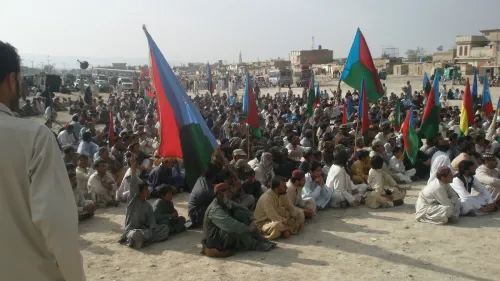
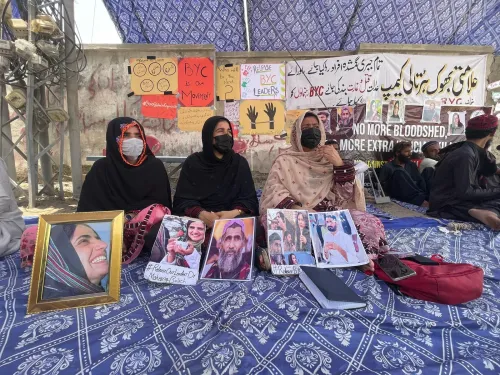
The article says political grievances and disputes over natural resources in Balochistan have too often been handled as security questions. It cites the Human Rights Commission of Pakistan (HRCP), which in August 2025 reported continuing enforced disappearances, shrinking civic space and impunity in the province.
“Balochistan is the clearest case of this internal-colonial pattern. Its coastline, minerals, energy resources and location are treated as assets of the central state, while the political rights and economic priorities of its people are treated as secondary,” it stated.
Military's Commercial Footprint and Accountability Concerns
The article also points to the military's commercial presence through four entities:
- the Fauji Foundation
- the Army Welfare Trust
- the National Logistics Corporation
- the Frontier Works Organisation
It also cites the International Monetary Fund's (IMF) November 2025 report, which identified persistent corruption risks and weak accountability in Pakistan.
These references draw on outside institutions, which Azad uses to support his broader argument that power and economic privilege are concentrated in a few hands.
What the Article Calls For
Azad calls on the military to withdraw from political engineering and to give up its commercial privileges. He also says the provinces should exercise real control over their resources. He warns that another change of government or a temporary economic package will not be enough.
“In 1971, refusing to accept democratic reality cost Pakistan its eastern wing... The first Pakistan was broken by the arrogance of its ruling establishment. Unless that system gives way to a genuinely democratic and federal order, the same old machinery may break it again,” the article added.
The article's warning will be tested by how Islamabad responds to unrest and rights concerns in Balochistan in the months ahead.
Point of View
Not a neutral assessment, and readers should weigh it that way. Its strength is that its core claims rest on Pakistan's own institutions and multilateral lenders: the HRCP on disappearances and the IMF on corruption risk. The 1971 parallel is rhetorically powerful, but Balochistan is not East Pakistan. There is no geographic separation and no electoral mandate being denied on a national scale, so the comparison should not be taken as a forecast. Still, the deeper point holds: a state that answers resource disputes with security operations rather than political settlement keeps producing the alienation it claims to fight.
NationPress
28 Nov 2026
Frequently Asked Questions
What is Pakistan's 'power triangle'?
It is a term used by writer Baloch Siddik Azad for the combined dominance of Pakistan's military, senior bureaucracy and a dependent political class. He argues the military supplies force, the bureaucracy controls administration and finance, and politicians provide civilian legitimacy.
How does the article link the power triangle to 1971?
The article says Pakistan broke apart in 1971 because the establishment refused to accept the Awami League's clear majority in the 1970 National Assembly election. In that case, force replaced political settlement and the country lost its eastern wing.
Why does the article focus on Balochistan?
It calls Balochistan the clearest case of an internal-colonial pattern, where the province's coastline, minerals and energy are treated as central assets while its people's rights are secondary. It cites the HRCP's August 2025 report of continuing enforced disappearances and impunity in the province.
What evidence does the article cite on the military's economic role?
It names the Fauji Foundation, Army Welfare Trust, National Logistics Corporation and Frontier Works Organisation as examples of the military's commercial presence. It also cites the IMF's November 2025 report on persistent corruption risks and weak accountability in Pakistan.
What reforms does the article propose?
It calls for the military to withdraw from political engineering and commercial privileges, and for provinces to exercise real control over their resources. It warns that a change of government or a temporary economic package will not be enough.