PM Surya Ghar Yojana crosses 50 lakh homes: bills drop to zero in Mahoba, ₹130 in Shirdi
Synopsis
Over 50 lakh Indian households have joined the PM Surya Ghar: Muft Bijli Yojana — and the numbers from the ground are striking. In Mahoba, one family's ₹2,500 monthly bill has hit zero. In Shirdi, a household added electric vehicles and an EV stove yet pays just ₹130 a month. The scheme is simultaneously a household budget fix and India's largest rooftop-solar rollout.
Key Takeaways
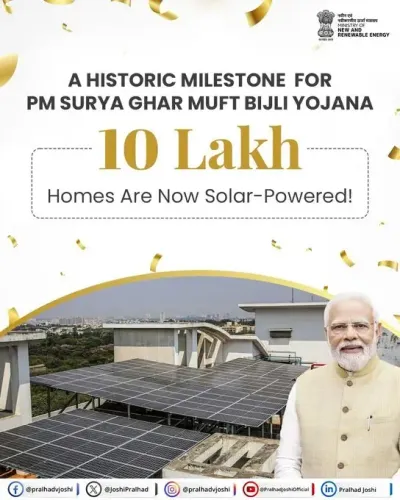
The PM Surya Ghar: Muft Bijli Yojana has crossed 50 lakh households across India.
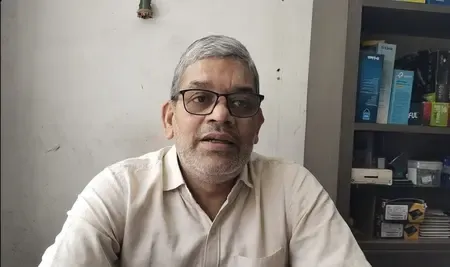
Jageshwar Chaurasia of Mahoba, Uttar Pradesh saw his monthly bill fall from ₹2,000–₹2,500 to zero .
Monu Chaurasia in Mahoba reduced his monthly bill from ₹3,000 to ₹200–₹300 .
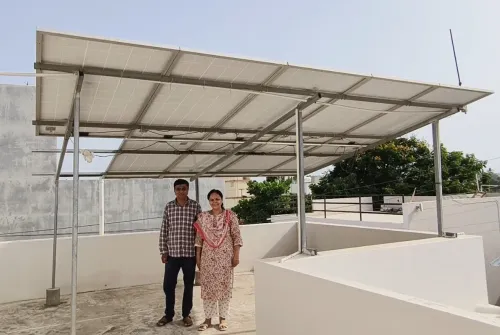
Mangesh Jibhkate of Shirdi, Maharashtra received a ₹75,000 subsidy; his bill now stands at ₹130 even after adding electric vehicles and an EV stove.
Both Central and state governments provide subsidies for panel installation and grid connection under the scheme.
Surplus power generated by beneficiaries can be sold back to the grid, creating an additional income stream.
The Pradhan Mantri Surya Ghar: Muft Bijli Yojana has surpassed a landmark milestone, with over 50 lakh households across India now benefiting from rooftop solar installations, according to official data. From Mahoba in Uttar Pradesh to Shirdi in Maharashtra, the scheme is cutting electricity bills to near-zero and enabling families to use electric vehicles and appliances they could not previously afford to run.
Bills Slashed: What Beneficiaries Say
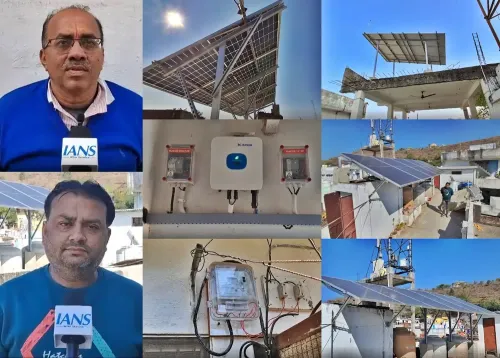
In Mahoba, Uttar Pradesh, beneficiary Jageshwar Chaurasia said his monthly electricity bill, which previously ranged between ₹2,000 and ₹2,500, has dropped to zero since installing rooftop solar panels under the scheme. Another resident, Monu Chaurasia, reported that his bill — earlier around ₹3,000 per month — now stands at just ₹200–₹300.
Both beneficiaries credited the scheme for the financial relief and expressed gratitude toward the Central Government for its implementation in the region.
Shirdi Household Adds EVs, Bill Still at ₹130
In Shirdi district, Maharashtra, beneficiary Mangesh Jibhkate described an even sharper transformation. His previous monthly electricity bill of ₹1,500–₹2,000 has fallen to approximately ₹130 after solar installation. Notably, his household has since added electric vehicles and electric stoves — appliances that increase consumption — yet his bill has remained at that minimal level.
Jibhkate received a subsidy of ₹75,000 under the scheme and reported no significant hurdles in availing it. He also noted that the panels have reduced power outages for residents in his vicinity, providing a community-level benefit beyond individual savings.
How the Scheme Works
Under the PM Surya Ghar: Muft Bijli Yojana, both the Central Government and respective state governments provide subsidies to eligible households for installing rooftop solar panels and connecting them to the grid. The scheme is designed to generate free electricity for domestic use while allowing beneficiaries to supply surplus power back to the grid — creating a potential income stream.
The dual benefit — replacing fossil-fuel-dependent grid power with clean renewable energy and lowering household expenditure — positions the initiative as both an environmental and economic intervention. This comes amid India's broader push to expand its renewable energy capacity and reduce carbon intensity ahead of its 2070 net-zero commitment.
50 Lakh Milestone and What Comes Next
The scheme's recent crossing of the 50 lakh household mark represents a significant scaling milestone for one of the Central Government's flagship clean-energy programmes. Critics and energy policy observers, however, note that India has an estimated 30 crore households, meaning the scheme still covers a small fraction of its potential beneficiary base.
Execution challenges — including grid connectivity in rural areas, net metering availability, and awareness gaps — remain factors that will determine how quickly the next tranche of households can be brought under the scheme. With subsidies in place and early adopters reporting tangible savings, the coming months will test whether the programme can scale from milestone to mass movement.
Point of View
But 50 lakh households against an estimated base of 30 crore means the scheme has barely scratched the surface. The real test is whether the subsidy pipeline, net metering infrastructure, and state-level distribution utilities can scale in tandem — or whether the programme plateaus as rural grid constraints and awareness gaps slow enrolment. The Shirdi case, where a household absorbed EV and induction loads yet kept its bill at ₹130, is a powerful proof-of-concept; replicating it at scale requires both policy continuity and execution discipline that past clean-energy schemes have not always delivered.
NationPress
21 Sept 2026
Frequently Asked Questions
What is the PM Surya Ghar: Muft Bijli Yojana?
The Pradhan Mantri Surya Ghar: Muft Bijli Yojana is a Central Government scheme that subsidises rooftop solar panel installation for households, enabling them to generate free electricity and supply surplus power back to the grid. Both the Centre and state governments contribute subsidies under the programme.
How much has the electricity bill fallen for beneficiaries?
Results vary by household. In Mahoba, Uttar Pradesh, one beneficiary's bill dropped from ₹2,000–₹2,500 to zero, while another's fell from ₹3,000 to ₹200–₹300. In Shirdi, Maharashtra, a beneficiary's bill came down from ₹1,500–₹2,000 to around ₹130 — even after adding electric vehicles and an electric stove.
What subsidy is available under PM Surya Ghar Yojana?
The subsidy amount varies by state and panel capacity. One beneficiary in Shirdi, Maharashtra reported receiving a subsidy of ₹75,000 and faced no significant difficulties in availing it. Both Central and state governments contribute to the subsidy structure.
How many households have benefited from the scheme so far?
The PM Surya Ghar: Muft Bijli Yojana has crossed 50 lakh household beneficiaries across India, according to recent official data. The scheme continues to expand across states.
Can beneficiaries earn money from surplus solar power?
Yes. Households that generate more electricity than they consume can supply the surplus back to the grid, potentially earning income. This net-metering mechanism is a built-in feature of the scheme designed to make rooftop solar financially attractive beyond bill reduction alone.