DRDO successfully tests Pinaka long-range guided rocket at 60 km range
Synopsis
DRDO has now validated the Pinaka Long-Range Guided Rocket at both ends of its range envelope — 60 km and 120 km — using the same in-service launcher. The back-to-back successes signal that a single Pinaka platform can deliver multi-range precision strike capability, a force-multiplier the Indian Army has been seeking for modern artillery operations.
Key Takeaways
DRDO successfully flight-tested the Pinaka Long-Range Guided Rocket (LRGR) on 8 July at ITR Chandipur .
The rocket was validated at a user-defined minimum range of 60 km , hitting the target with 'textbook precision.' The test confirmed that the existing Pinaka in-service launcher can fire variants across different range configurations from the same platform.
In December last year , DRDO had tested the Pinaka LRGR 120 at a maximum range of 120 km at the same facility.
Defence Minister Rajnath Singh called the test a 'major milestone in indigenous design and development capability.' The rocket is designed for use in the Pinaka Multiple Launcher Rocket System (MLRS) , developed to enhance Indian Army precision strike capability.
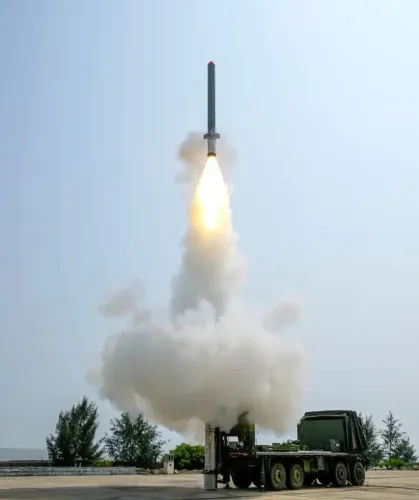
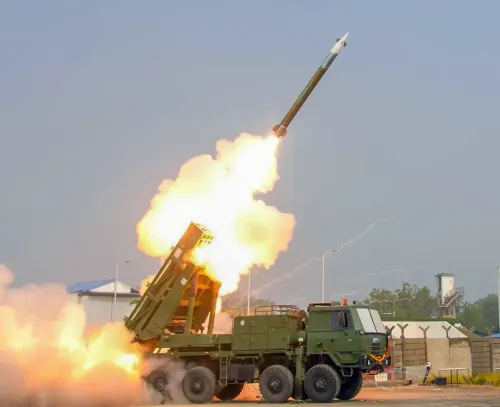
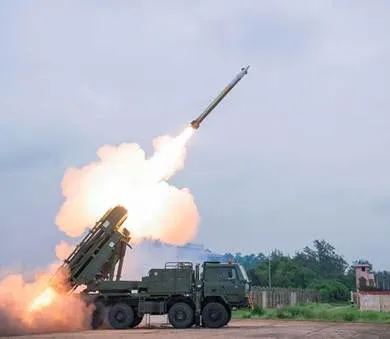
The Defence Research and Development Organisation (DRDO) on Wednesday, 8 July conducted a successful flight test of the Pinaka Long-Range Guided Rocket (LRGR) at the Integrated Test Range (ITR) in Chandipur, on India's east coast, according to a statement from the Ministry of Defence. The rocket was validated at a user-defined minimum range of 60 km, executing all in-flight manoeuvres with textbook precision along the predicted trajectory.
What the Test Demonstrated
According to the Ministry of Defence statement, the Pinaka LRGR 'impacted on the target with textbook precision exactly following the predicted trajectory.' All range instruments deployed at ITR Chandipur tracked the rocket throughout its flight path without interruption. The rocket was launched from the existing in-service Pinaka launcher, confirming that a single launcher platform can handle Pinaka variants across different range configurations — a significant operational advantage for the Indian Army.
Design and Development Teams
The Pinaka LRGR was designed by the Armament Research and Development Establishment (ARDE) in collaboration with the High Energy Materials Research Laboratory (HEMRL), with additional support from the Defence Research and Development Laboratory (DRDL) and Research Centre Imarat (RCI). The flight trial was coordinated by ITR and the Proof and Experimental Establishment (PXE).
Government Response
Defence Minister Rajnath Singh congratulated the DRDO, the Indian Army, and the defence industry on the milestone, describing it as 'a major milestone in indigenous design and development capability for long-range guided rockets.' Defence Secretary and Chairman, DRDO, Rajesh Kumar Singh closely monitored the trials and commended all teams involved in the successful test.
Context: Building on December's 120 km Test
This test follows the maiden flight trial of the Pinaka LRGR 120 conducted in December last year at the same ITR facility in Chandipur, where the rocket was validated at its maximum range of 120 km. That trial also demonstrated all planned in-flight manoeuvres and confirmed the required target precision. Together, the two tests establish the Pinaka LRGR's capability across a range envelope from 60 km to 120 km, reinforcing its role in the Pinaka Multiple Launcher Rocket System (MLRS) — a long-range artillery platform developed by the DRDO. Known for rapid response and precision strike capability, the Pinaka MLRS is designed to enhance the Indian Army's effectiveness in modern, high-intensity warfare scenarios. With back-to-back successful trials, the system is steadily progressing toward full operational induction.
Point of View
Multiple range variants. That is exactly the kind of logistics simplicity that makes a system operationally credible, not just a test-range success. The broader significance is strategic — as India modernises its artillery doctrine, reducing dependence on foreign rocket artillery systems like the BM-30 Smerch becomes a stated priority. The Pinaka LRGR's back-to-back validations suggest that timeline is compressing. The test of real progress, however, will come with production orders and field deployment numbers, not range demonstrations alone.
NationPress
8 Jul 2026
Frequently Asked Questions
What is the Pinaka Long-Range Guided Rocket (LRGR)?
The Pinaka LRGR is an indigenously developed precision-strike rocket designed for use in the Pinaka Multiple Launcher Rocket System (MLRS). It was developed by ARDE and HEMRL with support from DRDL and RCI, and is capable of hitting targets at ranges between 60 km and 120 km.
What did the 8 July DRDO Pinaka test prove?
The 8 July test validated the Pinaka LRGR at a user-defined minimum range of 60 km, demonstrating all planned in-flight manoeuvres and striking the target with textbook precision. Crucially, it also confirmed that the existing in-service Pinaka launcher can fire variants across different range configurations.
How does this test differ from the December trial?
The December trial tested the Pinaka LRGR 120 at its maximum range of 120 km, while the 8 July test validated the system at the shorter 60 km minimum range. Together, they establish the rocket's full operational range envelope using the same launcher platform.
What is the Pinaka MLRS and why does it matter?
The Pinaka Multiple Launcher Rocket System is a long-range artillery weapon developed by DRDO for the Indian Army. It is valued for rapid response and precision, and the LRGR variants significantly extend its strike reach, reducing the Army's reliance on imported rocket artillery systems.
Who congratulated the DRDO on the Pinaka test?
Defence Minister Rajnath Singh congratulated DRDO, the Indian Army, and the industry, calling the test a major milestone in indigenous long-range guided rocket capability. Defence Secretary and DRDO Chairman Rajesh Kumar Singh also closely monitored the trials and commended the teams involved.