DRDO gets expanded financial powers under DFP-2026 defence reform
Synopsis
India's defence R&D establishment just got a significant operational upgrade. The DFP-2026, released by Rajnath Singh on 29 June, gives DRDO devolved financial authority across trial campaigns, pre-project R&D, and innovation fund grants — directly targeting the approval bottlenecks that have long slowed the journey from lab to battlefield.
Key Takeaways
Defence Minister Rajnath Singh released the DFP-2026 framework on 29 June in New Delhi .
The reform grants DRDO expanded financial powers at multiple organisational levels, reducing centralised approval delays.
Dedicated provisions introduced for trial campaigns , tests and evaluation , and pre-project R&D sanctioning.
Financial powers for Extra-Mural Research Projects , Defence Innovation Accelerator-Centres of Excellence , and Technology Development Fund grants are now clearly segregated.
The framework is designed to accelerate induction of indigenous systems into the armed forces and deepen collaboration with industry and academia under Aatmanirbhar Bharat .
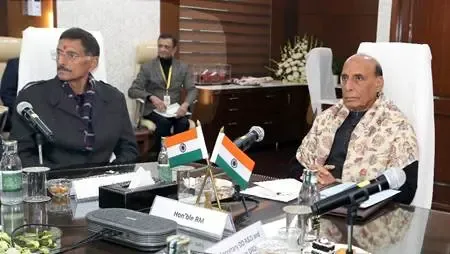
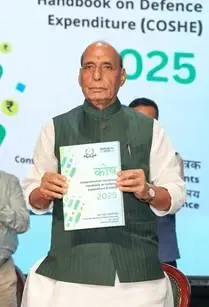
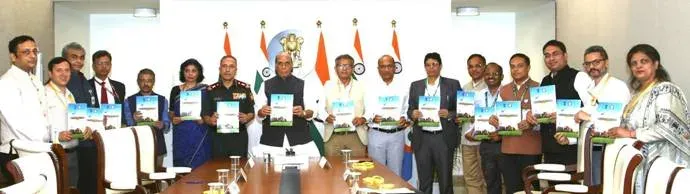
Defence Minister Rajnath Singh on Monday, 29 June released the Delegation of Financial Powers to DRDO (DFP-2026), a sweeping reform designed to accelerate strategic R&D, enhance accountability, and fast-track the induction of indigenous defence technologies into the armed forces. The revamped framework marks one of the most significant restructurings of DRDO's financial authority in recent years.
What DFP-2026 Changes
The revised framework introduces dedicated financial provisions for trial campaigns, tests, and evaluation activities — areas that had previously been constrained by centralised approval bottlenecks. It also authorises the sanctioning of pre-project R&D initiatives and introduces a clear segregation of financial powers for grants-in-aid covering Extra-Mural Research Projects, Defence Innovation Accelerator-Centres of Excellence, and Technology Development Fund (TDF) projects under their respective schedules.
Critically, the DFP-2026 devolves decision-making authority across multiple levels within the Department of Defence R&D, reducing the time lost to hierarchical approvals that have historically slowed project timelines.
What the Government Said
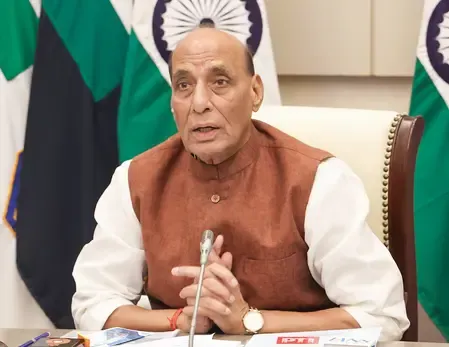
Rajnath Singh stated that the DFP-2026 will facilitate faster production and induction of systems, platforms, and technologies emerging from the R&D ecosystem into the Defence Forces. He added that the new framework will foster stronger collaboration with industry and academia, reinforcing the vision of Aatmanirbhar Bharat, and will contribute to enhanced self-reliance in defence technologies while strengthening the nation's overall defence preparedness.
Senior Officials Present
The release event in New Delhi was attended by Chief of Defence Staff General N.S. Raja Subramani, Defence Secretary Rajesh Kumar Singh — who also holds additional charge of Secretary, Defence R&D and DRDO Chairman — Secretary, Defence Production Sanjeev Kumar, Secretary, Ex-Servicemen Welfare Sukriti Likhi, Controller General of Defence Accounts Anugraha Narayana Das, DG, Naval Systems and Materials R.V. Hara Prasad, DG, Resources and Management Dr Ravindra Singh, and Director, Directorate of Finance and Material Management Dr Maiya Din, among other senior officials.
DRDO's Role in Make in India
The DRDO regularly transfers indigenous technologies to Indian public and private sector industries through Licensing Agreements for Transfer of Technology and the Technology Development Fund. These mechanisms empower MSMEs and startups to manufacture critical aerospace and defence equipment, directly bolstering armed forces preparedness. The DFP-2026 is expected to deepen this pipeline by removing financial friction at the project-initiation and evaluation stages.
This comes amid a broader push by the Centre to reduce dependence on foreign defence imports and scale up domestic production capacity. With the DFP-2026 now in effect, the pace at which DRDO-developed technologies reach operational deployment will be closely watched as a measure of the reform's real-world impact.
Point of View
Creating queues that outlast project relevance. Devolving sanction powers to working levels is the right diagnosis. But the reform's value will ultimately be measured not in framework documents but in how quickly DRDO-developed platforms move from prototype to induction — a journey that has historically taken years longer than comparable programmes abroad. The inclusion of TDF and innovation-centre grants in the new schedules is a quiet but important signal that the Centre is treating startups and MSMEs as structural partners in defence manufacturing, not just supplementary vendors. Whether executing agencies have the capacity to absorb this autonomy responsibly is the next question.
NationPress
29 Jun 2026
Frequently Asked Questions
What is the DFP-2026 released by Rajnath Singh?
The DFP-2026, or Delegation of Financial Powers to DRDO 2026, is a revised financial framework released on 29 June by Defence Minister Rajnath Singh. It devolves financial decision-making authority across multiple levels within the Department of Defence R&D to accelerate strategic project execution and technology induction.
How does DFP-2026 improve DRDO's functioning?
DFP-2026 introduces dedicated financial provisions for trial campaigns, tests, and evaluation activities, and authorises sanctioning of pre-project R&D initiatives. It also clearly segregates financial powers for grants-in-aid under Extra-Mural Research, Defence Innovation Accelerator-Centres of Excellence, and Technology Development Fund projects, reducing approval bottlenecks.
What is the link between DFP-2026 and Aatmanirbhar Bharat?
The framework is explicitly designed to reinforce the Aatmanirbhar Bharat vision by fostering stronger collaboration between DRDO, industry, and academia. By easing financial constraints at the project level, it is expected to speed up the transfer of indigenous technologies to Indian MSMEs and startups for defence manufacturing.
Who attended the DFP-2026 release event?
The event in New Delhi was attended by Chief of Defence Staff General N.S. Raja Subramani, Defence Secretary Rajesh Kumar Singh, Secretary Defence Production Sanjeev Kumar, Controller General of Defence Accounts Anugraha Narayana Das, and several other senior DRDO and defence ministry officials.
How does DRDO transfer technologies to Indian industry?
DRDO transfers indigenous technologies through Licensing Agreements for Transfer of Technology and the Technology Development Fund, enabling MSMEs and startups to manufacture critical aerospace and defence equipment for the armed forces. The DFP-2026 is expected to streamline the financial approvals underpinning these transfers.