India a global healthcare powerhouse, says Jitendra Singh
Synopsis
Union Minister Dr Jitendra Singh says AI and quantum tools are transforming medicine but cannot replace a doctor's bedside judgement. The Indian Genome Programme has sequenced 10,000-15,000 people from 84 populations and is aiming for one million. He also flagged diabetes and heart disease striking Indians at younger ages.
Key Takeaways
Dr Jitendra Singh said on 28 November 2026 that India is becoming a global healthcare powerhouse through indigenous research and affordable treatment.
He told the Global Healthcare Conclave 2026 , organised by GAIMS , that AI cannot replace a doctor's clinical understanding.
The Indian Genome Programme has sequenced around 10,000-15,000 individuals from 84 populations , with an initial target of one million .
India faces a dual burden of communicable and non-communicable diseases, with metabolic disorders appearing at younger ages.
He said Ayushman Bharat has expanded financial protection for patients, including cover for pre-existing diseases.
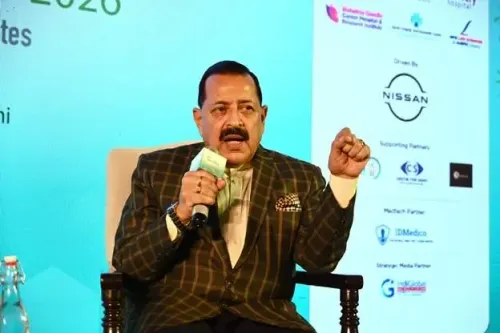
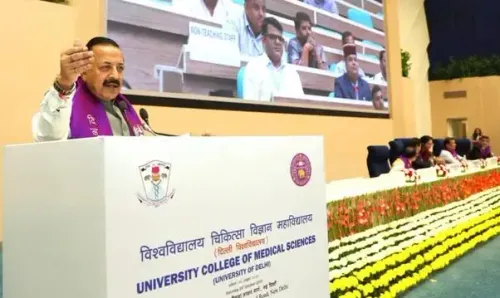
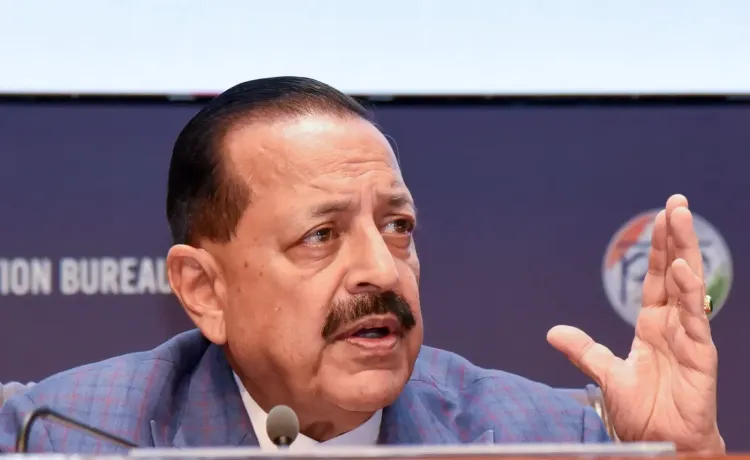
India is moving towards becoming a global healthcare powerhouse through indigenous research, medical innovation and affordable advanced treatment, Union Minister of State (Independent Charge) Dr Jitendra Singh said in New Delhi on Saturday, 28 November 2026. Speaking at the Global Healthcare Conclave 2026, organised by the Global Association of Indian Medical Students (GAIMS), the minister said technologies such as AI are reshaping medicine. He added that they cannot replace a doctor's core clinical understanding.
Technology Versus Clinical Skill
Dr Singh said artificial intelligence, quantum technologies and advanced diagnostic tools are transforming healthcare. However, he argued that these tools cannot substitute for the fundamental clinical judgement expected of a physician.
He called for medical education to keep a strong focus on bedside learning, direct patient interaction, clinical examination and hands-on experience. According to the minister, the next generation of doctors must combine technological advances with strong clinical acumen to meet the changing demands of modern medicine.
He traced the evolution of medical science from conventional X-ray-based diagnostics to ultrasound, CT scans and MRI. He noted that therapeutics and disease management have advanced alongside these diagnostic tools.
From Import Dependence to Indigenous Solutions
India once relied heavily on foreign medical technologies and advanced treatment facilities. It is now developing home-grown solutions in vaccines, antibiotics, gene therapy and cancer treatment, and is emerging as a cost-effective destination for quality care.
The minister said India's growing scientific capabilities, its distinctive genomic diversity and progress in precision medicine have opened up unprecedented opportunities for the country to contribute to global healthcare.
Indian Genome Programme and Precision Medicine
Referring to the Indian Genome Programme, Dr Singh said around 10,000-15,000 individuals from 84 different populations have already been sequenced. The programme has an initial target of one million individuals.
He said the database could strengthen India's precision medicine capabilities and generate scientific knowledge useful to healthcare research worldwide. India's genetic and population diversity offers researchers a unique resource for understanding genetic variation and disease patterns.
India's Dual Disease Burden
Communicable diseases once accounted for a large share of illness and death in the country. India now faces a dual burden of communicable and non-communicable diseases, the minister said.
He listed Type-2 diabetes, cardiovascular disease, hypertension, dyslipidemia and fatty liver disease as major public health challenges. Notably, he flagged that metabolic disorders are increasingly being detected at younger ages. He called for stronger research into how these disorders are linked, and for more targeted prevention and treatment.
Global Standing and Affordable Care
Dr Singh said the global perception of Indian medical professionals has changed significantly. Indian doctors and researchers, he said, are gaining wider recognition for their capabilities, knowledge and contributions to medical science.
On access to care, he said initiatives such as Ayushman Bharat have expanded financial protection for patients, including provisions that cover pre-existing diseases.
The pace at which the genome programme moves towards its one-million target is likely to shape how quickly India can turn its genetic diversity into precision medicine at scale.
Point of View
000-15,000 people sequenced against a one-million target, India's precision-medicine promise is still at an early stage. The minister's more urgent point is the one likely to get less coverage: diabetes, heart disease and fatty liver are hitting younger Indians, a trend that could strain a health system still fighting infectious disease. The 'powerhouse' label will mean little unless prevention and primary care keep pace with frontier research.
NationPress
28 Nov 2026
Frequently Asked Questions
What did Dr Jitendra Singh say about India's healthcare sector?
He said India is becoming a global healthcare powerhouse through indigenous research, medical innovation and affordable advanced treatment. He made the remarks at the Global Healthcare Conclave 2026 on 28 November 2026.
Can AI replace doctors, according to Jitendra Singh?
No. Dr Singh said AI, quantum technologies and advanced diagnostics are transforming healthcare but cannot replace a doctor's fundamental clinical understanding. He urged continued emphasis on bedside learning and direct patient interaction.
How many people have been sequenced under the Indian Genome Programme?
Around 10,000-15,000 individuals from 84 different populations have been sequenced so far, according to the minister. The programme's initial target is one million individuals.
What is India's dual burden of disease?
It refers to India facing both communicable diseases and rising non-communicable diseases at the same time. The non-communicable conditions include Type-2 diabetes, cardiovascular disease, hypertension, dyslipidemia and fatty liver disease, which are increasingly seen in younger people.
Who organised the Global Healthcare Conclave 2026?
The conclave was organised by the Global Association of Indian Medical Students (GAIMS). Union Minister Dr Jitendra Singh addressed the event.