BRICS Chennai Declaration adopted unanimously on science and tech
Synopsis
At the 14th BRICS Science Ministerial Meet chaired by India, all member nations unanimously adopted the 'Chennai Declaration' — a sweeping STI cooperation framework covering AI, quantum tech, biotechnology, climate, and a new startup fund. It is the most comprehensive BRICS science agreement under India's chairship, and signals a push from dialogue to deliverables.
Key Takeaways
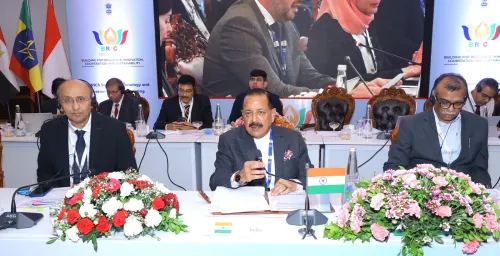
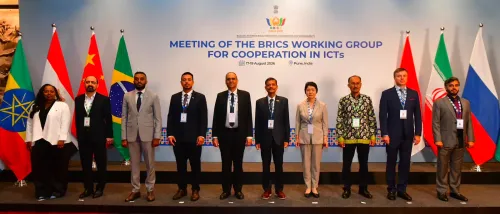
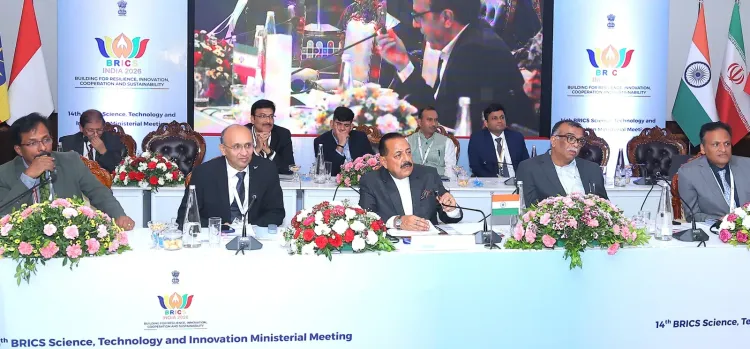
Union Minister Dr Jitendra Singh announced the unanimous adoption of the 'Chennai Declaration' on 22 August at the 14th BRICS Science Ministerial Meet .
The declaration places a people-centred approach at the core of BRICS STI cooperation under India's BRICS Chairship.
Collaboration spans 14 thematic Working Groups , 11 Young Scientist Forum editions , and 9 STI Framework Programme calls .
Key themes include AI , quantum technologies , biotechnology , climate sustainability , and advanced materials .
The BRICS Youth Startup Platform was welcomed, with a BRICS Startup Innovation Fund under consideration.
India called for a shift from dialogue to demonstrable outcomes through joint projects and open research infrastructure.
Union Minister Dr Jitendra Singh on 22 August announced the unanimous adoption of the 'Chennai Declaration' at the 14th BRICS Science Ministerial Meet, chaired by India under its BRICS Chairship. The declaration reaffirms the bloc's collective commitment to building an effective, resilient and future-ready framework for Science, Technology and Innovation (STI) cooperation across member nations.
What the Chennai Declaration Establishes
The 'Chennai Consensus' — as the declaration is also referred to — places a people-centred and humanity-first approach at the core of BRICS STI cooperation. It emphasises sustainable development, resilient and high-quality growth, social inclusiveness, and the deployment of innovation and technology to improve the welfare and quality of life of citizens across all BRICS nations.
The document records the depth of collaboration achieved through 14 thematic Working Groups, 11 editions of the BRICS Young Scientist Forum, nine editions of the Young Innovators Prize, and nine BRICS STI Framework Programme calls — spanning research, innovation and flagship project initiatives. This trajectory, according to the declaration, reflects growing strength and sustained engagement within the BRICS STI partnership.
Key Themes Covered at the Ministerial Meet
Addressing the closing session, Dr Singh said the breadth of discussions — ranging from artificial intelligence and high-performance computing to quantum technologies, advanced materials, biotechnology, health, and climate and sustainability — underscores the shared opportunities and challenges that BRICS nations can tackle through collective action.
He noted that the deliberations had reaffirmed the central role of STI in building a more resilient, inclusive and sustainable future for the bloc's member countries.
Startup Ecosystem and Youth Innovation
The Chennai Declaration also formally welcomes the BRICS Youth Startup Platform, recognising the need to catalyse financing for early and growth-stage startups. It records the consideration of a BRICS Startup Innovation Fund, as noted in the BRICS Industry Ministers' Declaration, to be coordinated with the STI track where appropriate.
India's efforts to review and streamline BRICS STI priorities were also welcomed, alongside consultative work towards a more future-ready cooperation framework.
India's Call for Demonstrable Outcomes
Dr Singh stressed that the BRICS STI partnership must move beyond sustained dialogue toward demonstrable outcomes. He called for stronger mechanisms for joint projects, shared platforms, coordinated research calls, and open research infrastructure — signalling India's intent to push the partnership into an implementation-focused phase.
With India holding the BRICS Chairship, the Chennai Declaration marks a significant milestone in the country's multilateral science diplomacy, and sets the agenda for STI cooperation as the bloc continues to expand its global footprint.
Point of View
But the real measure of success lies in what follows. BRICS STI cooperation has accumulated impressive institutional scaffolding — 14 working groups, nine framework programme calls — yet the minister's own remarks acknowledged the gap between dialogue and outcomes. India's push for 'demonstrable outcomes' and open research infrastructure is the right instinct, but it arrives without a binding accountability mechanism. As BRICS expands its membership, harmonising STI priorities across a more diverse bloc will only get harder. The startup fund, still at the 'consideration' stage, is worth watching — if operationalised, it could be the partnership's most tangible deliverable yet.
NationPress
22 Aug 2026
Frequently Asked Questions
What is the Chennai Declaration adopted at the BRICS Science Ministerial Meet?
The Chennai Declaration is a multilateral agreement unanimously adopted by BRICS nations on 22 August at the 14th BRICS Science Ministerial Meet, chaired by India. It establishes a people-centred framework for Science, Technology and Innovation cooperation, covering areas from AI and quantum technologies to climate sustainability and startup financing.
What is the significance of India chairing the BRICS Science Ministerial Meet?
India's chairship allowed it to shape the STI agenda and push for a more outcome-oriented partnership. The adoption of the Chennai Declaration under India's leadership marks a high point in the country's multilateral science diplomacy during its BRICS Chairship.
What topics were discussed at the 14th BRICS Science Ministerial Meet?
Discussions covered artificial intelligence, high-performance computing, quantum technologies, advanced materials, biotechnology, health, climate and sustainability. These themes reflect the shared scientific and developmental priorities of BRICS member nations.
What is the BRICS Youth Startup Platform and the proposed Startup Innovation Fund?
The BRICS Youth Startup Platform is a newly welcomed initiative aimed at fostering innovation among young entrepreneurs across member nations. A BRICS Startup Innovation Fund is under consideration, as noted in the BRICS Industry Ministers' Declaration, to catalyse financing for early and growth-stage startups in coordination with the STI track.
How extensive is existing BRICS STI cooperation?
BRICS STI cooperation spans 14 thematic Working Groups, 11 editions of the Young Scientist Forum, nine editions of the Young Innovators Prize, and nine STI Framework Programme calls. The Chennai Declaration describes this as reflecting growing strength and sustained engagement within the partnership.