IndiaAI Mission launches EKA-1 and Dhīr, India's first indigenous AI foundation models
Synopsis
India has taken a concrete step toward AI sovereignty — the IndiaAI Mission has released EKA-1 and Dhīr, two domestically built foundation models covering all 22 scheduled Indian languages and capable of running offline on mobile devices. Backed by subsidised national compute infrastructure, these models signal India's ambition to move from AI consumer to AI creator.
Key Takeaways
The IndiaAI Mission released EKA-1 (by Soket Labs) and Dhīr 2B & Dhīr 5B (by ZenteiQ AiTech Innovations) on 4 November 2026 .
EKA-1 supports all 22 scheduled Indian languages plus English, designed for math, code, reasoning, and banking/financial services.
Dhīr 2B and Dhīr 5B are offline-capable, deployable on mobile devices without cloud connectivity, targeting defence, government, and education sectors.
Both models were developed using subsidised national AI compute infrastructure under the IndiaAI Innovation Centre (Foundation Models) pillar.
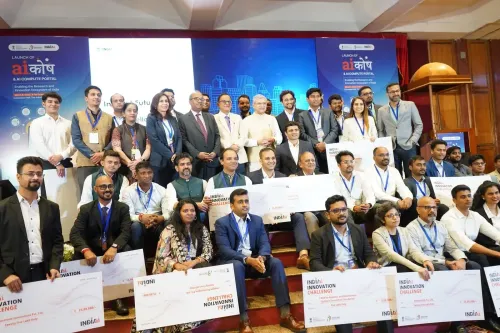
Models will be accessible to researchers, students, and the public via the AIKosh platform.
Krishnan said the models strengthen India's 'technological and strategic autonomy in Artificial Intelligence.'
The IndiaAI Mission on 4 November 2026 released two indigenous AI foundation models — EKA-1 and Dhīr (Dhīr 2B and Dhīr 5B) — marking a significant step in India's push to build homegrown artificial intelligence capabilities. The models were developed by Soket Labs Technology and Research Private Limited and ZenteiQ AiTech Innovations, respectively, under the IndiaAI Innovation Centre (Foundation Models) pillar of the mission.
What Was Announced
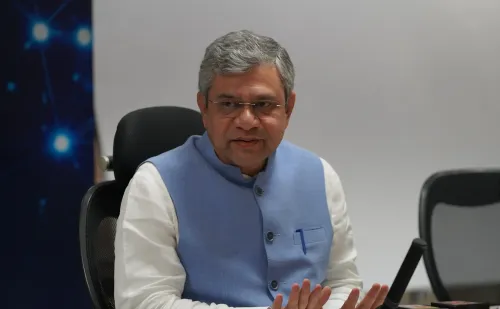
IT Secretary S. Krishnan stated that the development of such indigenous models strengthens India's technological and strategic autonomy in artificial intelligence. He added that the models open up opportunities to improve productivity and efficiency across government, industry, research, and education. Access to subsidised national AI compute infrastructure and support for ancillary research expenses under the mission enabled the development of both models, underscoring how public AI infrastructure can accelerate homegrown innovation.
Sudeep Shrivastava, Chief Operating Officer of IndiaAI, described the mission's support ecosystem as 'dedicated to making artificial intelligence more accessible and tailored to India's unique landscape.' He noted that 'breakthrough models like Dhīr and EKA-1 showcase the nation's multi-layered progress in AI ranging from lightweight solutions optimised for everyday devices to robust powerhouses engineered for complex enterprise applications.'
EKA-1: Multilingual and Finance-Ready
EKA-1, developed by Soket Labs, demonstrates advanced capabilities spanning all 22 scheduled Indian languages alongside English. Built as an open, sparse hybrid language model, it is designed for applications in mathematics, code, reasoning, and agentic use. Abhishek Upperwal, Chief Executive Officer of Soket Labs Technology and Research Pvt Ltd, said, 'With the support of the IndiaAI Mission, we have developed an advanced AI model specifically tailored to India's unique banking, financial services and cybersecurity landscape.'
Notably, EKA-1's multilingual architecture directly addresses a long-standing gap in AI accessibility for India's non-English-speaking majority, covering languages from Hindi and Tamil to Meitei and Dogri.
Dhīr: Offline-Capable and Privacy-First
Dhīr 2B and Dhīr 5B, developed by ZenteiQ AiTech Innovations, are engineered for offline-capable, document-grounded automation, knowledge retrieval, and citizen or enterprise services — particularly in low-connectivity or sensitive environments across defence, government, industrial, and educational sectors. Prof. Sashikumar, CEO of ZenteiQ AiTech Innovations, said, 'Models like Dhīr 2B and Dhīr 5B offer the flexibility to run across different computing platforms, including GPUs and TPUs.' Their lightweight architecture enables on-device deployment on mobile phones without dependence on cloud connectivity, keeping data local and enhancing privacy, security, and accessibility.
Broader Access Through AIKosh
Through platforms such as AIKosh, both EKA-1 and Dhīr are expected to be made accessible to researchers, students, innovators, and the wider public, encouraging further experimentation and innovation, according to an official statement. This comes amid growing global competition in sovereign AI development, with countries including France, Japan, and the UAE investing heavily in nationally developed large language models. India's move to release open foundation models signals an intent to compete at the frontier rather than merely consume foreign AI platforms.
What's Next
Soket AI and ZenteiQ are among the teams selected under the IndiaAI Mission's Foundation Models pillar, and further iterations of these models are anticipated as the mission scales its compute and research support. Wider deployment across government services, educational institutions, and enterprise applications is expected to follow in the coming months.
Point of View
Startups, and educators actually build on these models, or whether they remain landmark releases that see limited downstream use. Competing with globally dominant models from OpenAI, Google, and Meta requires not just capable models but a thriving open-source ecosystem — and that ecosystem is still nascent in India.
NationPress
4 Nov 2026
Frequently Asked Questions
What are EKA-1 and Dhīr, the models released by IndiaAI Mission?
EKA-1 and Dhīr (Dhīr 2B and Dhīr 5B) are two indigenous AI foundation models released by the IndiaAI Mission on 4 November 2026. EKA-1 was developed by Soket Labs Technology and Research Pvt Ltd, and Dhīr by ZenteiQ AiTech Innovations, both under the IndiaAI Innovation Centre's Foundation Models pillar.
What makes EKA-1 unique among Indian AI models?
EKA-1 supports all 22 scheduled Indian languages alongside English, making it one of the most linguistically inclusive AI models built in India. It is an open, sparse hybrid language model designed for tasks including mathematics, coding, reasoning, and banking and cybersecurity applications.
Can Dhīr work without an internet connection?
Yes. Dhīr 2B and Dhīr 5B are designed for offline-capable, on-device deployment, including on mobile phones, without reliance on cloud connectivity. This architecture is intended to enhance data privacy and accessibility in low-connectivity or sensitive environments such as defence and government settings.
How were these models funded and developed?
Both models were developed using subsidised national AI compute infrastructure and support for ancillary research expenses provided under the IndiaAI Mission. The mission's support ecosystem was designed to lower barriers for Indian teams building foundation AI capabilities.
Where can researchers and students access EKA-1 and Dhīr?
Both models are expected to be made accessible through AIKosh, IndiaAI's platform for researchers, students, innovators, and the wider public. The platform is intended to encourage further experimentation and downstream innovation built on these models.