Semicon 2.0 portal launched; 12 ECMS projects worth ₹7,503 crore approved
Synopsis
India's semiconductor ambition just got a major operational push: the Semicon 2.0 portal is live with a ₹1.27 lakh crore outlay, and 12 fresh ECMS projects worth ₹7,503 crore have been cleared — including the country's first domestic support for copper foil and cathode active material, two materials at the heart of the battery and chip supply chain.
Key Takeaways
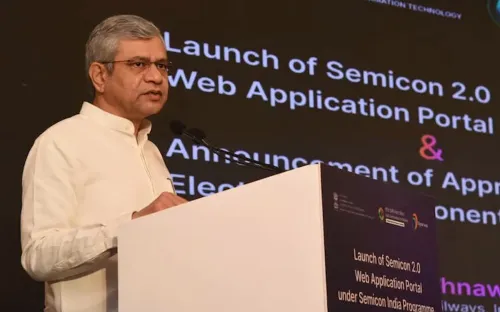
Minister Ashwini Vaishnaw launched the Semicon 2.0 portal on 6 November 2026 , with a fiscal outlay of ₹1.27 lakh crore under the India Semiconductor Mission.
12 new ECMS projects approved with projected investments of ₹7,503 crore , expected to generate ₹39,045 crore in production and 7,127 direct jobs .
Cumulative ECMS approvals now stand at 118 applications ; earlier 106 clearances involved investments of ₹69,548 crore .
Phase 1 saw 12 semiconductor projects approved with investments exceeding ₹1.64 lakh crore ; five have begun commercial production as of October 2026 .
First-ever ECMS support extended to copper foil , cathode active material and specialty ceramics — critical battery and chip inputs.
332 academic institutions and 105 startups have received EDA tools; approximately 70,000 students trained under the C2S programme .
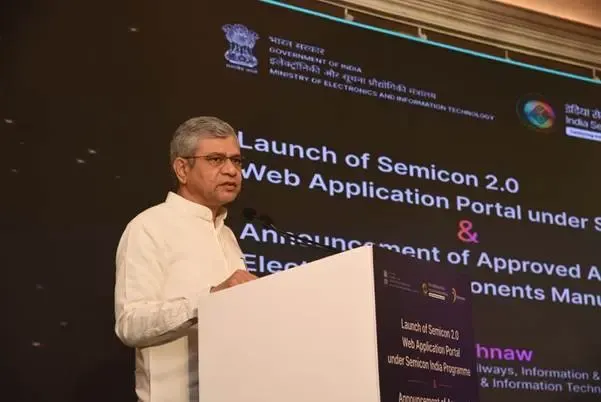
Union Electronics and Information Technology Minister Ashwini Vaishnaw on Friday, 6 November 2026, launched the Semicon 2.0 web application portal under the Semicon India Programme and announced the approval of 12 new projects under the Electronics Components Manufacturing Scheme (ECMS), involving projected investments of ₹7,503 crore. The twin announcements mark a significant escalation in India's push to deepen its semiconductor and electronics manufacturing ecosystem.
What Semicon 2.0 Covers
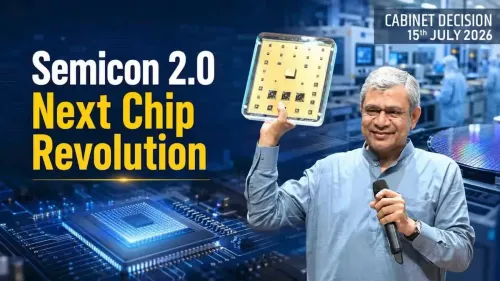
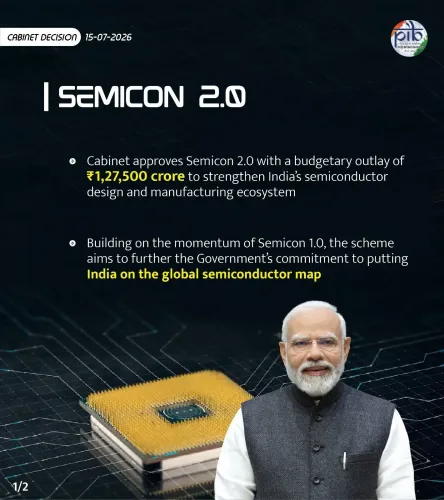
The Semicon 2.0 portal launch follows the Union Cabinet's approval of the programme with a fiscal outlay of ₹1.27 lakh crore under the India Semiconductor Mission (ISM). The next phase is built on six strategic pillars: chip design, semiconductor equipment and materials, fabrication units, ATMP/OSAT facilities, research and development, and talent development.
Applications have gone live for Pillars 2, 3 and 4, covering machines and materials, new semiconductor fabrication facilities, and the strengthening of the assembly, testing, marking and packaging (ATMP) ecosystem. The remaining pillars are expected to open for applications in subsequent tranches.
Progress Under Phase One
The government highlighted that the first phase has already generated tangible results. A total of 12 semiconductor projects with cumulative investments exceeding ₹1.64 lakh crore have been approved across six states, with five of them having commenced commercial production as of October 2026. This comes amid growing global competition for semiconductor supply-chain resilience, with India positioning itself alongside Taiwan, South Korea and the United States.
The ecosystem has also attracted startups and academia. According to the government, 105 startups have received access to Electronic Design Automation (EDA) tools, 24 startups have received funding support, and 15 startups have secured venture capital investments. Meanwhile, 332 academic institutions have been provided EDA tools under the Chips to Startup (C2S) programme, training approximately 70,000 students.
Twelve New ECMS Projects: What Gets Built
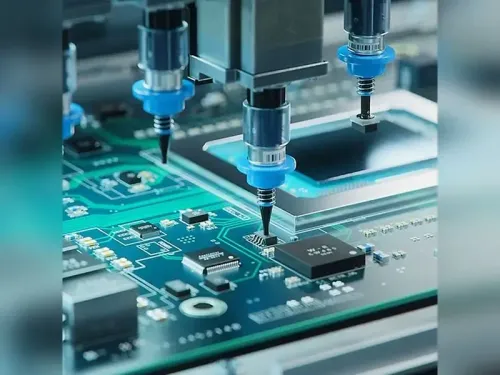
The 12 newly approved ECMS projects are projected to generate production worth ₹39,045 crore and create 7,127 direct jobs. They span components, supply-chain products and capital goods, covering the manufacturing of multilayer printed circuit boards, relays, heat sinks and specialty ceramics, as well as upstream materials such as copper foil, anode material, cathode active material, polypropylene film and camera rims.
Notably, this marks the first time that ECMS support has been extended to copper foil, cathode active material and specialty ceramics — materials critical to battery and advanced electronics supply chains. The latest batch brings the cumulative ECMS pipeline to 118 approved applications, with the earlier 106 clearances involving investments of ₹69,548 crore.
The 12 projects are geographically distributed across Gujarat, Karnataka, Madhya Pradesh, Maharashtra, Punjab, Tamil Nadu and Uttar Pradesh, broadening India's electronics manufacturing footprint beyond traditional hubs.
What Vaishnaw Said
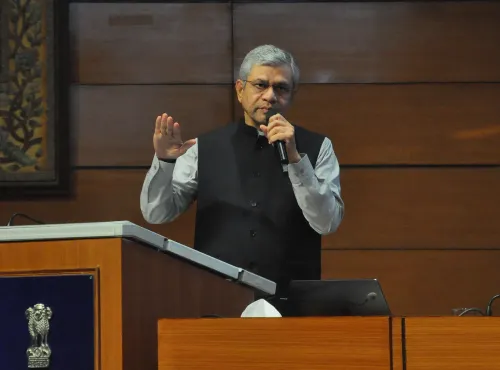
Speaking at the launch event, Minister Vaishnaw said India's electronics manufacturing sector has moved beyond basic assembly and is increasingly building depth across modules, components, materials and advanced technologies. He pointed to emerging domestic strengths in battery cells, copper foils, copper-clad laminates and advanced printed circuit boards, adding that government schemes are actively creating opportunities for MSMEs in this space.
What Comes Next
With applications now live for three of the six pillars, industry observers will watch the pace of approvals and disbursements under Semicon 2.0 closely. The scale of ₹1.27 lakh crore makes it one of the largest technology-sector commitments in India's history. Whether it translates into a globally competitive fabrication base — or remains concentrated in downstream assembly and packaging — will define India's semiconductor decade.
Point of View
And the phased opening of application pillars signals operational seriousness rather than a one-day announcement cycle. But the real bottleneck in India's semiconductor story has never been intent; it has been the gap between approved projects and actual fabrication capacity. Five of twelve Phase 1 projects reaching commercial production is progress, but the global race — particularly with US CHIPS Act disbursements accelerating and Taiwan deepening alliances — will not wait for India's approval pipeline to mature. The ECMS approvals are downstream wins; the upstream fabrication story, which involves far longer lead times and far higher execution risk, remains the one to watch.
NationPress
6 Nov 2026
Frequently Asked Questions
What is the Semicon 2.0 portal and what does it do?
The Semicon 2.0 portal is the online application gateway for the second phase of the Semicon India Programme, backed by a ₹1.27 lakh crore outlay under the India Semiconductor Mission. It currently accepts applications under three of six strategic pillars — semiconductor equipment and materials, new fabrication facilities, and ATMP/OSAT ecosystem strengthening.
What are the 12 new ECMS projects approved on 6 November 2026?
The 12 newly approved Electronics Components Manufacturing Scheme projects involve investments of ₹7,503 crore and are projected to generate production worth ₹39,045 crore, creating 7,127 direct jobs. They cover multilayer printed circuit boards, relays, heat sinks, specialty ceramics, copper foil, cathode active material, polypropylene film and camera rims, spread across seven states.
Which states will host the newly approved ECMS projects?
The 12 projects are distributed across Gujarat, Karnataka, Madhya Pradesh, Maharashtra, Punjab, Tamil Nadu and Uttar Pradesh, broadening India's electronics component manufacturing base beyond existing hubs.
What progress has India made under the first phase of the Semicon India Programme?
Under Phase 1, 12 semiconductor projects with cumulative investments exceeding ₹1.64 lakh crore were approved across six states, with five already in commercial production as of October 2026. Additionally, 105 startups received EDA tools, 24 received funding, 15 secured venture capital, and around 70,000 students were trained through the Chips to Startup programme.
Why is the ECMS support for copper foil and cathode active material significant?
This marks the first time ECMS backing has been extended to copper foil, cathode active material and specialty ceramics — upstream materials essential to battery manufacturing and advanced electronics. Domestic production of these inputs reduces India's dependence on imports from China, which currently dominates global supply of these materials.