Serum Institute fast-tracks Ebola vaccine for Africa amid India-Africa Summit delay
Synopsis
The postponement of the India-Africa Forum Summit IV over Bundibugyo Ebola outbreaks has put Serum Institute of India centre-stage: SII is using ChAdOx1 technology — the same platform behind its Covid-19 success — to fast-track a candidate Ebola vaccine, with clinical-grade doses reportedly possible within two to three months. It is a striking reminder that India's vaccine diplomacy is no longer just a Covid-era story.
Key Takeaways
The India-Africa Forum Summit IV , originally scheduled for 28–31 May in New Delhi , was postponed due to Bundibugyo Ebola outbreaks in the DRC and Uganda .
The Serum Institute of India (SII) is developing a Bundibugyo Ebola candidate vaccine using ChAdOx1 technology in partnership with CEPI and Oxford University .
Clinical-grade doses could reportedly be ready for trials within two to three months .
The African Union , via Africa CDC , has declared a Public Health Emergency and is targeting vaccine availability by year-end .
India also donated 1,000 metric tons of food grain to Burkina Faso and extended humanitarian aid to Malawi and Mozambique .
The IOL report cautioned that lasting African health sovereignty requires local biotech investment and technology transfer, not just external partnerships.
The Serum Institute of India (SII) is racing to develop a vaccine against the Bundibugyo strain of Ebola, according to a report by South Africa-based media outlet IOL, as the postponement of the India-Africa Forum Summit IV — originally scheduled for 28–31 May in New Delhi — threw India's growing role as a rapid vaccine manufacturer for the African continent into sharp relief.
Why the Summit Was Postponed
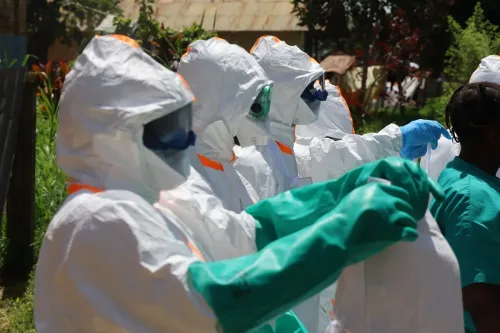
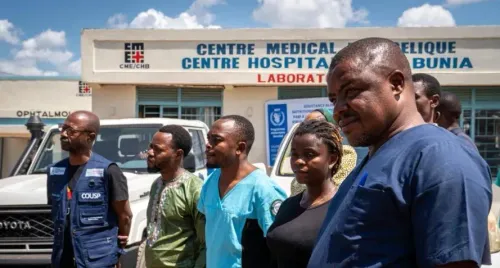
The India-Africa Forum Summit IV was deferred over what officials described as an 'emerging public health situation' linked to Bundibugyo Ebola outbreaks in the Democratic Republic of Congo (DRC) and Uganda. Concerns about the safety and full participation of African leaders and delegations drove the decision. The postponement, according to the IOL report, inadvertently spotlighted India's capacity for rapid vaccine intervention.
SII's Ebola Vaccine Push
Working in partnership with the Coalition for Epidemic Preparedness Innovations (CEPI), Oxford University, and African health stakeholders, SII is leveraging ChAdOx1 technology to produce a candidate vaccine for the Bundibugyo strain. According to reports, clinical-grade doses could be ready for trials within two to three months. The IOL report described this intervention as positioning India as 'a reliable big brother to Africa, prioritising affordable access for affected nations while working closely with African counterparts on trial preparedness and distribution planning.'
Echoes of India's Covid-19 Role
SII's Ebola push mirrors its widely recognised role during the Covid-19 pandemic, when it emerged as the world's largest vaccine manufacturer by volume, delivering billions of doses affordably for the Global South — including African nations — often at cost or at low margins. This history lends credibility to SII's current intervention, though the IOL report noted that core research and development for the Bundibugyo candidate vaccine involves contributions from other countries as well.
African Union's Response
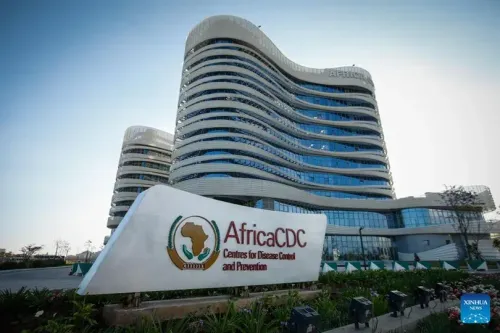
The African Union (AU), acting through the Africa Centres for Disease Control and Prevention (Africa CDC), has declared a Public Health Emergency and is pushing for vaccines to be available by year's end. The AU's collaboration with India and international partners reflects the urgency of containing the outbreak before it spreads further across the continent.
India's Broader Support to Africa
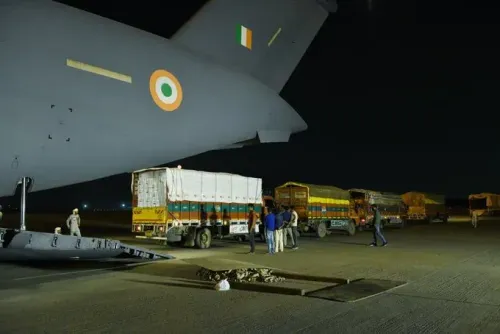
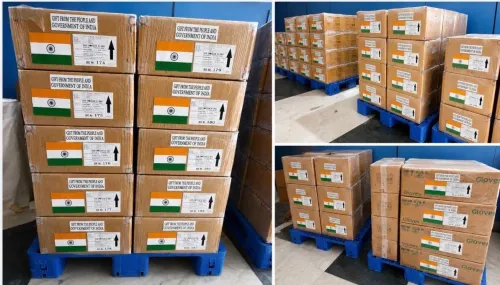
India's engagement with Africa extends beyond vaccine manufacturing. The IOL report noted that India has donated 1,000 metric tons of food grain to Burkina Faso and extended aid to Malawi and Mozambique. However, the report also struck a cautionary note: 'Partnerships with India, CEPI, Oxford, and others are vital bridges, but true self-reliance demands sustained investment in local biotech, technology transfer, and unified regulatory frameworks.' The India-Africa Forum Summit IV, when rescheduled, is expected to place health security and vaccine equity at the centre of the agenda.
Point of View
But the IOL report's own caveat is the most important line in the story: external partnerships, however swift, are not a substitute for African self-reliance in biotech. SII's ChAdOx1 pivot is impressive, but the core R&D still originates outside Africa — a structural dependency that one vaccine intervention will not resolve. The postponement of the India-Africa Summit is also a reminder that health security is now a precondition for diplomatic engagement, not a side agenda. New Delhi would do well to put vaccine technology transfer — not just supply — at the heart of the rescheduled summit.
NationPress
21 Sept 2026
Frequently Asked Questions
Why was the India-Africa Forum Summit IV postponed?
The summit, originally scheduled for 28–31 May in New Delhi, was postponed due to an 'emerging public health situation' caused by Bundibugyo Ebola outbreaks in the Democratic Republic of Congo and Uganda. Concerns about the safety and full participation of African leaders and delegations prompted the deferral.
What is the Serum Institute of India doing about the Ebola outbreak?
SII is developing a candidate vaccine for the Bundibugyo Ebola strain using ChAdOx1 technology, in partnership with CEPI and Oxford University. According to reports, clinical-grade doses could be ready for trials within two to three months.
What is ChAdOx1 technology?
ChAdOx1 is a chimpanzee adenovirus-based viral vector platform developed at Oxford University. SII used a related ChAdOx platform for its Covid-19 vaccine (Covishield) and is now applying it to develop the Bundibugyo Ebola vaccine candidate.
How has the African Union responded to the Ebola outbreak?
The African Union, acting through the Africa Centres for Disease Control and Prevention (Africa CDC), has declared a Public Health Emergency and is working with international partners including India, CEPI, and Oxford to secure vaccines by the end of the year.
Does India's support to Africa go beyond vaccines?
Yes. According to the IOL report, India donated 1,000 metric tons of food grain to Burkina Faso and extended humanitarian aid to Malawi and Mozambique, reflecting a broader partnership that spans food security and disaster relief alongside health interventions.